Introduction: Why Fall-Blooming Perennials Matter
Many gardens lose their vibrant appeal as summer flowers fade, but fall-blooming perennials solve this problem beautifully. These plants provide long-lasting color when most annuals begin to decline. Fall-blooming perennials also support pollinators late in the season when food sources become scarce. They add structure, texture, and warmth to autumn landscapes. Gardeners who plan for fall blooms enjoy visual interest well into cooler months. These perennials return every year, making them cost-effective. Proper selection ensures continuous flowering. Autumn gardens can be just as stunning as summer ones.
Understanding Fall Bloom Cycles
Fall-blooming perennials follow different growth patterns compared to spring or summer flowers. Many focus on leaf growth earlier in the year and save energy for late-season flowering. Shorter days and cooler nights trigger blooming. Understanding this cycle helps gardeners care for plants correctly. Late fertilization and pruning can interfere with bloom timing. These plants thrive with early-season care and patience. Knowing when buds form prevents accidental damage. Fall bloom cycles reward forward planning. Awareness ensures vibrant results.
Benefits of Growing Fall-Blooming Perennials
Fall-blooming perennials reduce the need for seasonal replanting. They extend garden color without additional effort. These plants provide food for bees and butterflies preparing for winter. They also create visual contrast with autumn foliage. Many are drought-tolerant and low-maintenance. Their deep root systems improve soil structure. Fall-blooming perennials add value to landscapes year after year. They also perform well in mixed borders. These benefits make them essential for balanced garden design.
1. Chrysanthemums: The Classic Autumn Performer
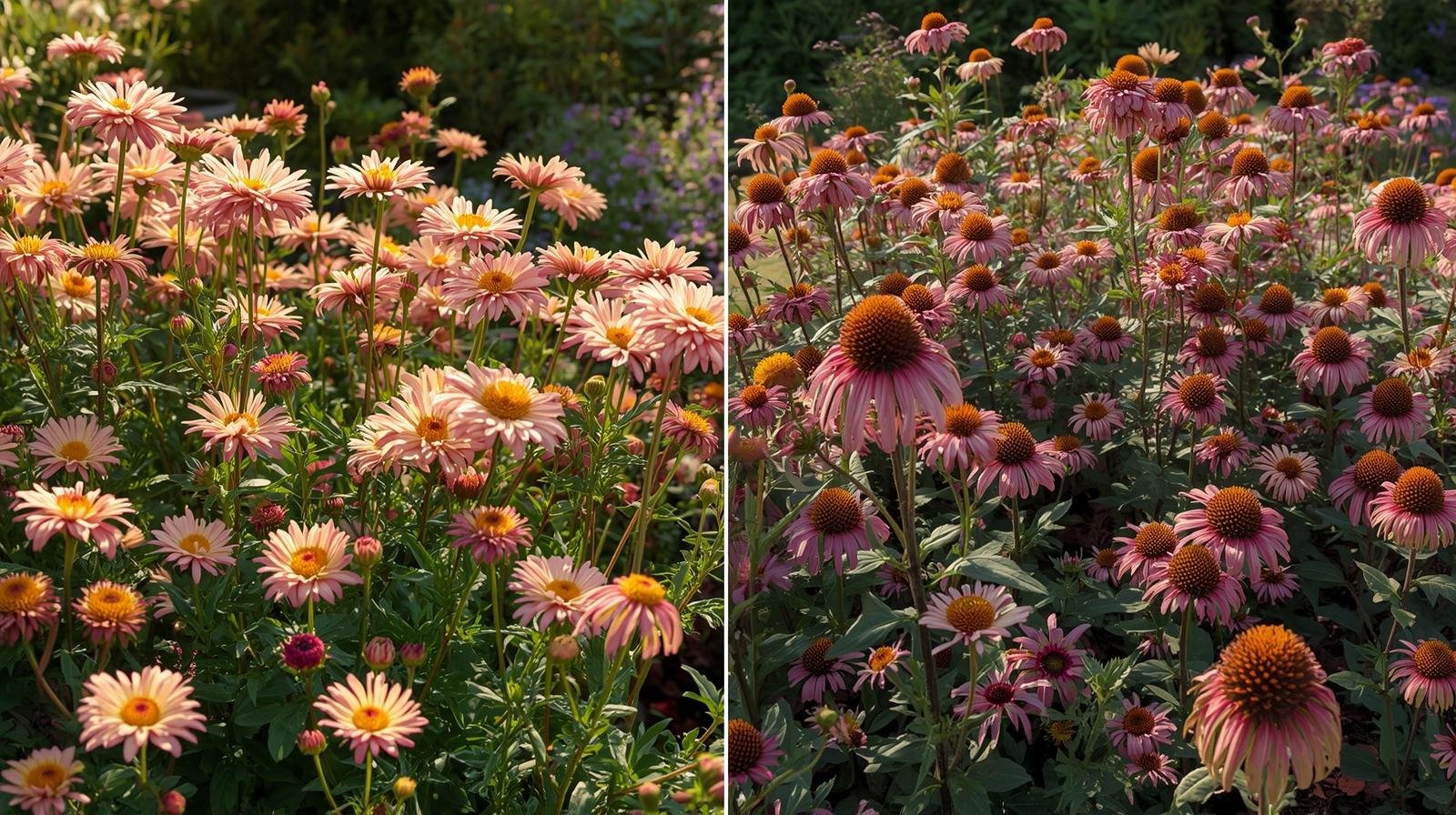
Chrysanthemums are among the most popular fall-blooming perennials. They produce dense clusters of flowers in vibrant autumn shades. Colors range from yellow and orange to deep red and purple. Chrysanthemums bloom from late summer through fall. They thrive in full sun and well-drained soil. Regular pinching earlier in the season improves bushiness. Once established, they return reliably every year. Their long bloom period makes them garden favorites. Proper care ensures spectacular autumn displays.
Growing and Caring for Chrysanthemums
Chrysanthemums need at least six hours of sunlight daily. Soil should remain evenly moist but not waterlogged. Early-season fertilization supports healthy growth. Avoid heavy feeding late in the season. Mulching helps protect roots during winter. Deadheading spent flowers encourages longer blooming. Pruning should be done in spring, not fall. Cold protection improves survival. With correct care, chrysanthemums bloom abundantly each autumn.
2. Asters: Star-Shaped Blooms for Fall Gardens
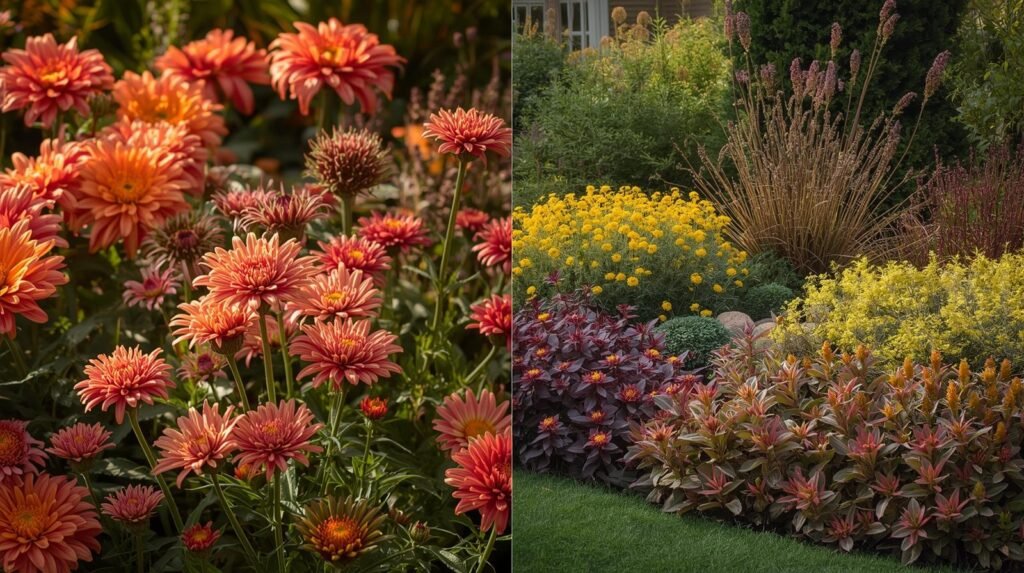
Asters are excellent fall-blooming perennials known for their star-shaped flowers. They bloom from late summer into autumn. Colors include purple, blue, pink, and white. Asters pair beautifully with ornamental grasses. They attract pollinators late in the season. Asters thrive in full sun with good airflow. They add height and texture to borders. Their daisy-like flowers brighten fading gardens. Asters bring life to autumn landscapes.
Growing and Caring for Asters
Asters prefer well-drained soil and consistent moisture. Regular watering prevents stress during dry spells. Pruning in early summer controls height. Avoid cutting back too late. Good airflow prevents powdery mildew. Mulching retains moisture and regulates soil temperature. Divide plants every few years to maintain vigor. Healthy asters produce abundant blooms. Proper spacing improves performance.
3. Sedum: Reliable Color with Minimal Effort
Sedum, also called stonecrop, is a hardy fall-blooming perennial. It produces fleshy leaves and flat flower clusters. Sedum blooms from late summer into fall. Flowers change color as they mature. These plants tolerate drought and poor soil. Sedum thrives in full sun. Its sturdy stems provide structure in autumn gardens. Pollinators love sedum flowers. Low maintenance makes sedum ideal for busy gardeners.
Growing and Caring for Sedum
Sedum prefers dry to moderately moist soil. Overwatering causes root rot. Full sunlight ensures strong stems. Fertilization is rarely needed. Cut back old growth in spring. Avoid heavy pruning in fall. Sedum withstands cold winters well. Its thick leaves store water efficiently. Proper placement ensures long-lasting blooms.
4. Japanese Anemone: Elegant Fall Beauty
Japanese anemones bloom gracefully in late summer and fall. Their delicate flowers sway on tall stems. Colors include soft pink and white. They thrive in partial shade. Japanese anemones brighten shaded autumn gardens. These perennials spread slowly over time. They pair well with hostas and ferns. Their long bloom season adds elegance. Japanese anemones create calm garden spaces.
Growing and Caring for Japanese Anemone
Japanese anemones prefer rich, well-drained soil. Consistent moisture supports flowering. Partial shade protects flowers from heat. Avoid disturbing roots frequently. Mulching helps retain moisture. Pruning is minimal and done in spring. These plants establish slowly but last for years. Patience is rewarded with beauty. Proper care ensures reliable autumn blooms.
5. Coneflowers: Extended Bloom into Fall
Coneflowers are known for their long bloom season. Many varieties bloom well into fall. They produce bold daisy-like flowers. Colors include purple, pink, orange, and white. Coneflowers tolerate drought once established. They attract birds and pollinators. Their seed heads add winter interest. Coneflowers thrive in full sun. Their resilience makes them garden staples.
Growing and Caring for Coneflowers
Coneflowers grow best in well-drained soil. Full sun promotes strong stems. Overwatering should be avoided. Deadheading encourages continued blooming. Leave seed heads for wildlife. Fertilization is minimal. Coneflowers resist pests and diseases. Their deep roots improve drought tolerance. Low care makes them ideal for autumn gardens.
Designing a Fall-Blooming Perennial Garden
Combining different fall-blooming perennials creates continuous color. Mix heights, textures, and bloom times. Pair bold flowers with ornamental grasses. Choose complementary color palettes. Consider sunlight and soil conditions. Plant in groups for impact. Layer plants for depth. Thoughtful design enhances visual appeal. Planning ensures harmony throughout fall.
Maintaining Fall-Blooming Perennials
Maintenance ensures consistent performance. Water during dry autumn periods. Avoid heavy pruning before winter. Mulch to protect roots. Remove diseased foliage promptly. Monitor for pests. Allow plants to enter dormancy naturally. Healthy maintenance improves next year’s blooms. Minimal effort yields lasting beauty. Seasonal care is essential.
Supporting Pollinators in Autumn
Fall-blooming perennials provide vital nectar sources. Bees and butterflies rely on late flowers. Avoid pesticide use during blooming. Plant diverse species for continuous nectar. Leave seed heads for birds. Supporting pollinators improves ecosystem health. Gardens become wildlife-friendly spaces. Autumn flowers sustain life. Small actions make big impact.
Common Mistakes with Fall-Blooming Perennials
Planting too late reduces establishment time. Overfertilizing causes excessive leaf growth. Pruning too late removes flower buds. Ignoring sunlight needs weakens blooms. Poor drainage causes root issues. Overcrowding reduces airflow. Avoid these mistakes for success. Knowledge prevents failure. Careful planning improves outcomes.
Table: Popular Fall-Blooming Perennials
Plant Name
Chrysanthemum provides dense autumn flowers
Bloom Color
Aster offers purple and blue star-shaped blooms
Sun Requirement
Sedum thrives in full sunlight
Maintenance Level
Japanese anemone requires moderate care