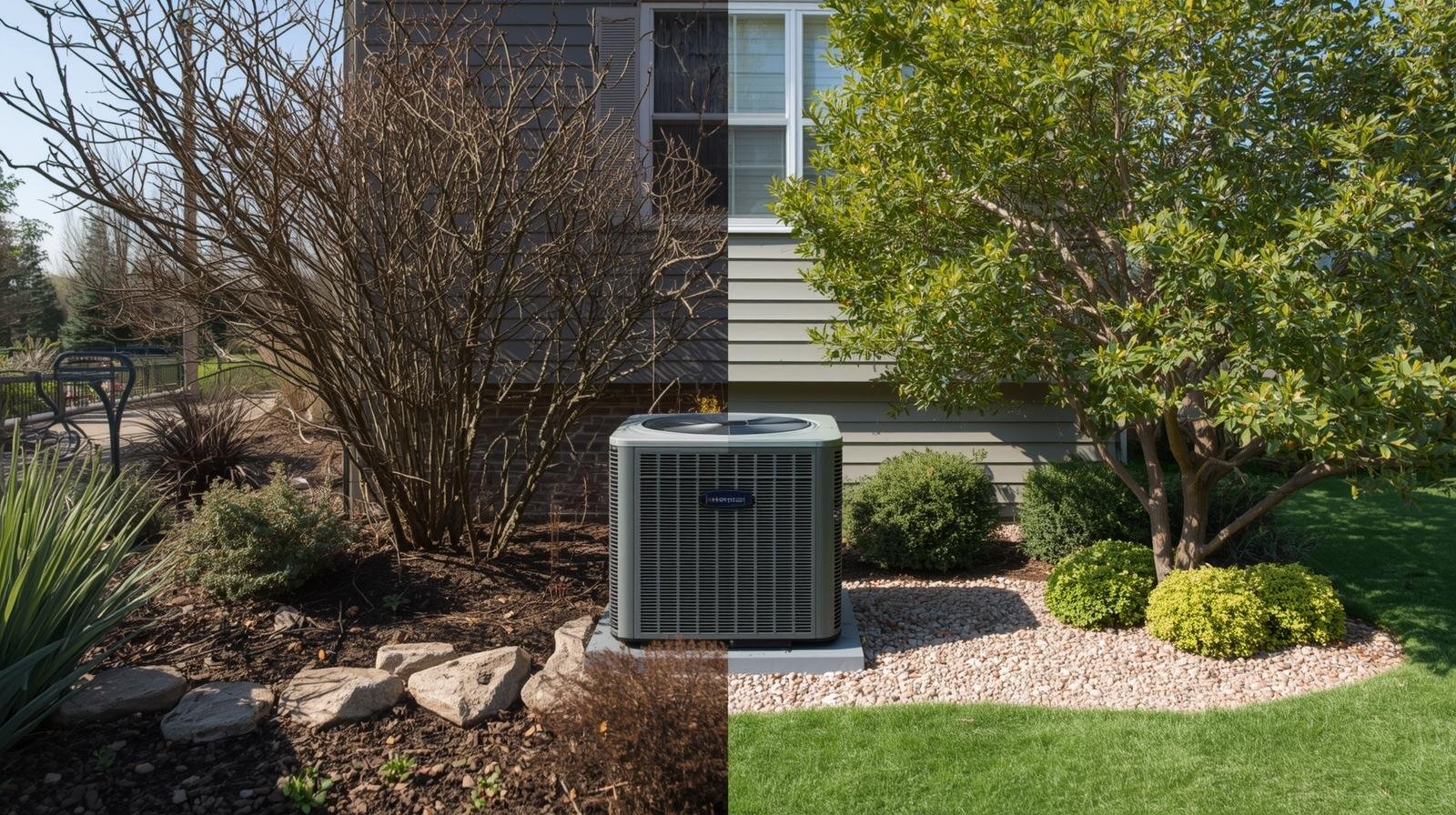
Proper landscaping around HVAC units plays a major role in energy efficiency. Many homeowners overlook how outdoor surroundings affect cooling systems. Strategic landscaping can lower operating temperatures and reduce energy bills. HVAC units work best when airflow is unrestricted. Heat buildup around units forces them to work harder. Smart landscaping improves performance naturally. This article explains practical landscaping techniques for better HVAC efficiency.
Why HVAC Units Overheat
HVAC units generate heat while cooling indoor spaces. Poor placement and blocked airflow trap this heat. Direct sunlight increases system temperature significantly. Overheating reduces efficiency and lifespan. Landscaping helps control environmental factors. Natural cooling methods reduce strain on equipment. Understanding overheating causes helps apply effective solutions.
Tip 1: Plant Shade Trees Strategically
Shade trees reduce direct sunlight on HVAC units. Planting trees at a safe distance prevents root damage. Deciduous trees provide summer shade and winter sunlight. Shade can lower unit temperature by several degrees. Cooler units consume less electricity. Tree placement should not block airflow. Proper shading improves long-term efficiency.
Tip 2: Use Shrubs Without Blocking Airflow
Shrubs can deflect hot air and sunlight effectively. Maintain at least two feet of clearance around units. Avoid dense plants that restrict ventilation. Low-growing shrubs are ideal. Trim regularly to maintain airflow. Balanced landscaping improves cooling performance. Shrubs also enhance visual appeal.
Tip 3: Install Gravel or Mulch Beds
Gravel beds reduce heat retention around HVAC units. Unlike concrete, gravel allows heat dissipation. Mulch helps regulate ground temperature. Avoid dark materials that absorb heat. Light-colored gravel reflects sunlight. Proper ground cover supports cooling. These materials require minimal maintenance.
Tip 4: Avoid Solid Fencing Around Units
Solid fences trap heat and block airflow. If fencing is needed, use open lattice designs. Allow air circulation from all sides. Proper fencing protects without overheating. Ventilated barriers balance safety and efficiency. Design choices impact HVAC performance. Open designs are always better.
Tip 5: Keep the Area Clean and Clear
Debris around HVAC units restricts airflow. Leaves, grass, and dirt increase system strain. Regular cleaning improves efficiency. Maintain clear space around the unit. Seasonal maintenance prevents buildup. Clean surroundings enhance cooling performance. Simple upkeep goes a long way.
Tip 6: Elevate the Unit Slightly
Elevated HVAC units avoid heat from ground surfaces. Proper elevation improves airflow underneath. Use manufacturer-approved stands. Elevation also protects from water damage. Cooler airflow improves efficiency. Elevated placement extends system life. This small change makes a big difference.
How Landscaping Improves Energy Efficiency
Cooler units require less energy to operate. Landscaping reduces ambient temperature naturally. Improved airflow supports optimal performance. Reduced strain lowers electricity consumption. Energy-efficient systems save money. Landscaping provides long-term benefits. Natural solutions outperform artificial cooling.
Impact on HVAC Lifespan
Overheating shortens HVAC lifespan. Proper landscaping minimizes wear and tear. Reduced stress improves reliability. Long-lasting systems reduce replacement costs. Preventive care ensures durability. Landscaping protects your investment. Efficiency and longevity go hand in hand.
Seasonal Landscaping Considerations
Seasonal changes affect HVAC surroundings. Summer requires shade and airflow. Winter demands debris removal. Seasonal pruning ensures clear ventilation. Adjust landscaping as needed. Proactive care improves year-round performance. Seasonal planning is essential.
Common Landscaping Mistakes
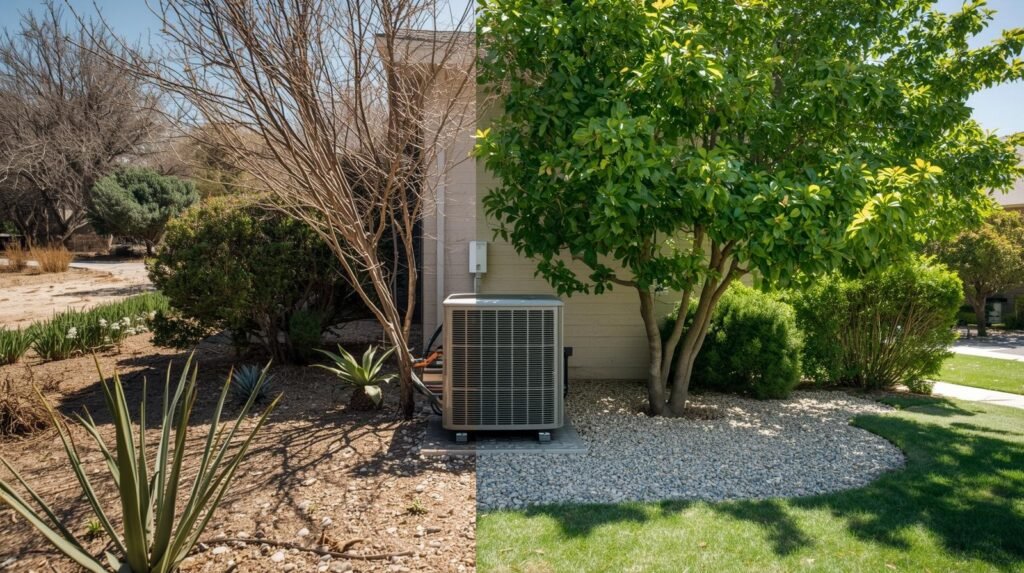
Planting too close to units is a common error. Blocking vents reduces efficiency. Ignoring maintenance leads to overheating. Using heat-absorbing materials increases strain. Poor planning wastes energy. Awareness prevents costly mistakes. Smart landscaping avoids these issues.
Choosing the Right Plants
Select plants that require minimal watering. Avoid plants that shed heavily. Drought-tolerant species are ideal. Native plants adapt better to local climate. Proper plant selection simplifies maintenance. Plants should support airflow. Smart choices improve efficiency.
Noise Reduction Benefits
Landscaping also reduces HVAC noise. Shrubs absorb sound naturally. Proper placement minimizes disturbance. Noise reduction improves comfort. Efficient systems operate quietly. Landscaping enhances overall living experience. Multiple benefits from one solution.
Environmental Advantages
Reduced energy use lowers carbon footprint. Landscaping promotes sustainability. Natural cooling reduces power consumption. Eco-friendly practices benefit the environment. Efficient HVAC systems support green living. Landscaping aligns with environmental goals. Small steps create big impact.
Cost Savings Over Time
Lower energy bills result from improved efficiency. Landscaping is a one-time investment. Long-term savings outweigh initial costs. Reduced repairs save money. Efficient systems reduce maintenance expenses. Landscaping offers financial benefits. Smart planning pays off.
HVAC Landscaping Best Practices Table
| Landscaping Element | Benefit |
|---|---|
| Shade Trees | Lower unit temperature |
| Shrubs | Sun protection |
| Gravel Beds | Heat reduction |
| Open Fencing | Airflow |
| Clean Area | Improved efficiency |
Professional vs DIY Landscaping
DIY landscaping is cost-effective for small changes. Professionals help with complex designs. Expert planning ensures safety. Choose based on project size. Both approaches improve efficiency. Proper execution is key. Select what fits your needs.
Safety Considerations
Avoid damaging HVAC components. Maintain recommended clearances. Use non-invasive plants. Follow manufacturer guidelines. Safety ensures system integrity. Proper planning prevents accidents. Safe landscaping protects equipment.
Long-Term Maintenance Tips
Schedule regular inspections. Trim plants as needed. Remove debris promptly. Monitor airflow conditions. Adjust landscaping over time. Maintenance preserves efficiency. Consistency ensures lasting results.
Conclusion
Smart landscaping significantly improves HVAC efficiency. Simple changes reduce heat buildup. Proper airflow extends system lifespan. Natural cooling saves energy and money. Landscaping enhances aesthetics and performance. Implement these tips for better results. Efficient HVAC systems start outdoors.