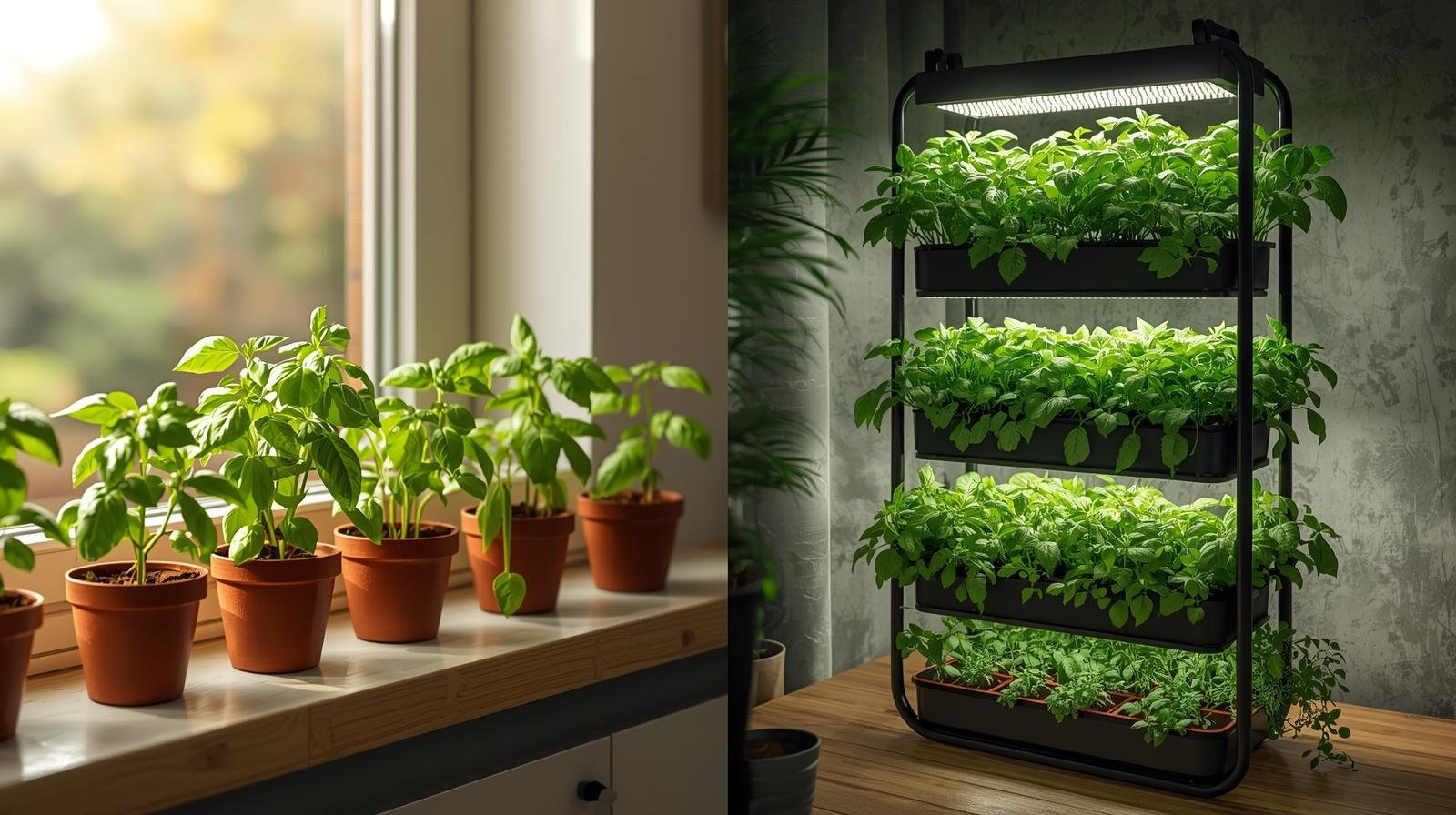
Growing basil indoors year-round is an excellent solution for people who love fresh herbs but have limited outdoor space. Basil is one of the easiest herbs to grow inside because it adapts well to containers, responds quickly to care, and provides continuous harvests. Indoor basil ensures a steady supply of aromatic leaves for cooking while also improving indoor air quality. With proper light, watering, and pruning, basil can thrive even in compact apartments. This guide explains everything you need to know to grow healthy basil indoors. Whether you live in a studio apartment or a small house, basil can fit perfectly into your indoor gardening routine.
Why Basil Is Ideal for Indoor Growing
Basil is a fast-growing herb with shallow roots, making it perfect for pots and small containers. Unlike many plants, basil does not require deep soil to grow successfully. It responds well to regular harvesting, which encourages bushier growth. Indoor basil also faces fewer pests compared to outdoor plants, reducing the need for chemicals. Its pleasant aroma and lush green leaves make it both decorative and functional. Basil grows well in controlled environments where temperature and moisture are stable. This adaptability makes basil an ideal herb for indoor spaces.
Choosing the Right Basil Variety for Indoors
Not all basil varieties perform equally indoors, so selecting the right type is important. Sweet basil, Genovese basil, and Greek basil are among the best indoor choices. These varieties grow compactly and tolerate container conditions well. Thai basil and lemon basil can also be grown indoors if sufficient light is available. Compact basil types are especially suitable for windowsills and shelves. Choosing the right variety ensures faster growth and better flavor. Always select fresh seeds or healthy seedlings for best results.
Selecting the Best Containers for Small Spaces
The container you choose directly affects basil growth and root health. A pot with good drainage holes is essential to prevent waterlogging. Containers made of clay, ceramic, or food-grade plastic work well for indoor basil. Shallow but wide pots allow roots to spread comfortably. For small spaces, vertical planters or railing-style containers are excellent options. Ensure the pot size is appropriate for the plant’s growth stage. Proper containers help maintain moisture balance and promote strong roots.
Ideal Soil Mix for Indoor Basil
Basil prefers loose, nutrient-rich, and well-draining soil. A good indoor soil mix includes garden soil, compost, and sand or coco peat. This combination allows water to drain easily while retaining enough moisture for roots. Avoid using heavy clay soil, as it can suffocate roots. Organic compost improves nutrient availability and soil structure. Soil quality directly influences leaf size and flavor. Refreshing the soil every few months helps maintain plant health.
Light Requirements for Year-Round Growth
Light is one of the most critical factors for indoor basil success. Basil needs at least six to eight hours of bright light daily. A south-facing window is ideal for natural sunlight exposure. If natural light is insufficient, grow lights can be used effectively. LED grow lights placed above the plant provide consistent lighting. Adequate light prevents leggy growth and enhances leaf aroma. Proper lighting ensures year-round productivity.
Watering Basil Indoors Correctly
Overwatering is a common mistake when growing basil indoors. Basil prefers evenly moist soil but not soggy conditions. Water the plant when the top layer of soil feels dry. Use room-temperature water to avoid shocking the roots. Proper drainage ensures excess water escapes easily. Consistent watering helps prevent leaf wilting and yellowing. Balanced moisture supports steady growth and healthy leaves.
Maintaining Ideal Indoor Temperature
Basil thrives in warm temperatures between 18°C and 30°C. Avoid placing basil near cold drafts or air conditioners. Sudden temperature changes can stress the plant and slow growth. Indoor environments usually provide stable temperatures, which benefits basil. During winter, keep basil away from cold windows at night. Warm conditions promote faster leaf production. Stable temperature is essential for year-round cultivation.
Humidity Needs for Indoor Basil
Basil enjoys moderate humidity levels similar to typical indoor conditions. Dry air can cause leaf edges to curl or dry out. Light misting can help during dry seasons. Placing a tray of water near the plant also increases humidity. Avoid excessive moisture on leaves to prevent fungal issues. Balanced humidity keeps basil lush and green. Proper air circulation complements humidity control.
Fertilizing Basil for Continuous Harvest
Indoor basil benefits from light but regular feeding. Use organic liquid fertilizer or compost tea every two to three weeks. Avoid over-fertilization, as it can reduce flavor intensity. Balanced nutrients support leaf growth and color. Nitrogen-rich fertilizers encourage lush foliage. Always dilute fertilizers according to instructions. Consistent feeding ensures long-term productivity.
Pruning and Harvesting Basil Correctly
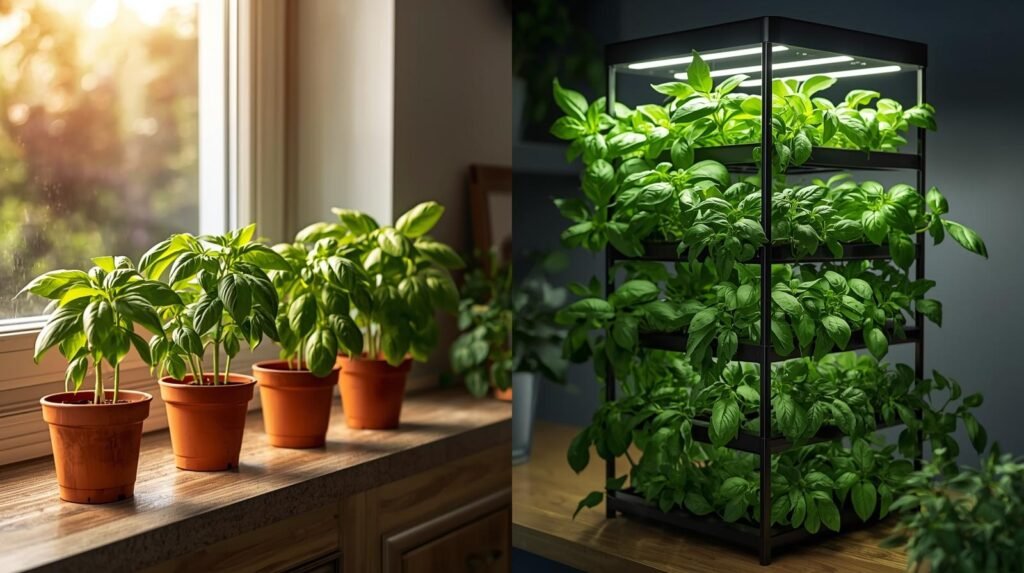
Regular pruning is essential for bushy basil plants. Always cut above a leaf node to encourage branching. Harvesting young leaves improves flavor and texture. Avoid removing more than one-third of the plant at a time. Frequent harvesting prevents flowering, which can make leaves bitter. Proper pruning extends the plant’s lifespan. Healthy harvesting techniques ensure continuous growth.
Preventing Common Indoor Basil Problems
Indoor basil may face issues like yellowing leaves or slow growth. These problems often result from improper watering or light. Regularly inspect leaves for signs of pests. Good air circulation reduces disease risk. Adjust care routines based on plant response. Early detection prevents major damage. Healthy care habits keep basil thriving.
Growing Basil from Seeds Indoors
Starting basil from seeds indoors is simple and rewarding. Sow seeds shallowly and keep soil moist. Germination occurs within five to ten days. Provide warmth and light during early growth. Thin seedlings to prevent overcrowding. Seed-grown basil adapts well to indoor conditions. This method ensures fresh and chemical-free plants.
Growing Basil from Cuttings
Basil can also be grown from cuttings placed in water. Roots develop within one to two weeks. Once roots appear, transfer cuttings to soil. This method allows quick plant multiplication. Cuttings retain the parent plant’s characteristics. It is a cost-effective propagation method. Basil cuttings grow rapidly indoors.
Best Placement Ideas for Small Homes
Small spaces require smart placement strategies for basil. Windowsills, kitchen counters, and shelves are ideal locations. Hanging planters save floor space while adding greenery. Vertical racks can hold multiple pots efficiently. Choose areas with good light access. Proper placement enhances both growth and aesthetics. Small spaces can still support abundant basil.
Seasonal Care Tips for Indoor Basil
Indoor basil care changes slightly with seasons. During winter, reduce watering and increase light exposure. In summer, monitor moisture levels more closely. Seasonal adjustments prevent stress. Indoor control allows consistent growth year-round. Observe plant behavior to fine-tune care. Seasonal awareness improves long-term success.
Benefits of Growing Basil Indoors
Indoor basil provides fresh herbs anytime without pesticides. It enhances cooking flavor and nutritional value. Basil plants also improve indoor aesthetics. Growing herbs indoors reduces grocery expenses. It promotes sustainable living habits. Indoor basil encourages gardening confidence. The benefits extend beyond just food.
Indoor Basil Care Summary Table
| Aspect | Best Practice |
|---|---|
| Light | Six to eight hours daily |
| Water | When topsoil is dry |
| Soil | Loose and well-draining |
| Temperature | Warm and stable |
| Fertilizer | Light organic feeding |
Common Mistakes to Avoid
Avoid overcrowding plants in small containers. Do not ignore light requirements. Overwatering can cause root rot. Skipping pruning leads to weak growth. Neglecting feeding reduces yield. Awareness of mistakes ensures success. Proper care leads to healthy basil.
Conclusion
Growing basil indoors year-round is achievable even in small spaces. With correct care, basil provides continuous harvests. Attention to light, water, and pruning is key. Indoor basil gardening is simple and rewarding. Anyone can enjoy fresh basil at home. This guide empowers you to grow confidently. Start today and enjoy fresh herbs daily.