
Rosemary is more than just a fragrant herb—it’s a culinary superstar, a natural remedy, and a beautiful plant that enhances any garden or balcony. From adding flavor to meats and sauces to improving memory and digestion, rosemary is highly versatile. But buying fresh rosemary regularly can be expensive, and dried herbs often lack flavor.
What if you could propagate your own rosemary easily and have a permanent supply at home? With simple techniques, you can multiply rosemary plants from cuttings and enjoy fresh herbs year-round without ever buying new ones.
In this article, we’ll guide you step by step on how to propagate rosemary, care for it, and ensure a long-lasting supply in your home garden.
🌱 Why Propagating Rosemary Is Worth It

Rosemary is a perennial herb, which means it can live for several years if properly cared for. Propagating rosemary has multiple benefits:
- Cost-effective: One plant can give rise to many more.
- Fresh and chemical-free: You control the growing conditions.
- Continuous harvest: Enjoy fresh rosemary all year round.
- Beginner-friendly: Propagation is simple and doesn’t require advanced gardening skills.
- Aesthetic appeal: Evergreen foliage adds beauty to balconies, patios, and gardens.
By learning to propagate rosemary, you create a self-sustaining herb supply for life.
🌿 Step 1: Choosing the Right Mother Plant
Healthy propagation starts with selecting a strong, disease-free rosemary plant:
- Look for lush, green foliage and firm stems.
- Avoid plants with yellowing leaves or signs of pests.
- Prefer young to semi-mature branches, which root faster than older, woody stems.
Pro tip: Use organically grown rosemary to ensure your new plants are chemical-free from the start.
✂️ Step 2: Take the Right Cuttings

Rosemary propagates easily from cuttings, which are small sections of stems taken from the mother plant:
- Use a clean, sharp pair of scissors or pruning shears.
- Cut 4–6 inch long stems from the top or middle of the plant.
- Remove leaves from the lower 2 inches of the cutting, leaving a few leaves at the top.
These cuttings are ready to root and grow into independent plants.
🥄 Step 3: Prepare the Rooting Medium
Rosemary roots best in a well-draining medium. You can use:
- Potting soil mixed with sand or perlite (2:1 ratio)
- Coconut coir or vermiculite
- Loose garden soil with added compost
Tip: Avoid heavy clay soil, which retains too much moisture and causes cuttings to rot.
💧 Step 4: Planting the Cuttings
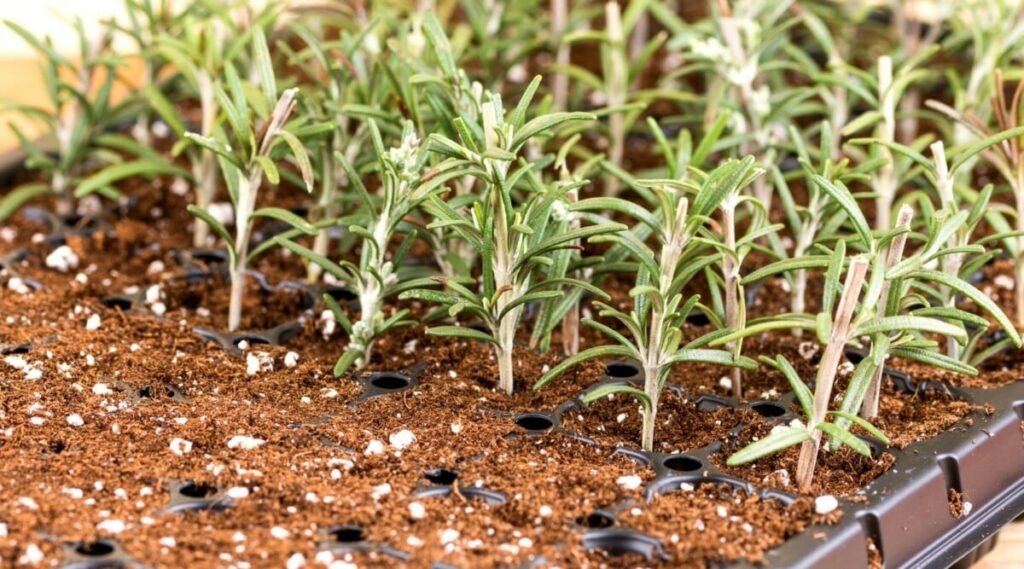
Plant the cuttings carefully to encourage strong root growth:
- Make a small hole in the medium.
- Insert the cutting 1–2 inches deep, ensuring the leafless part is buried.
- Firm the soil gently around the cutting to stabilize it.
- Water lightly to settle the medium.
Pro tip: Keep the cuttings upright to ensure roots grow straight and strong.
🌞 Step 5: Provide Ideal Conditions for Rooting
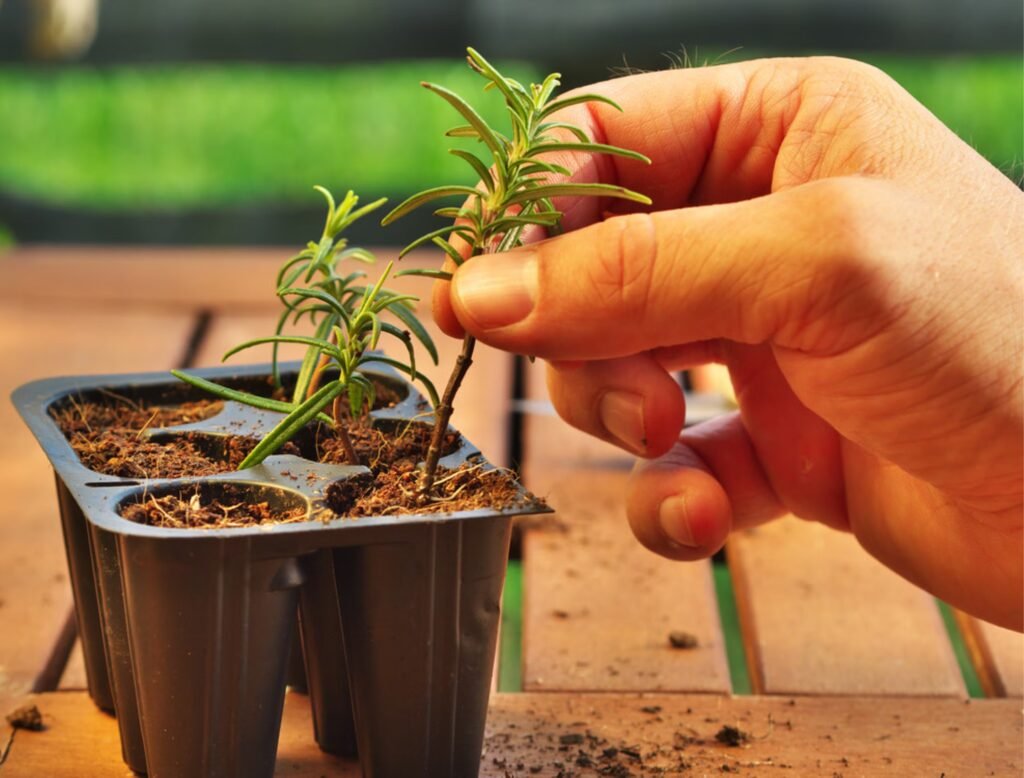
Rosemary cuttings need a warm, humid, and bright environment for rapid rooting:
- Temperature: 20–25°C is optimal.
- Light: Bright, indirect sunlight. Avoid direct harsh sun on young cuttings.
- Humidity: Cover cuttings with a plastic bag or dome to retain moisture (ensure air circulation to prevent mold).
Roots typically develop in 2–4 weeks, depending on conditions.
🕒 Step 6: Watering and Care During Rooting
Proper moisture is key to successful propagation:
- Keep the medium lightly moist but not soggy.
- Mist the cuttings if the air is dry.
- Avoid overwatering, which can cause stem rot.
With minimal care, you’ll see new root development within a few weeks.
🌿 Step 7: Transplanting Rooted Cuttings
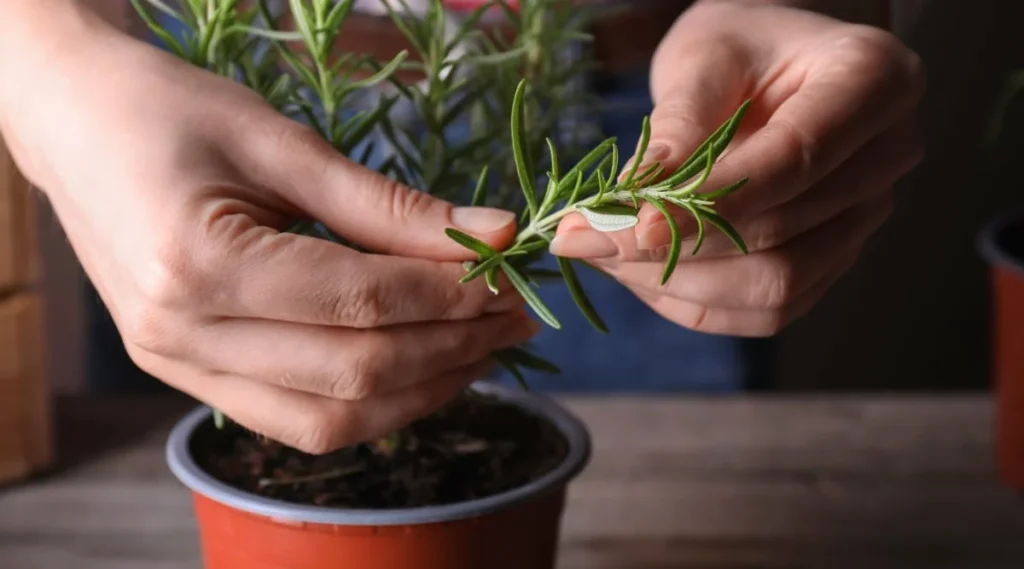
Once the cuttings have strong roots, it’s time to move them to their permanent home:
- Choose a pot, container, or garden bed with well-draining soil.
- Gently remove the cutting from the rooting medium.
- Plant at the same depth as it was before.
- Water lightly and place in partial sunlight for a few days, gradually increasing light exposure.
Proper transplanting ensures the young plant establishes healthy growth and long-term survival.
🌱 Step 8: Caring for Your New Rosemary Plant
To ensure your rosemary thrives year after year, follow these care tips:
- Sunlight: 6–8 hours of sunlight daily.
- Watering: Water deeply but infrequently; allow soil to dry slightly between watering.
- Pruning: Regularly trim stems to encourage bushy growth and prevent woody, tall stems.
- Fertilizing: Use organic compost or a balanced fertilizer every 4–6 weeks.
Healthy care results in lush foliage, fragrant aroma, and strong stems.
🌿 Step 9: Multiplying Your Rosemary Supply
Once your initial cuttings have grown into full plants, you can propagate further:
- Use new top growth for additional cuttings.
- Repeat the process every few months.
- Gradually build a permanent herb garden, producing rosemary indefinitely.
This method ensures you’ll never run out of fresh rosemary.
🌞 Step 10: Benefits of Homegrown Rosemary
Homegrown rosemary is more than just a kitchen herb:
- Fresh and chemical-free: Safe for cooking and herbal remedies.
- High-yield: Continuous harvest for months or years.
- Fragrant and beautiful: Adds greenery and aroma to your home or balcony.
- Health benefits: Improves digestion, boosts memory, and has anti-inflammatory properties.
- Cost-effective: One plant can produce dozens of new plants through cuttings.
Growing your own rosemary is a sustainable, rewarding, and practical hobby.
🌿 Step 11: Tips for Propagating Rosemary Successfully
- Use healthy, young cuttings for faster rooting.
- Maintain consistent moisture but avoid waterlogging.
- Provide bright, indirect sunlight until roots establish.
- Mulch the soil surface to retain moisture and reduce weeds.
- Regularly prune mature plants to encourage new growth for future cuttings.
Following these tips ensures a high success rate and a lifetime supply of rosemary.
🏡 Step 12: Conclusion – Your Forever Supply of Rosemary
Propagating rosemary at home is easy, fun, and highly rewarding. With just a few cuttings, you can establish a perennial herb garden that produces fresh rosemary for life.
From selecting healthy mother plants to planting, rooting, and transplanting, this method allows even beginners to cultivate aromatic, flavorful, and nutrient-rich rosemary year-round.
Start today, and in a few weeks, you’ll have lush, green rosemary plants ready to enhance your cooking, improve your health, and beautify your home. With this simple propagation method, you’ll never have to buy rosemary again — a permanent, living supply right at your fingertips.