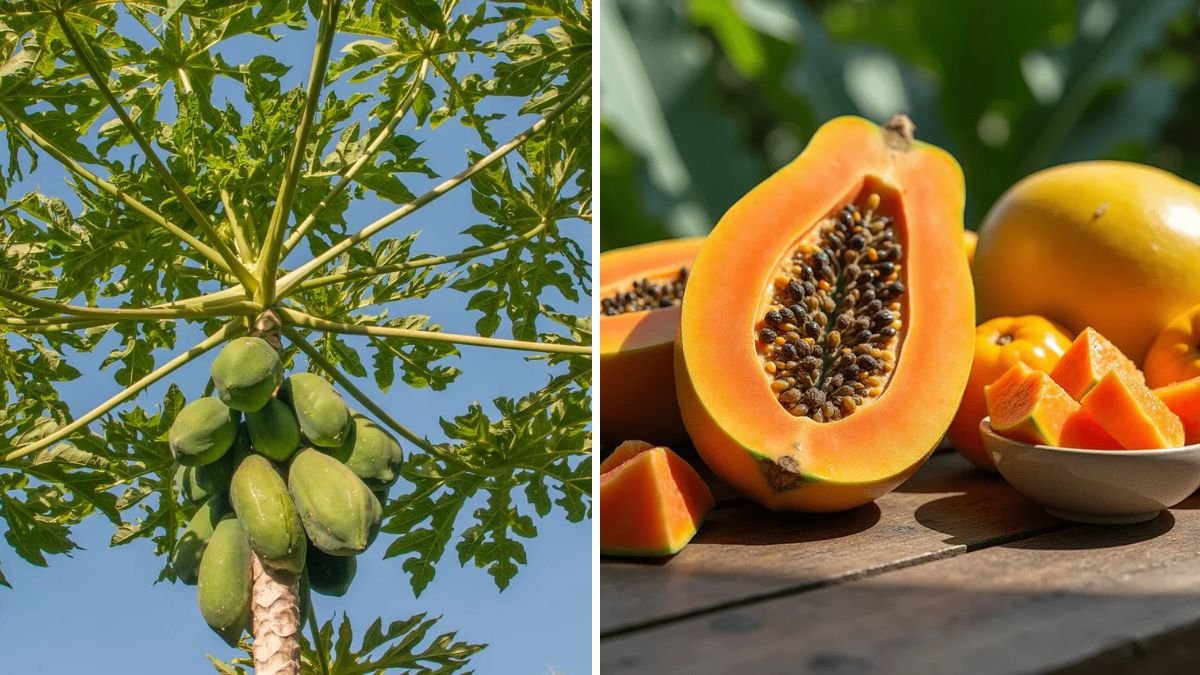
Papaya, also known as pawpaw, is a tropical fruit cherished for its sweet, juicy flesh and rich nutritional benefits. Packed with vitamins A, C, E, antioxidants, and digestive enzymes like papain, papayas are excellent for health and wellness. Growing papaya at home allows you to enjoy fresh, pesticide-free fruits, save money, and add a tropical touch to your garden, balcony, or backyard.
This guide will walk you through everything you need to know about papaya cultivation at home—from seed selection and planting to care, fertilization, pest management, and harvesting.
🌿 Why Grow Papaya at Home?
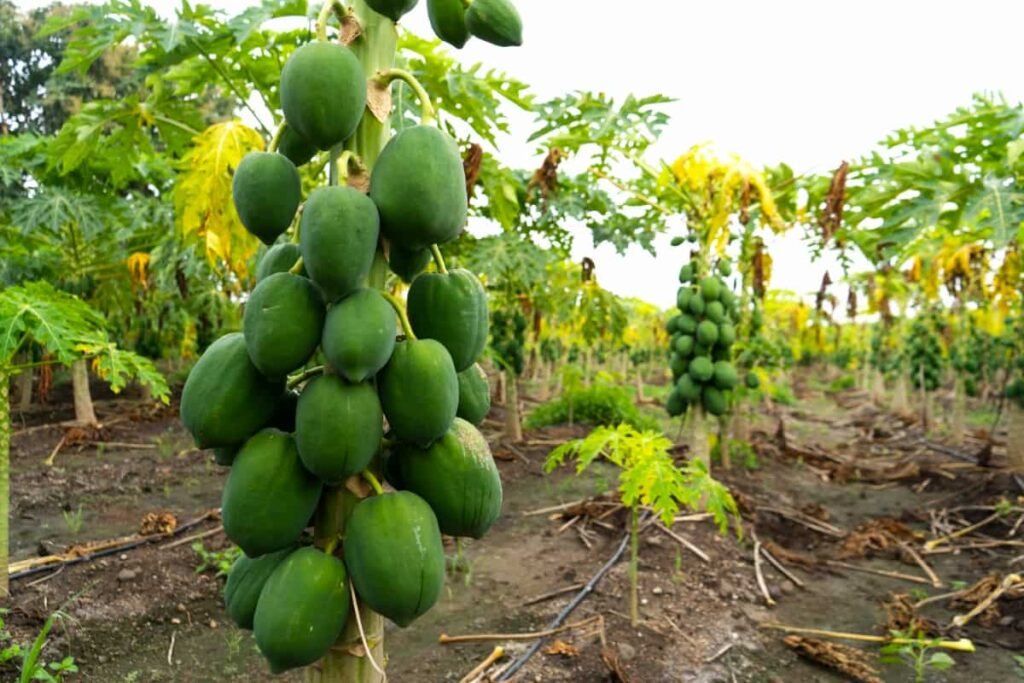
Home-grown papayas offer numerous advantages:
- Freshness and taste: Enjoy sweet and juicy fruits straight from your garden.
- Nutritional benefits: Rich in fiber, vitamins, minerals, and antioxidants.
- Cost-effective: Grow your own fruits rather than buying them from markets.
- Space-efficient: Can be cultivated in pots, raised beds, or small gardens.
- Continuous harvest: With proper care, papaya plants can produce fruits for several years.
Growing papaya at home also enhances the beauty of your garden with its large, attractive leaves.
🪴 Choosing the Right Papaya Variety
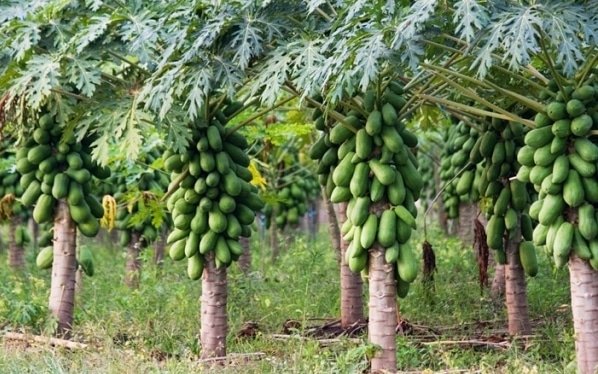
Selecting the right variety is essential for home cultivation:
- Red-flesh varieties: Sweet, rich in antioxidants, and ideal for fresh consumption.
- Yellow-flesh varieties: Popular for juices, smoothies, and desserts.
- Dwarf varieties: Suitable for small gardens and container cultivation.
- Hybrid varieties: Fast-growing and high-yielding, often disease-resistant.
Tip: For beginners, dwarf or hybrid varieties are ideal for home cultivation due to their compact growth and high productivity.
🌱 Seed Selection and Preparation
Papaya can be grown from seeds or grafted saplings:
- Seed selection: Choose fresh seeds from ripe, healthy fruits. Discard damaged or dry seeds.
- Cleaning: Remove pulp completely and rinse seeds in water.
- Drying: Air-dry seeds in shade for 2–3 days.
- Germination: Soak seeds in warm water for 24 hours before sowing to enhance germination.
Tip: Papaya seeds remain viable for up to a year if stored in a cool, dry place.
🪴 Soil Preparation for Papaya
Papaya thrives in well-draining, fertile soil:
- Soil type: Loamy soil enriched with organic matter.
- pH: Slightly acidic to neutral (6.0–7.0).
- Preparation steps:
- Clear the area of weeds and debris.
- Loosen the soil to a depth of 12–15 inches.
- Mix in well-rotted compost or organic manure for fertility.
- Ensure proper drainage to prevent root rot.
Container cultivation: Use large pots (18–24 inches deep) with adequate drainage for balcony or terrace gardens.
✂️ Planting Papaya Seeds or Saplings
From Seeds:
- Fill seedling trays or small pots with light, well-draining soil mix.
- Sow seeds ½ inch deep and water gently.
- Keep in a warm, sunny location with partial shade.
- Germination occurs within 2–3 weeks.
From Saplings:
- Dig a hole slightly larger than the root ball.
- Place the sapling carefully and cover with soil.
- Water immediately and mulch around the base.
- Space plants at least 6–8 feet apart for proper growth.
Tip: Choose a sunny location with protection from strong winds to prevent damage to tall, tender plants.
☀️ Sunlight and Climate Requirements
Papaya is a tropical plant that grows best under warm conditions:
- Sunlight: 6–8 hours of direct sunlight daily
- Temperature: Ideal range is 21°C–33°C
- Avoid frost, as papaya is sensitive to cold
- For container plants, move indoors or provide shade during extreme heat
Proper sunlight ensures strong stems, lush foliage, and healthy fruiting.
💧 Watering and Moisture Care
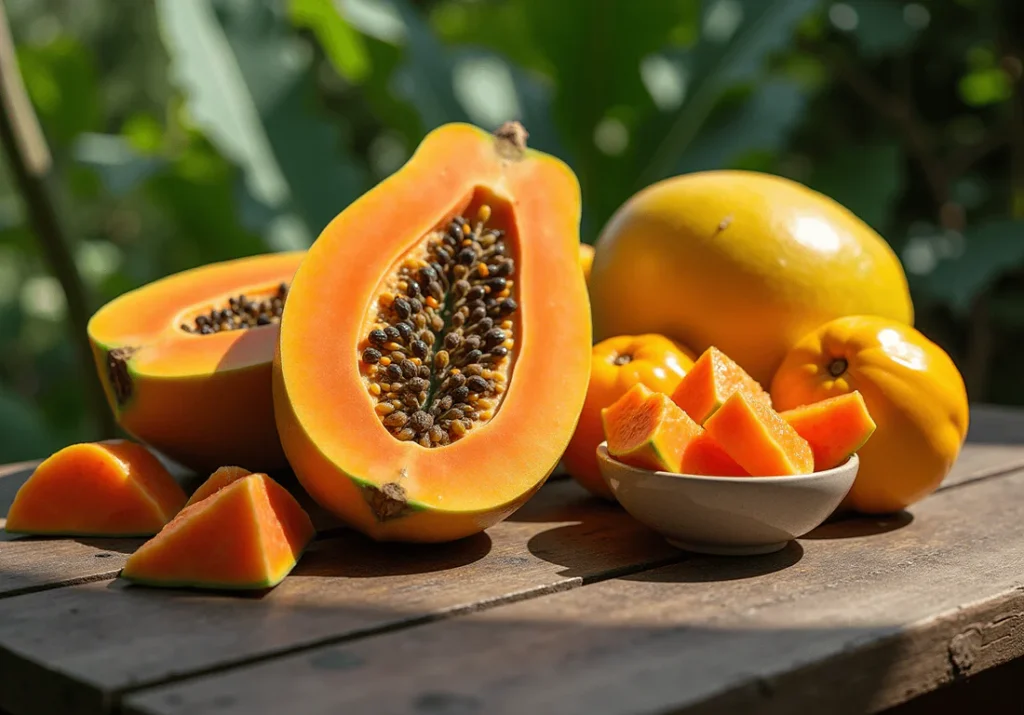
Papaya requires consistent moisture:
- Water regularly to keep soil evenly moist.
- Avoid waterlogging, which can cause root rot.
- Mulch around the base to retain soil moisture and control weeds.
Tip: Drip irrigation is ideal for efficient watering in garden beds or pots.
🌿 Fertilization for Healthy Growth
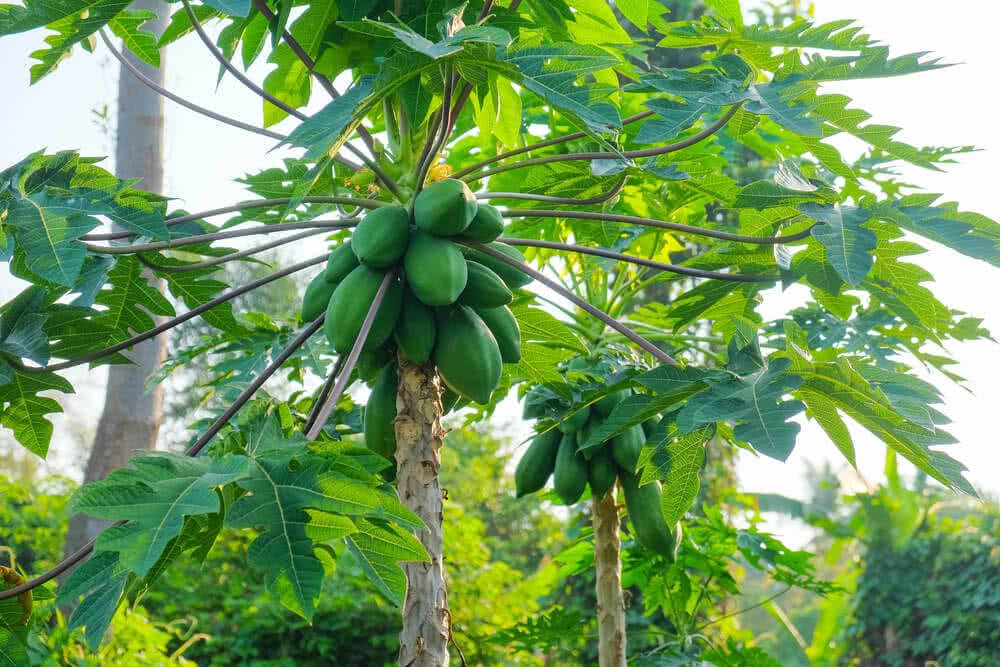
Nutrient-rich soil ensures rapid growth and high fruit yield:
- Apply organic compost or vermicompost every 4–6 weeks.
- Nitrogen-rich fertilizers promote leaf and stem growth.
- Phosphorus and potassium fertilizers support flowering and fruiting.
- Avoid excessive nitrogen during fruiting, as it promotes leaf growth over flowers.
Tip: Foliar spraying of liquid organic fertilizers improves nutrient absorption.
🐛 Pest and Disease Management
Papaya plants can face pests and diseases, but organic methods help maintain healthy plants:
Common Pests:
- Aphids: Spray neem oil or soap solution
- Fruit flies: Cover developing fruits with mesh or paper bags
- Whiteflies: Use yellow sticky traps or neem extracts
Common Diseases:
- Papaya ring spot virus: Use resistant varieties and remove infected plants
- Powdery mildew: Ensure proper spacing and avoid overhead watering
- Root rot: Maintain well-draining soil
Regular monitoring ensures healthy growth and high yields.
🌸 Flowering and Fruit Development
Papaya plants can be male, female, or hermaphrodite:
- Hermaphrodite plants are preferred for home cultivation as they self-pollinate.
- Flowering occurs 5–7 months after planting from seeds; earlier for saplings.
- Fruit development takes 6–9 months, depending on variety and conditions.
- Flowers require pollination by insects or hand-pollination for better fruit set.
Tip: Remove male plants if growing from seeds to maximize fruit production.
✂️ Harvesting Papayas
Timing is key for sweet, juicy fruits:
- Fruits are ready to harvest when they turn yellow-orange at the base.
- Cut fruits with a sharp knife, leaving a small stem attached.
- For continuous harvest, plant staggered seeds or saplings.
Tip: Harvesting slightly unripe fruits and letting them ripen indoors enhances shelf life.
🥗 Culinary Uses of Home-Grown Papayas
Papayas are versatile in the kitchen:
- Eaten raw as a refreshing fruit
- Used in smoothies, juices, and desserts
- Incorporated into salads and tropical dishes
- Green papaya can be used in pickles, curries, and slaws
Home-grown papayas provide maximum flavor and nutrition compared to store-bought fruits.
🔁 Creative Home Cultivation Ideas
- Container Gardening: Grow dwarf or hybrid varieties in large pots.
- Vertical Support: Use stakes for tall plants to prevent wind damage.
- Succession Planting: Plant seeds every few months for continuous harvest.
- Companion Planting: Plant marigolds or basil nearby to repel pests.
- YouTube Tutorials: Learn practical tips and visual techniques for home cultivation.
These ideas make papaya cultivation fun, productive, and beginner-friendly.
🌟 Benefits of Growing Papaya at Home
- Health benefits: Rich in vitamins, minerals, and antioxidants
- Cost-effective: Save money on fruits
- Eco-friendly: Reduce dependence on commercial farming
- Decorative: Large leaves and tropical appearance enhance gardens
- Educational: Learn about plant growth, pollination, and fruiting
🌿 Final Thoughts
Papaya cultivation at home is rewarding, sustainable, and surprisingly easy. With proper seed or sapling selection, soil preparation, watering, fertilization, and pest control, you can enjoy lush, healthy papaya plants and sweet, juicy fruits.
Whether you have a backyard, terrace, or large container space, growing papayas allows you to experience the joy of homegrown tropical fruits while adding beauty and greenery to your surroundings.
Fresh, sweet, and homegrown—your papaya tree is just a few simple steps away!