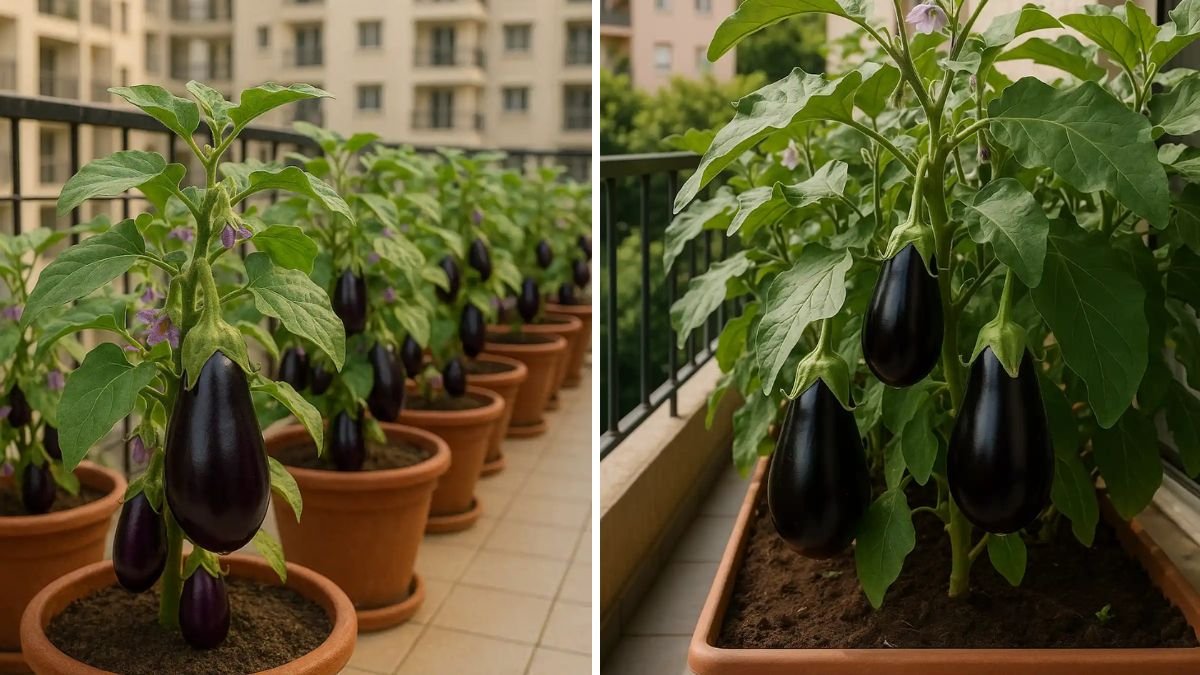
Brinjal, also known as eggplant or aubergine, is a versatile and nutrient-rich vegetable that can be easily grown at home. Its glossy purple fruits not only enhance your meals but also provide vitamins, minerals, and antioxidants that promote a healthy diet. With the right techniques, you can cultivate healthy brinjal plants in your garden, backyard, or even in containers, enjoying fresh, pesticide-free vegetables straight from your home.
This guide will take you through everything you need to know about growing brinjal at home—from seed selection and soil preparation to planting, care, pest management, and harvesting.
🌿 Why Grow Brinjal at Home?
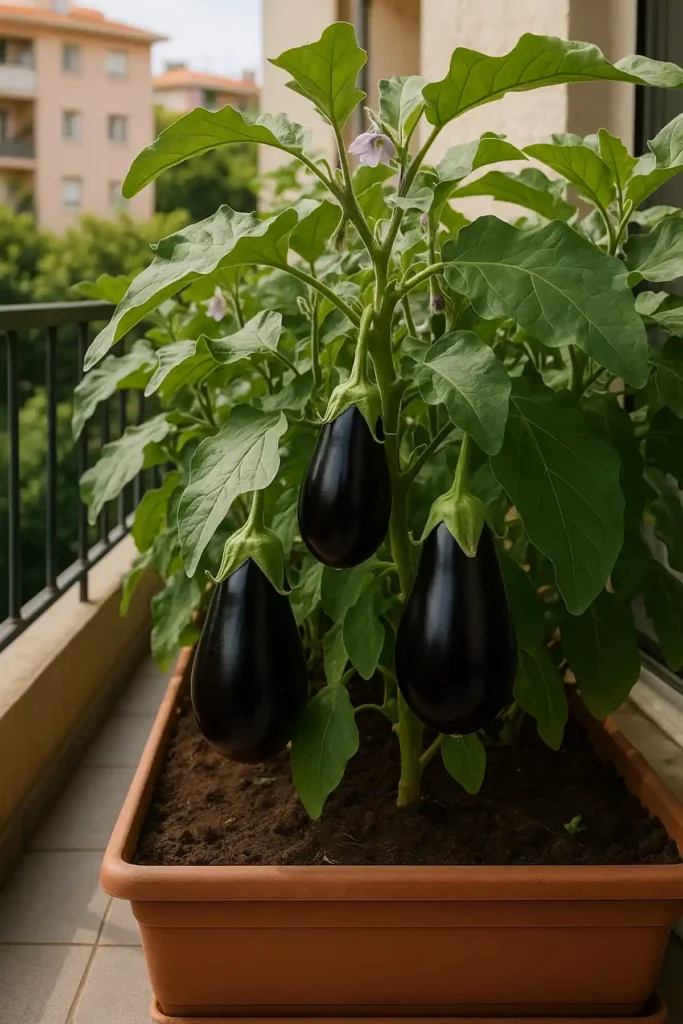
Home-grown brinjal has numerous advantages:
- Freshness and flavor: Nothing beats the taste of freshly picked brinjals.
- Nutritional benefits: Rich in fiber, vitamins B1 and B6, vitamin C, potassium, and antioxidants.
- Cost-effective: Reduce your dependency on store-bought vegetables.
- Safe and organic: Control over pesticides and chemical exposure.
- Space-efficient: Grows well in pots, small garden beds, or terraces.
Growing brinjal at home allows you to enjoy organic vegetables while enhancing your garden’s greenery.
🪴 Choosing the Right Brinjal Variety
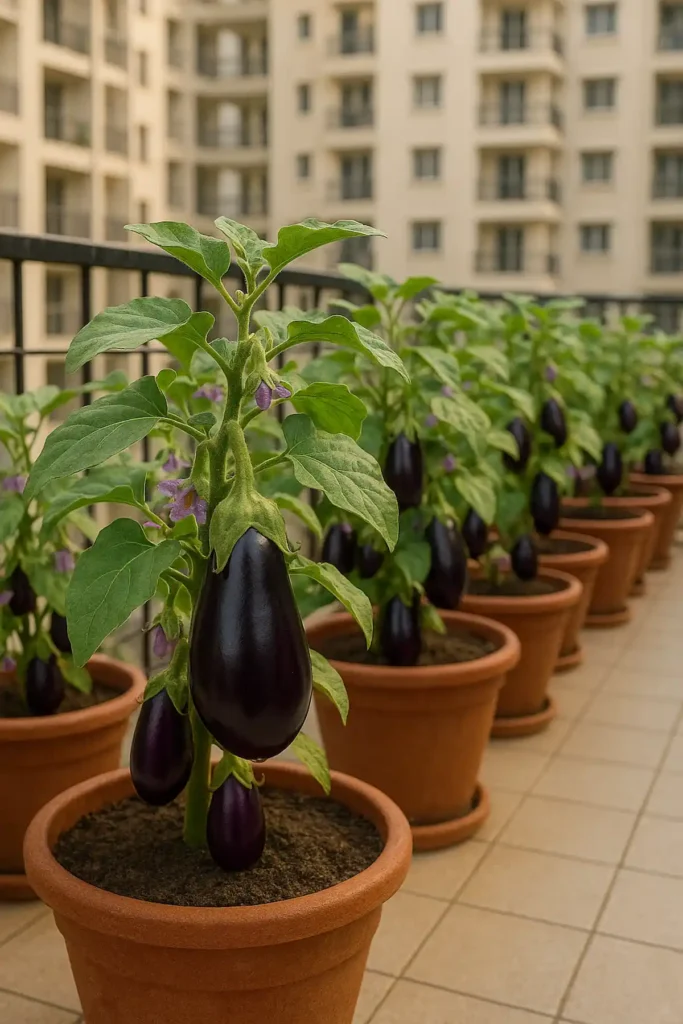
Several varieties of brinjal are suitable for home cultivation:
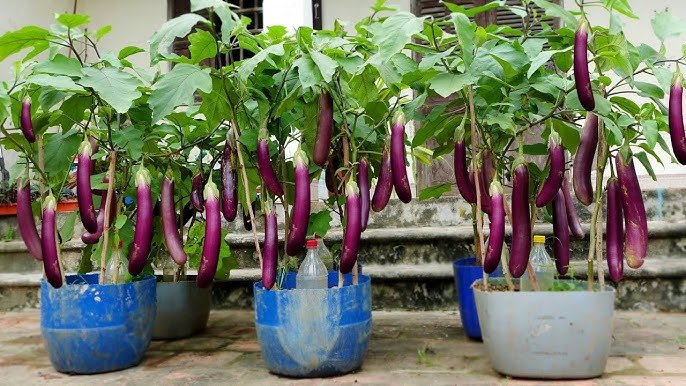
- Purple Long Brinjal: Long, slender, and deep purple in color. Ideal for curries and stir-fries.
- Round Brinjal: Medium-sized, round, and tender. Perfect for stuffing or pickling.
- Baby Brinjal: Small, tender, and ideal for curries and decorative dishes.
- Hybrid Varieties: High-yielding and disease-resistant varieties for better harvest.
Choose seeds based on your culinary preferences and growing space. For beginners, the Purple Long Brinjal is easy to grow and widely available.
🌱 Seed Selection and Preparation
Quality seeds are the foundation of a healthy brinjal crop:
- Select seeds from trusted suppliers to ensure high germination rates.
- Use fresh seeds, as old seeds may have reduced viability.
- Soak seeds in warm water for 12–24 hours before sowing to enhance germination.
🪴 Soil Preparation for Brinjal
Brinjal thrives in fertile, well-draining soil with good moisture retention.
Soil Requirements:
- pH: 5.5–6.8 (slightly acidic to neutral)
- Texture: Loamy soil enriched with organic matter
- Drainage: Avoid waterlogged areas to prevent root rot
Soil Preparation Steps:
- Clear the planting area of weeds and debris.
- Loosen the soil to a depth of 12–15 inches.
- Mix in compost, vermicompost, or well-rotted manure for nutrients.
- Add a handful of bone meal or neem cake to support growth and deter pests.
Container Gardening Tip:
Use large containers (12–15 inches deep) with drainage holes for balcony or terrace gardening.
✂️ Sowing Brinjal Seeds
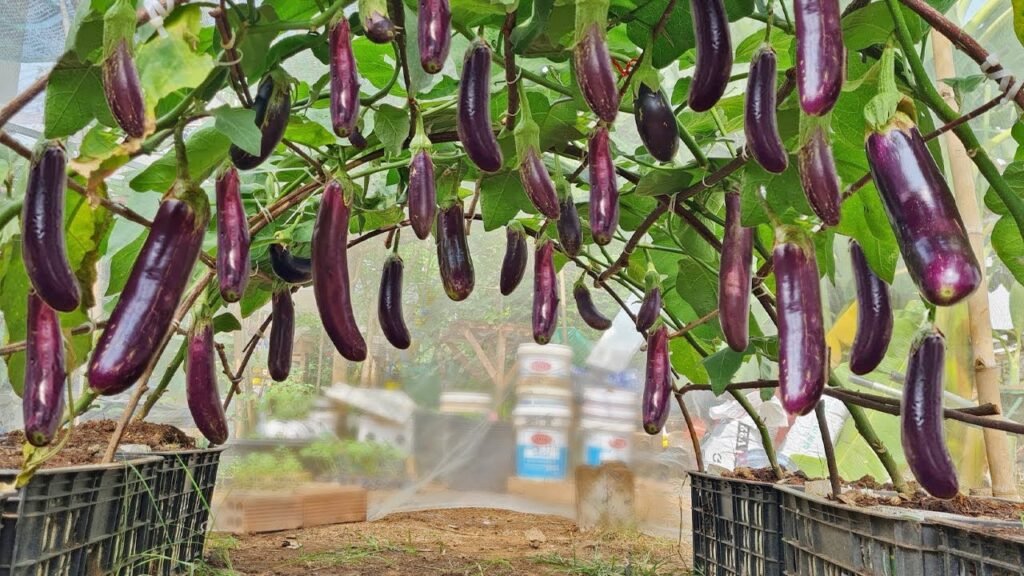
Brinjal seeds can be started in nursery trays, seedling pots, or directly in the garden.
Nursery Method (Recommended for Beginners):
- Fill seed trays or small pots with a light, well-draining seedling mix.
- Sow seeds ½ inch deep and cover lightly with soil.
- Water gently and keep the soil consistently moist.
- Place trays in warm, sunny spots or under grow lights.
- Seeds typically germinate in 7–14 days.
Direct Sowing Method:
- Sow seeds directly into prepared garden beds or containers.
- Ensure spacing of 18–24 inches between plants for proper growth.
☀️ Sunlight and Temperature Requirements
Brinjal is a sun-loving plant:
- Requires 6–8 hours of direct sunlight daily.
- Optimal temperature: 20°C–30°C for germination and growth.
- Avoid frost, as brinjal is sensitive to cold weather.
Proper sunlight ensures healthy foliage, strong stems, and abundant flowering.
💧 Watering and Care
Consistent moisture is crucial for brinjal growth:
- Water regularly: Keep the soil moist, especially during flowering and fruit development.
- Avoid waterlogging: Excess water can cause root rot and fungal diseases.
- Mulch: Apply organic mulch to retain soil moisture and suppress weeds.
Additional Care Tips:
- Stake taller plants to prevent bending or breaking.
- Pinch off early flowers to encourage stronger root development.
- Monitor soil moisture, especially in hot or dry weather.
🌿 Fertilization for Healthy Growth
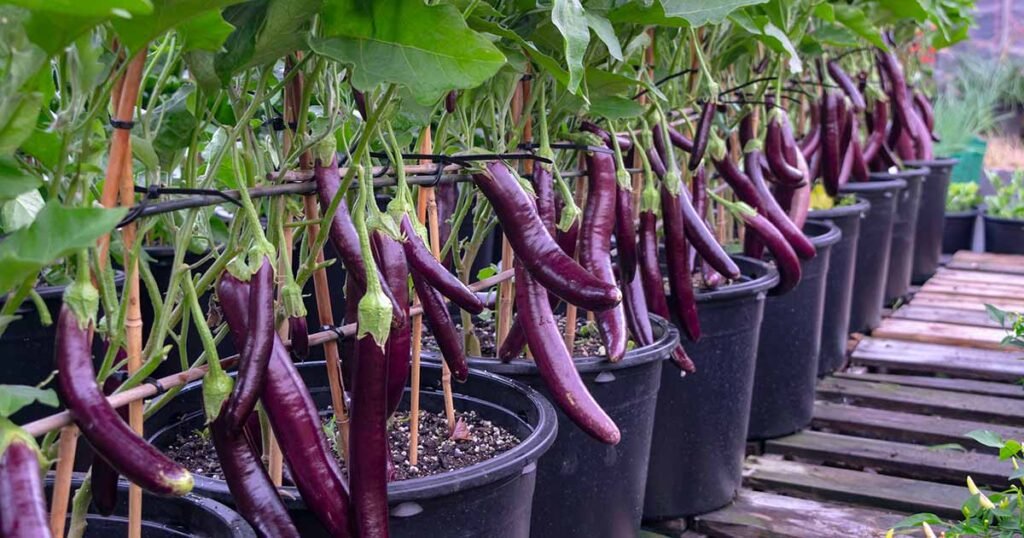
Brinjal benefits from organic fertilizers and compost:
- Apply compost or vermicompost every 3–4 weeks.
- Use organic liquid fertilizers like cow dung slurry or seaweed extract to promote flowering and fruiting.
- Avoid excessive nitrogen fertilizers; they promote leaf growth but reduce flowering.
Tip: Side-dress with compost when fruits start forming to boost pod development.
🐛 Pest and Disease Management
Brinjal is prone to some pests and diseases, but organic management works effectively:
Common Pests:
- Aphids: Spray neem oil or soap solution
- Whiteflies: Use yellow sticky traps or neem extract
- Fruit borers: Cover flowers or fruits with fine mesh
Common Diseases:
- Fusarium wilt: Use disease-resistant varieties and rotate crops
- Powdery mildew: Ensure proper spacing and avoid overhead watering
- Leaf spot: Remove affected leaves and apply organic fungicides
Regular monitoring and organic care ensure healthy plants and abundant harvests.
🌸 Flowering and Fruit Development
Brinjal produces beautiful purple flowers that later develop into fruits:
- Flowers appear 6–8 weeks after transplanting.
- Pollination can be assisted by bees or hand-pollination in indoor gardens.
- Fruits start small and gradually grow to 6–12 inches long, depending on variety.
Tip: Support developing fruits with soft ties to prevent bending or damage.
✂️ Harvesting Brinjal
Timely harvesting ensures tender, flavorful vegetables:
- Harvest when the skin is glossy and firm.
- Avoid overripe fruits, as they become bitter and spongy.
- Cut fruits with a sharp knife or scissors, leaving a small stem attached.
- Regular harvesting encourages continuous fruiting.
🥗 Culinary Uses of Brinjal
Brinjal is extremely versatile in the kitchen:
- Stir-fries, curries, and gravies
- Roasted or grilled as a side dish
- Stuffed or baked recipes
- Pickles and chutneys
Fresh, home-grown brinjal enhances taste and nutrition in everyday meals.
🔁 Tips for Continuous Home Cultivation
To maintain a productive brinjal garden:
- Succession planting: Sow seeds every 2–3 months for year-round harvest.
- Rotate crops: Prevent soil depletion and reduce pest problems.
- Regular pruning: Remove yellow or damaged leaves to encourage new growth.
- Monitor plants: Watch for pests and diseases to ensure high yield.
This approach guarantees continuous, healthy, and abundant harvests.
🌟 Benefits of Growing Brinjal at Home
- Health benefits: Rich in antioxidants and vitamins for overall wellness
- Cost-effective: Reduces dependency on market vegetables
- Organic and safe: Control over pesticides and chemicals
- Aesthetic value: Beautiful flowering plants enhance garden beauty
- Satisfying hobby: Promotes relaxation and sustainable living
🌿 Final Thoughts
Growing brinjal at home is rewarding, simple, and sustainable. With proper seed selection, soil preparation, watering, fertilization, and pest management, you can enjoy fresh, tender, and nutrient-rich brinjals from your garden, balcony, or terrace.
Whether you’re a beginner or an experienced gardener, brinjal is an excellent choice for home vegetable cultivation. Start today, and experience the joy of harvesting and cooking your own organic, delicious brinjals straight from your garden.
Fresh, healthy, and homegrown—your brinjal garden is just a few steps away!