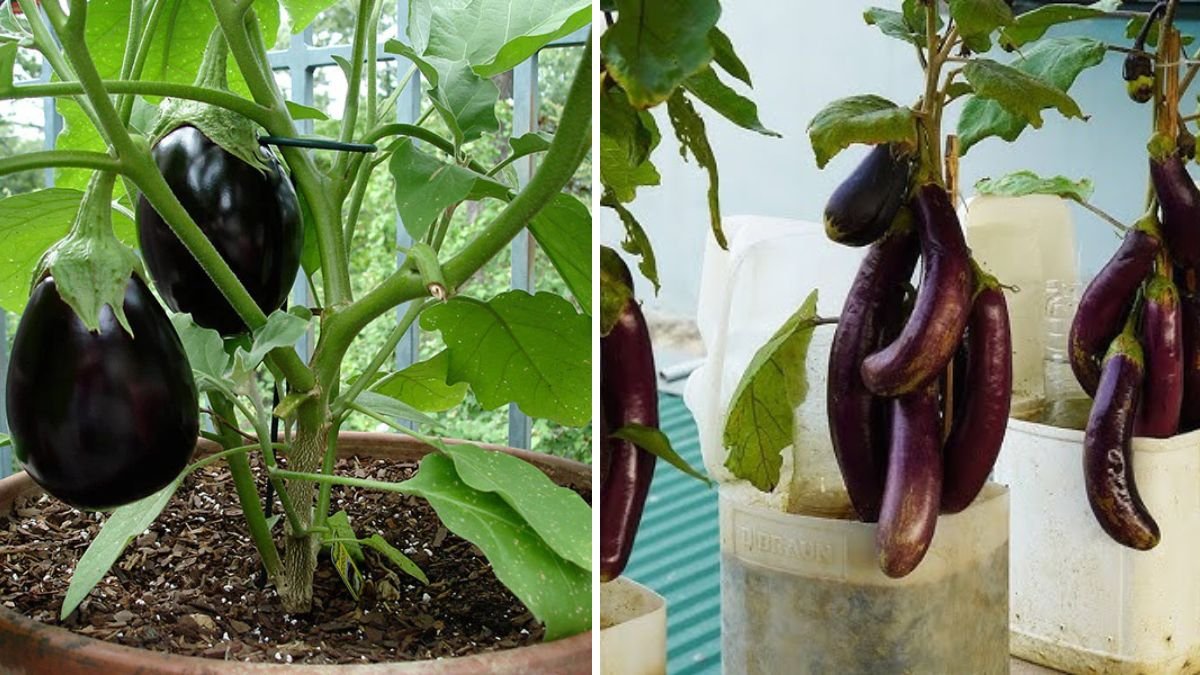
Eggplants—also known as brinjals or aubergines—are among the most rewarding vegetables you can grow in your home garden. Their glossy skins, rich flavors, and culinary versatility make them a favorite for many gardeners. But what if your plants aren’t producing as many fruits as you hoped? The good news is that with a few simple techniques, you can dramatically increase your eggplant yield.
In this comprehensive guide, you’ll learn everything you need to know to grow stronger plants, encourage more flowers, reduce flower drop, and enjoy a continuous supply of fresh eggplants right from your garden. Whether you’re a beginner or an experienced gardener, these tricks will transform the way you grow eggplants forever.
1. Choose the Right Variety for Massive Yields
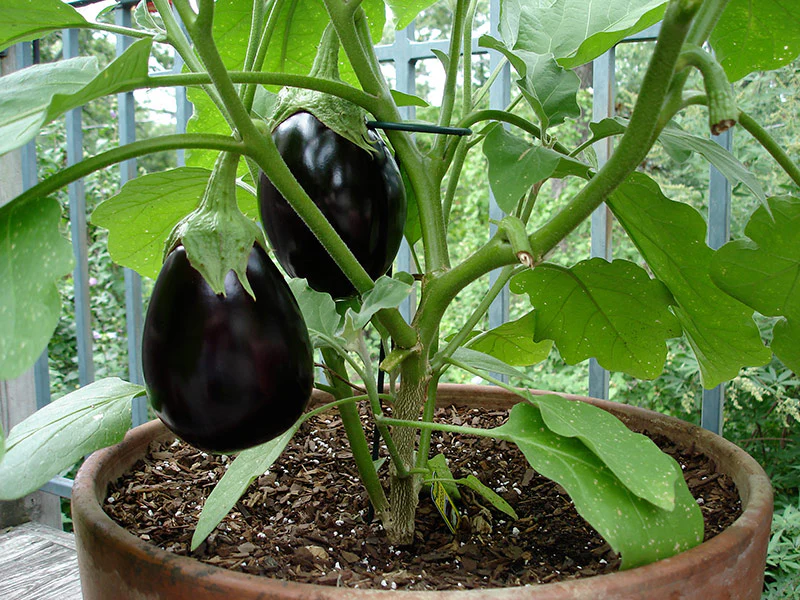
Your path to a bigger harvest begins with choosing the right type of eggplant. Some varieties naturally produce more fruits, grow faster, and resist diseases better.
Top High-Yield Eggplant Varieties:
- Black Beauty: Classic, large, and very productive.
- Long Purple: Thin, elongated fruits with constant output.
- Thai Green & Thai Purple: Heat-tolerant and early-fruiting.
- Pusa Purple Cluster: Ideal for tropical climates and heavy production.
- Ping Tung Long: Famous for producing dozens of fruits per plant.
Choose a variety suited for your climate and desired fruit shape.
2. Start with Healthy Seedlings
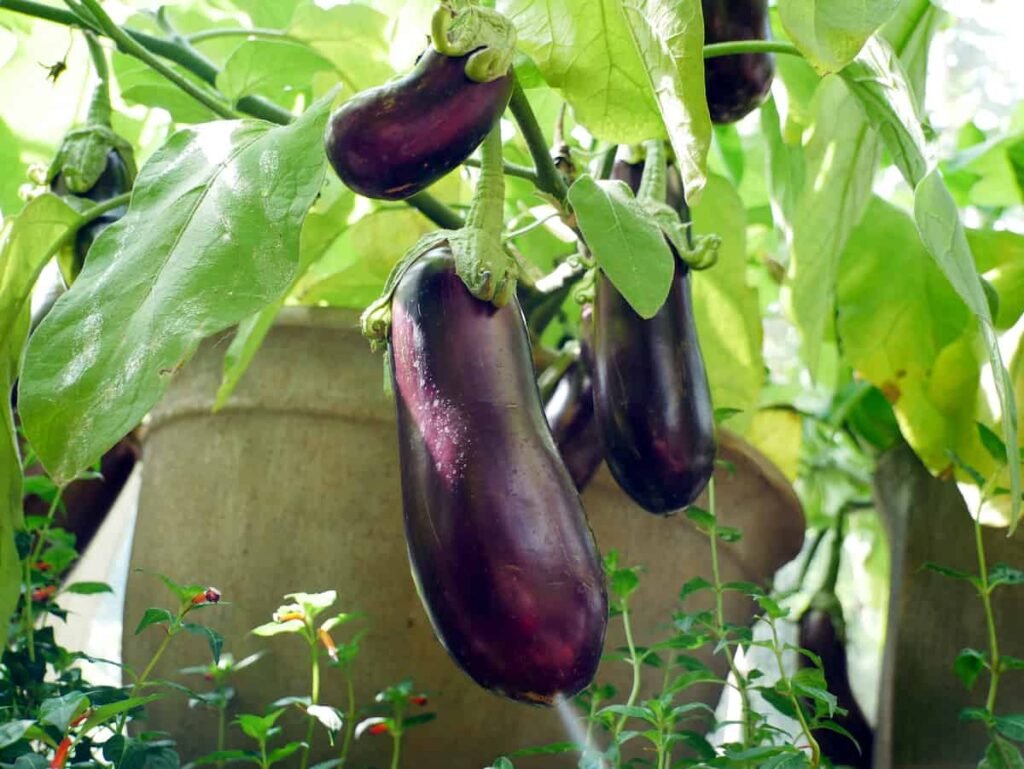
Healthy seedlings grow into strong, productive plants.
Seedling Tips for Bigger Harvests:
- Use well-drained soil and ensure good aeration.
- Provide 6–8 hours of full sunlight daily.
- Keep seedlings warm; eggplants love heat (25–30°C).
- To prevent legginess, allow good airflow and avoid over-watering.
- Harden seedlings for 5–7 days before transplanting outdoors.
Healthy seedlings grow faster, flower earlier, and produce more fruits.
3. Plant Them in the Right Spot
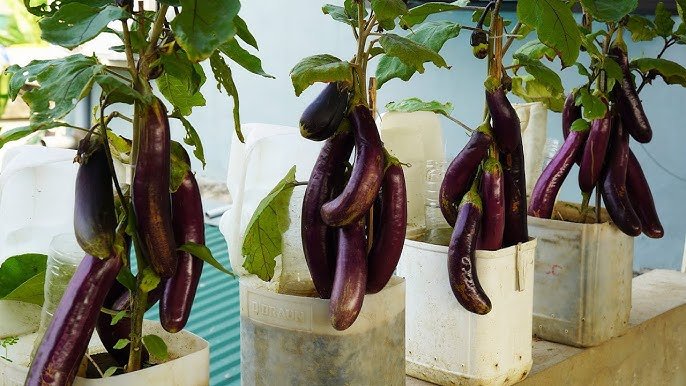
Eggplants need sunlight and warmth like they need air. If they don’t get 6–8 hours of direct sunlight, fruit production slows.
Optimal Growing Conditions:
- Sunlight: Full sun
- Temperature: 22–35°C
- Soil: Fertile, well-drained, slightly acidic (pH 5.5–6.8)
- Spacing: 45–60 cm between plants
Crowding plants reduces airflow and increases disease risk, so give them enough space to thrive.
4. Feed Your Plants the Right Nutrients
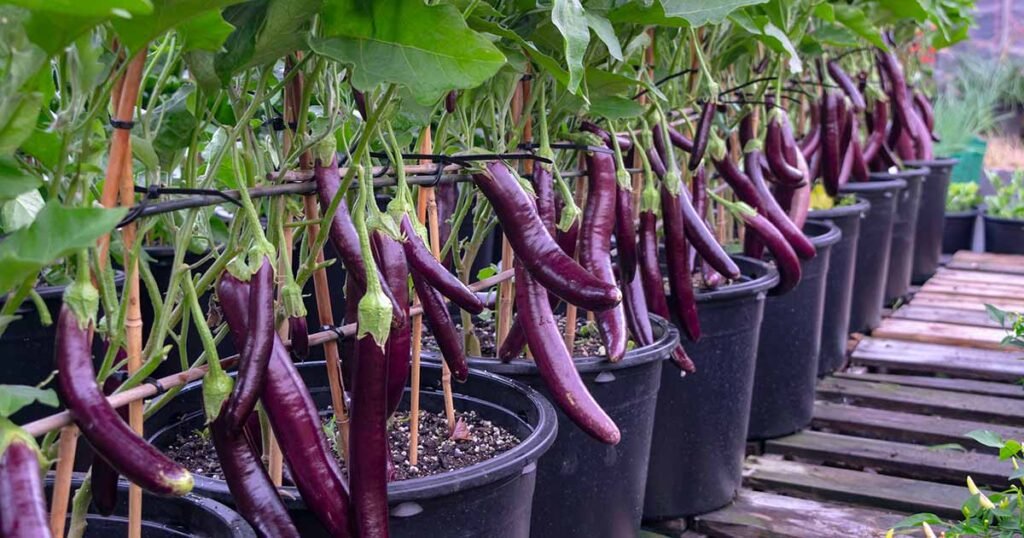
Eggplants are heavy feeders. They need consistent nutrition to produce multiple flowers and fruits.
Best Fertilizer Strategy:
Before Planting
Mix into the soil:
- Compost or well-rotted cow dung
- Bone meal (for root development)
- Neem cake (prevents soil pests)
During Growth
Use a fertilizer schedule:
- Nitrogen (N): For early leaf growth (but use sparingly later)
- Phosphorus (P): Promotes flowering
- Potassium (K): Boosts fruit formation
- Calcium & Magnesium: Prevents blossom end rot
Organic Fertilizer Options:
- Compost tea
- Fish amino acid (FAA)
- Banana peel fertilizer (high in potassium)
- Wood ash (in small amounts)
- Vermicompost
Feed your plants every 15–20 days for maximum yield.
5. Master Watering Techniques
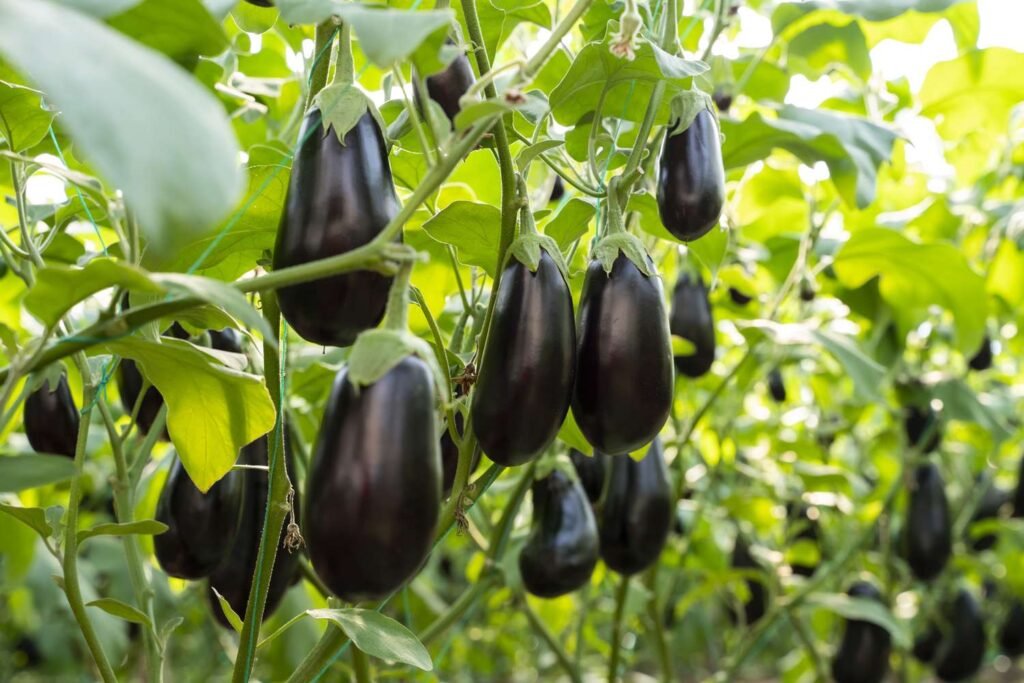
Eggplants thrive in moist but not soggy soil. Uneven watering leads to flower drop and poor fruit formation.
Watering Tips:
- Water deeply 2–3 times a week.
- Allow topsoil to dry slightly between watering.
- Use mulch (dry leaves, straw, cocopeat) to retain moisture.
- Water at the base, not overhead, to avoid fungal disease.
Consistent moisture = steady flowering and fruiting.
6. Prune for More Flowers and Better Airflow
Pruning is a secret many gardeners ignore—but it makes a huge difference!
How Pruning Boosts Yield:
- Encourages strong branches
- Improves airflow
- Reduces disease
- Redirects plant energy to fruits
How to Prune Eggplants:
- Remove the first flowers until the plant is 30–40 cm tall—this helps the plant establish roots.
- Pinch off suckers growing near the base.
- Keep only 3–4 main branches.
- Remove yellow or dried leaves regularly.
Well-pruned plants produce more and larger fruits.
7. Hand Pollination for Massive Increase in Fruit Set
In some places, eggplants do not get enough natural pollination due to lack of bees or high humidity.
How to Hand Pollinate:
- Shake the plant gently in the morning.
- Use a soft brush or cotton bud to transfer pollen between flowers.
- You’ll notice more fruits developing within a week!
This simple trick can double your fruit production.
8. Provide Support for Bigger Fruits
A supported plant channels more energy into fruiting rather than holding itself up.
Use:
- Bamboo stakes
- Tomato cages
- Garden twine
Support prevents branches from breaking under the weight of fruits and helps them stay healthy longer.
9. Control Pests Early
Eggplants attract pests like:
- Aphids
- Whiteflies
- Spider mites
- Mealybugs
- Fruit borer
- Flea beetles
Organic Pest Control Solutions:
- Neem oil spray every 7–10 days
- Soap + water spray for soft-bodied insects
- Sticky traps for whiteflies
- Bacillus thuringiensis (BT) for fruit borers
- Garlic–chili spray for general protection
Healthy, pest-free plants produce more flowers and fruits.
10. Harvest Regularly to Encourage More Production
The more you harvest, the more the plant produces.
Signs Eggplants Are Ready to Harvest:
- Glossy, firm skin
- Seeds are soft
- Fruit feels heavy for its size
Do not leave fruits on the plant too long—they become seedy and stop new ones from forming.
Final Thoughts
Growing more eggplants isn’t complicated—it’s all about giving your plants the right conditions, nutrition, and care. By following these simple techniques—proper sunlight, pruning, hand pollination, balanced feeding, and pest control—you can turn a small garden into a highly productive eggplant paradise.
With just a little effort, you’ll enjoy continuous harvests, richer flavors, and healthier plants throughout the season. Start today, and enjoy the satisfaction of growing more eggplants than ever before! 🌱🍆