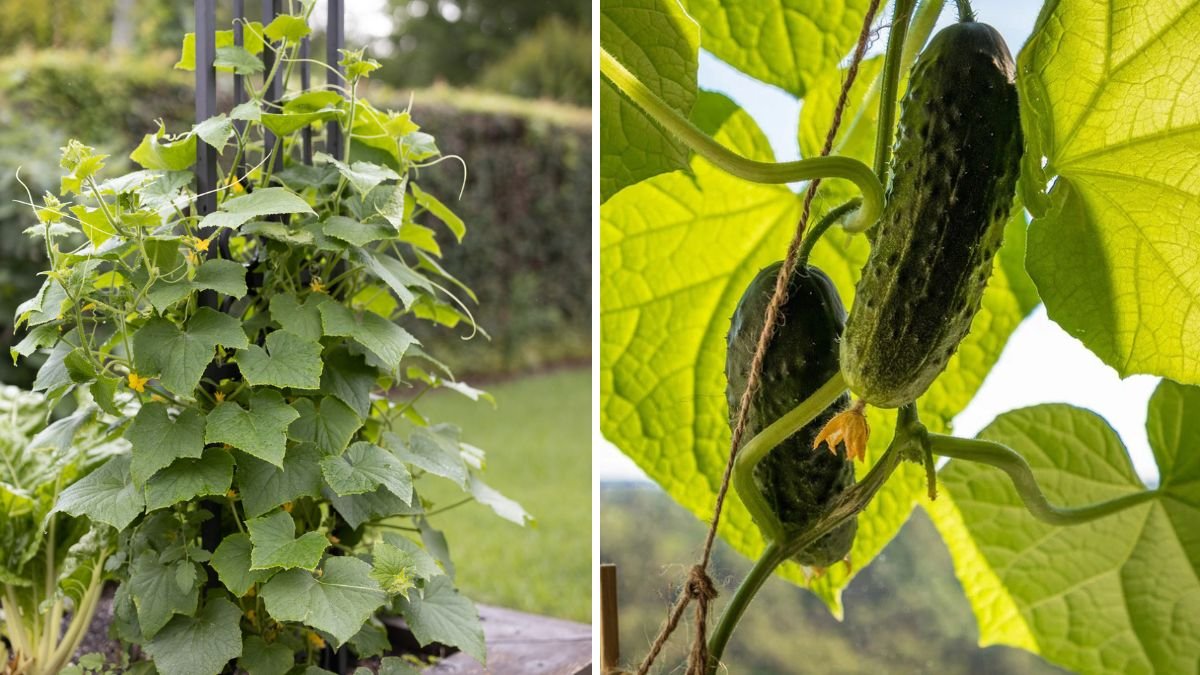
Cucumbers are one of the most refreshing and versatile vegetables in any garden. Whether in salads, pickles, or smoothies, nothing beats the flavor of fresh, homegrown cucumbers. Growing them at home is not only rewarding but also cost-effective, sustainable, and surprisingly easy—even if you have limited space.
This guide will take you through every step, from choosing the right variety to harvesting crisp cucumbers, while sharing practical tips and tricks for a thriving home garden.
🌱 1. Why Grow Cucumbers at Home?
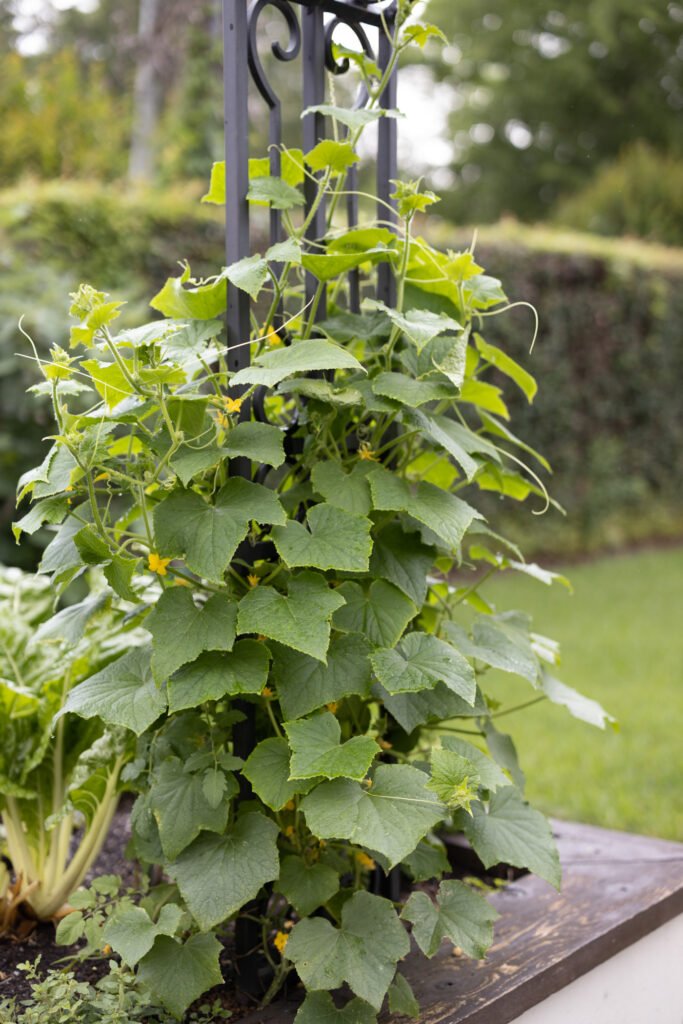
Homegrown cucumbers offer several advantages over store-bought ones:
✔ Freshness and Flavor
- Pick cucumbers at their peak for maximum crispness
- Free from preservatives and pesticides
✔ Cost Savings
- Seeds or seedlings are inexpensive compared to repeated grocery purchases
✔ Space Efficiency
- Cucumbers can thrive in pots, vertical gardens, or raised beds
✔ Sustainability
- Reduces food miles and packaging waste
✔ Variety
- Grow unique cucumber types not available in stores, like mini or heirloom varieties
🥒 2. Choosing the Right Cucumber Variety
Choosing the right variety ensures faster growth, better yield, and fewer pests.
🌿 Popular Varieties for Home Gardens:
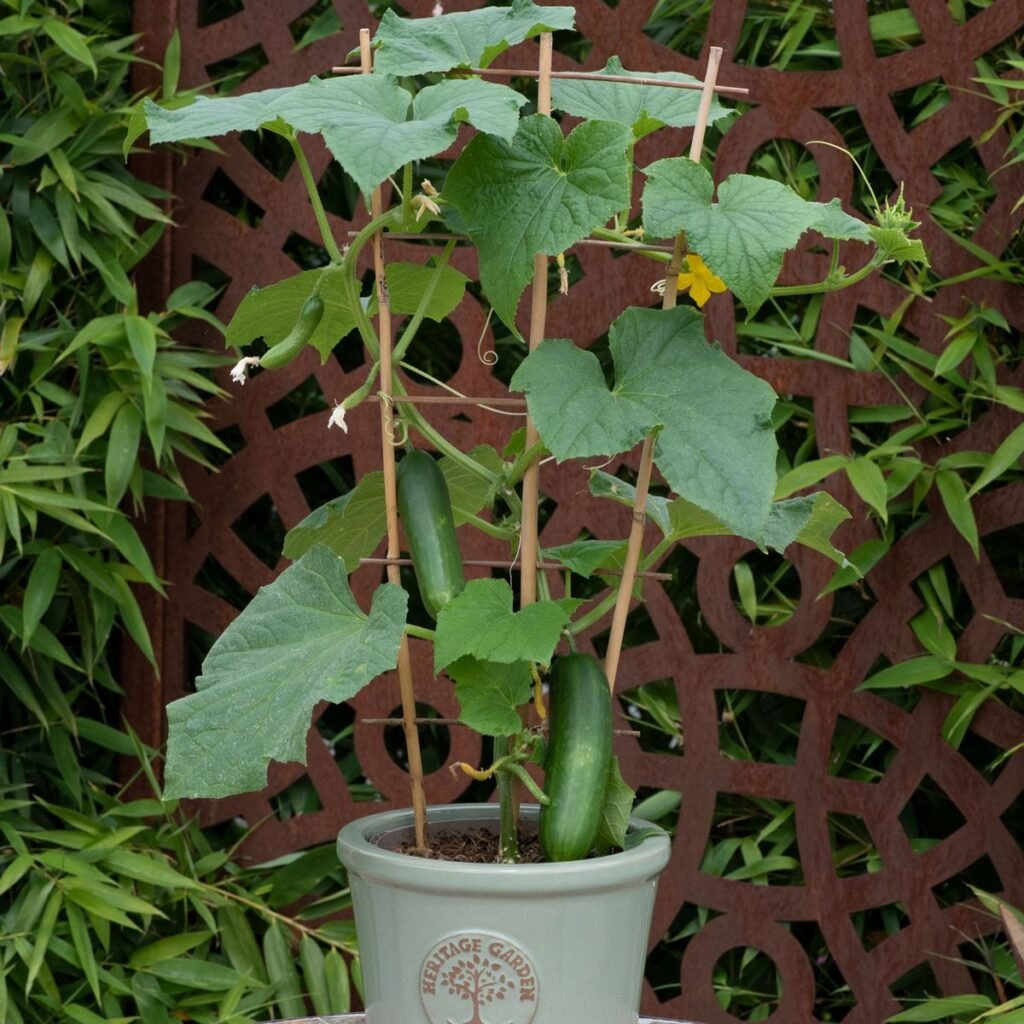
- Bush cucumbers: Compact, ideal for pots
- Vining cucumbers: Produce larger yields, great for trellises
- Pickling cucumbers: Small, crunchy, perfect for pickles
- Heirloom varieties: Unique flavor and appearance
Tip: Choose varieties suited to your climate and intended use (salad, pickling, or snacking).
🌞 3. Ideal Growing Conditions
Cucumbers are warm-season plants that thrive in specific conditions:
✔ Temperature
- 18°C–30°C (65°F–86°F)
- Sensitive to frost; wait until soil is warm
✔ Sunlight
- At least 6–8 hours of direct sunlight daily
✔ Soil
- Well-draining, fertile, and slightly acidic to neutral (pH 6.0–7.0)
- Enriched with compost or organic matter
✔ Water
- Consistent moisture is essential, especially during flowering and fruiting
- Avoid wetting leaves excessively to prevent fungal diseases
🪴 4. Planting Cucumbers: Seeds vs. Seedlings
From Seeds:
- Sow seeds 1–2 cm deep in moist soil
- Space seeds 30–60 cm apart depending on variety
- Germination occurs in 7–10 days with adequate warmth
From Seedlings:
- Start seeds indoors 3–4 weeks before transplanting
- Transplant seedlings with 2–3 true leaves
- Water immediately after transplanting to reduce shock
Using seedlings gives a head start and often faster fruiting.
🌿 5. Trellising and Space Management
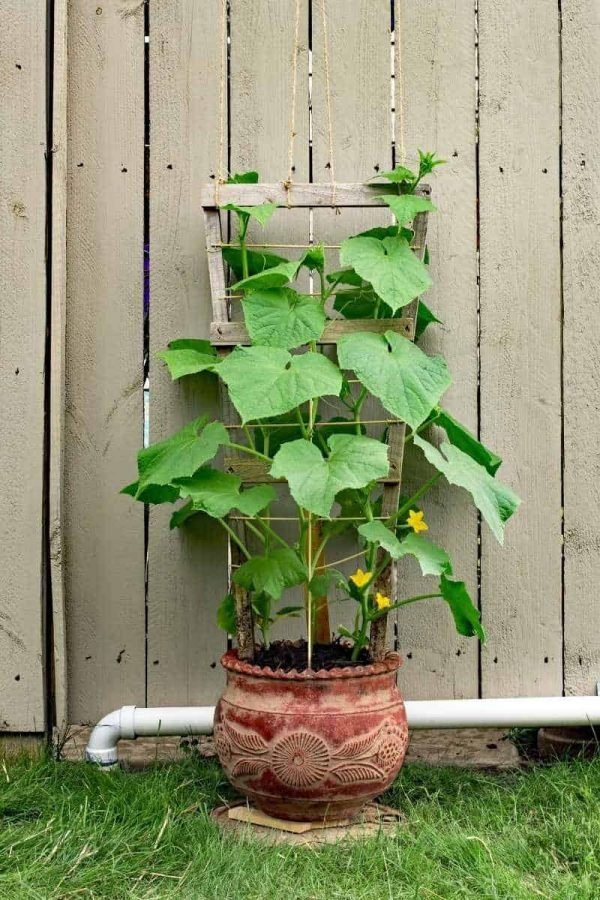
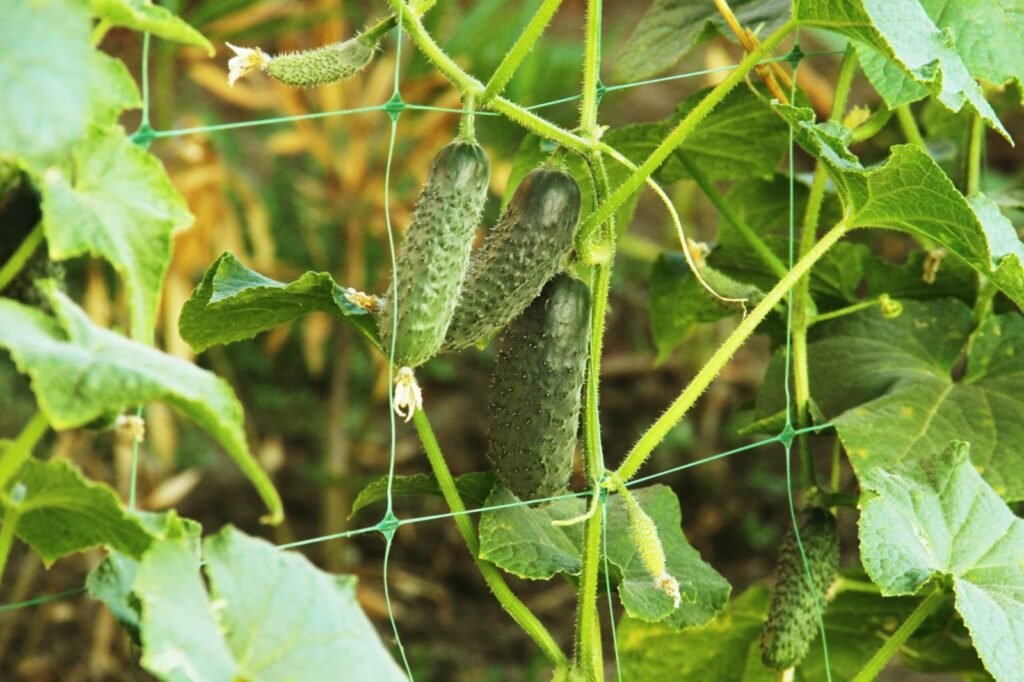
Cucumbers grow best when supported vertically. Trellises save space and improve air circulation.
✔ Benefits of Trellising:
- Keeps fruits clean and straight
- Reduces pest and disease issues
- Makes harvesting easier
✔ DIY Vertical Options:
- Wooden or bamboo trellises
- Wire mesh or nets
- Old ladders or fences
Bush varieties can grow in pots without support, but vining varieties benefit from climbing structures.
💧 6. Watering and Mulching for Healthy Growth
Cucumbers need consistent moisture for tender, juicy fruits.
✔ Watering Tips:
- Water at the base, 2–3 times per week
- Avoid wetting leaves to prevent powdery mildew
- Mulch soil to retain moisture
✔ Mulching Benefits:
- Conserves water
- Prevents weed growth
- Maintains stable soil temperature
- Adds organic matter as mulch decomposes
Straw, dried leaves, or grass clippings are perfect mulch materials.
🌱 7. Feeding Cucumbers for Maximum Yield
Cucumbers are heavy feeders and require nutrients throughout growth.
✔ Fertilizer Tips:
- Apply balanced organic fertilizer at planting
- Side-dress with compost or manure every 3–4 weeks
- Liquid seaweed or compost tea during flowering enhances fruiting
Proper nutrition ensures larger, crisper fruits and healthier plants.
🌿 8. Pollination: Ensuring Fruiting Success
Cucumbers need pollination for fruit production.
✔ Tips:
- Encourage pollinators like bees by planting flowers nearby
- Hand-pollinate if natural pollination is limited (use a brush to transfer pollen)
- Some varieties are parthenocarpic and do not require pollination
Successful pollination = more and bigger cucumbers.
🪱 9. Pest and Disease Management
Cucumbers can be vulnerable to pests and diseases, but simple preventive measures help.
✔ Common Pests:
- Aphids, cucumber beetles, spider mites
✔ Organic Solutions:
- Neem oil spray
- Handpick insects
- Companion plants like marigolds deter pests
✔ Common Diseases:
- Powdery mildew, downy mildew, root rot
✔ Prevention:
- Ensure good airflow with proper spacing
- Avoid overhead watering
- Remove infected leaves promptly
🌞 10. Harvesting Cucumbers
Timing is crucial for sweet, crisp cucumbers.
✔ Signs for Harvesting:
- Fruits reach desired size (depends on variety)
- Skin is firm and green, not yellowing
- Harvest regularly to encourage new growth
✔ Harvesting Tips:
- Use scissors or a knife to avoid damaging the vine
- Pick in the morning for best flavor and crispness
- Frequent harvesting = continuous production
Overripe cucumbers become bitter and reduce overall yield.
🌿 11. Creative Gardening Ideas for Cucumbers
Maximize your cucumber harvest with smart techniques:
✔ Companion Planting
- Beans, radishes, and lettuce grow well nearby
- Repel pests naturally
✔ Regrow from Kitchen Scraps
- Some cucumber seeds can be sprouted indoors for new plants
✔ Container Gardening
- Grow bush varieties in pots with trellises for limited space
- Perfect for balconies or patios
✔ Vertical Hydroponics
- Ideal for year-round production indoors
These ideas save space, reduce costs, and boost efficiency.
🥒 12. Benefits of Homegrown Cucumbers
Growing cucumbers at home is not just about taste—it brings multiple benefits:
✔ Healthier Produce
- Free from chemicals and preservatives
- Rich in vitamins and hydration
✔ Economic Savings
- Less need to buy expensive vegetables
- Saves money over the long term
✔ Sustainability
- Reduce food packaging and carbon footprint
- Encourage eco-friendly gardening habits
✔ Satisfaction
- Watching your plants grow from seed to fruit is incredibly rewarding
🌱 13. Final Tips for a Successful Cucumber Garden
- Choose the right variety for your space
- Provide support for climbing vines
- Keep soil fertile and moist
- Encourage pollinators or hand-pollinate if needed
- Harvest regularly for continuous production
- Use organic fertilizers and mulching
- Monitor for pests and diseases
Following these simple strategies ensures your cucumbers thrive and reward you with a bountiful harvest.
🌿 Conclusion
Growing cucumbers at home is easy, rewarding, and cost-effective. With the right variety, soil, sunlight, watering, and care, even small-space gardeners can enjoy crisp, juicy cucumbers all season long.
Whether you’re growing for salads, pickles, or snacking, homegrown cucumbers taste fresher and are healthier than store-bought options. Combine these techniques with creative gardening ideas, and your cucumber plants will produce abundantly while saving you time, money, and effort.
Start today, and you’ll soon enjoy the satisfaction of snipping your own fresh cucumbers straight from your garden or balcony.