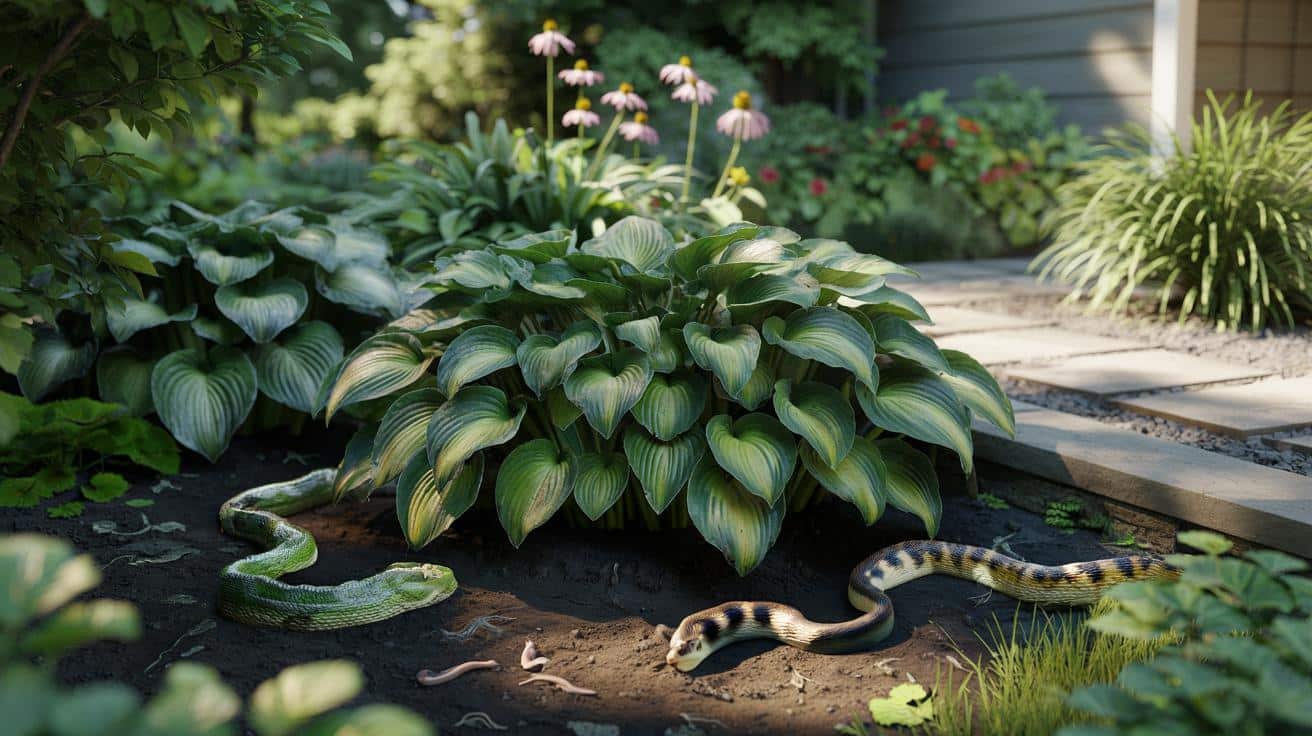
The first scream came from the neighbor’s yard.
One of those raw, unfiltered sounds that slice right through a sunny afternoon. I was watering my tomatoes, listening to the lazy buzz of bees, when I saw her drop her trowel and back away from a flower bed I’d always admired. Long, glossy leaves, white blooms like little chandeliers swaying in the breeze. Underneath them, a dark shape moved. Then another.
By the time I walked over, she’d counted three snakes, all sliding out from beneath the same lush plant she’d proudly planted the previous spring.
The plant everyone compliments… and the one that quietly invites snakes to move in.
The innocent-looking plant that turns into a snake magnet
The plant that caused all the drama that day was hosta.
You know the one: big, juicy leaves, rich greens and blues, sometimes streaked in creamy white, the kind of plant garden centers put right at the front door. Hosta looks soft and welcoming. It fills gaps, hides ugly corners, makes a small yard feel lush and cool.
Yet that same cool, shady, moist cover is like a luxury hotel for snakes. They don’t see beauty. They see shelter. They see cover from predators and a perfect place to wait for prey.
A few weeks after my neighbor’s scare, another friend sent me a photo from her rural backyard. Beautiful border of hostas along a stone wall, the kind you’d find in a gardening magazine. In the middle of the picture: a thick, patterned snake coiled neatly in the shade of the leaves, half-hidden but very much at home.
She told me she’d started noticing shed skins tucked under the foliage every few weeks. At first she thought it was a one-off. Then came the second skin. Then the third. By the time she saw two snakes sunning themselves on the path right next to the bed, she ripped the plants out in one afternoon.
The logic is cruelly simple. Hosta keeps the soil cool and moist, which draws slugs, snails and small insects. Those, in turn, attract frogs, toads and small rodents. And that little food chain is exactly what snakes are wired to follow.
Replace them with more upright plants, with air between stems and soil. Gravel or light mulch around the base leaves fewer hiding spots. Trim back anything that flops onto the ground and creates a dark tunnel. Small changes in shape and spacing can quietly tell snakes, “No vacancy here.”
A lot of people feel guilty about pulling out plants they love. Or they plant hostas right up against the house, then spend summers jumping every time something rustles near the foundation. We’ve all been there, that moment when your own garden suddenly feels like enemy territory.
The good news is you don’t need to sterilize your yard. You don’t have to cut every shrub or nuke every patch of shade. Focus on the hot spots: dense beds near play areas, patios, doors and paths. And be kind to yourself if the garden isn’t “perfect.” Let’s be honest: nobody really does this every single day.
Some herpetologists even joke that “hosta” is just another word for “sized-right snake shelter.” It’s an exaggeration, but there’s a reason you’ll often find little garden snakes curled under those cool leaves in late summer.
- Swap hosta for airy perennials
Think salvias, coneflowers, daylilies, or ornamental grasses that keep most of their foliage off the ground. - Raise the foliage line
Choose varieties and pruning styles that leave a visible gap between soil and leaves, so snakes feel exposed. - Create dry, bright borders
Use stones, light-colored gravel or low-growing herbs like thyme to form a less inviting edge around paths and terraces. - Limit ground clutter
Remove stacked wood, leftover tiles, broken pots and dense ivy near the house – all of them team up with hosta to form a reptile resort. - Choose distance wisely
If you really love hosta, plant small clusters far from seating areas, play zones and entrances, and keep the area around them open and clean.
Living with wildlife… without feeling like your yard is crawling
Once you start noticing how snakes use your garden, you can’t really unsee it. That thick border of ground-cover, the hostas stuffed beneath the deck, the ivy climbing around the shed, it all tells a story about who’s welcome and who isn’t.
Some people decide to embrace a wilder corner at the very back of the property and push risky plants out there, away from daily life. Others go the opposite way and curate every bed so that there’s always light on the soil and nowhere for a reptile to curl up unseen. Both are valid choices, as long as you’re the one deciding, not the snakes.
| Key point | Detail | Value for the reader |
|---|---|---|
| Hosta creates ideal snake shelter | Dense, low leaves, cool moist soil and plenty of prey under the foliage | Helps you identify why snakes keep choosing specific garden spots |
| Garden design can deter snakes | Using upright plants, open soil lines and bright, dry borders near living areas | Lets you enjoy greenery without feeling on edge every time you step outside |
| Small changes beat radical “scorched earth” approaches | Targeted plant swaps and decluttering instead of removing all vegetation | Preserves the beauty of your garden while reducing surprise encounters |
FAQ:
- Question 1Is hosta really that attractive to snakes, or is it just garden folklore?Hosta by itself doesn’t “call” snakes, but the environment it creates absolutely favors them: shade, cool soil, and a steady supply of slugs and small critters. That’s not folklore, that’s basic habitat logic.
- Question 2Which plants should I avoid if I don’t want snakes near my patio?Steer clear of very dense groundcovers and big-leaf, low plants like hosta right next to seating areas. Also think twice about ivy carpets, pachysandra and overgrown shrubs touching the ground.
- Question 3Are all snakes in the garden dangerous?No. Most garden snakes are harmless and shy, and they help control pests. The problem is the stress of surprise encounters, especially with kids or pets, and the small chance of a venomous species depending on where you live.
- Question 4Can I keep my hostas if I love them too much to remove them?You can, but plant them farther from the house and keep the area around them open, clean and well-lit. Combine them with gravel strips or stones instead of deep mulch, and avoid piling objects nearby.
- Question 5What’s one simple change I can make this weekend to discourage snakes?Clear any dense, low vegetation and clutter right along your paths and entrances, especially hosta clumps hugging steps or walls. Even moving or thinning a few plants can break the sense of safety that snakes rely on.