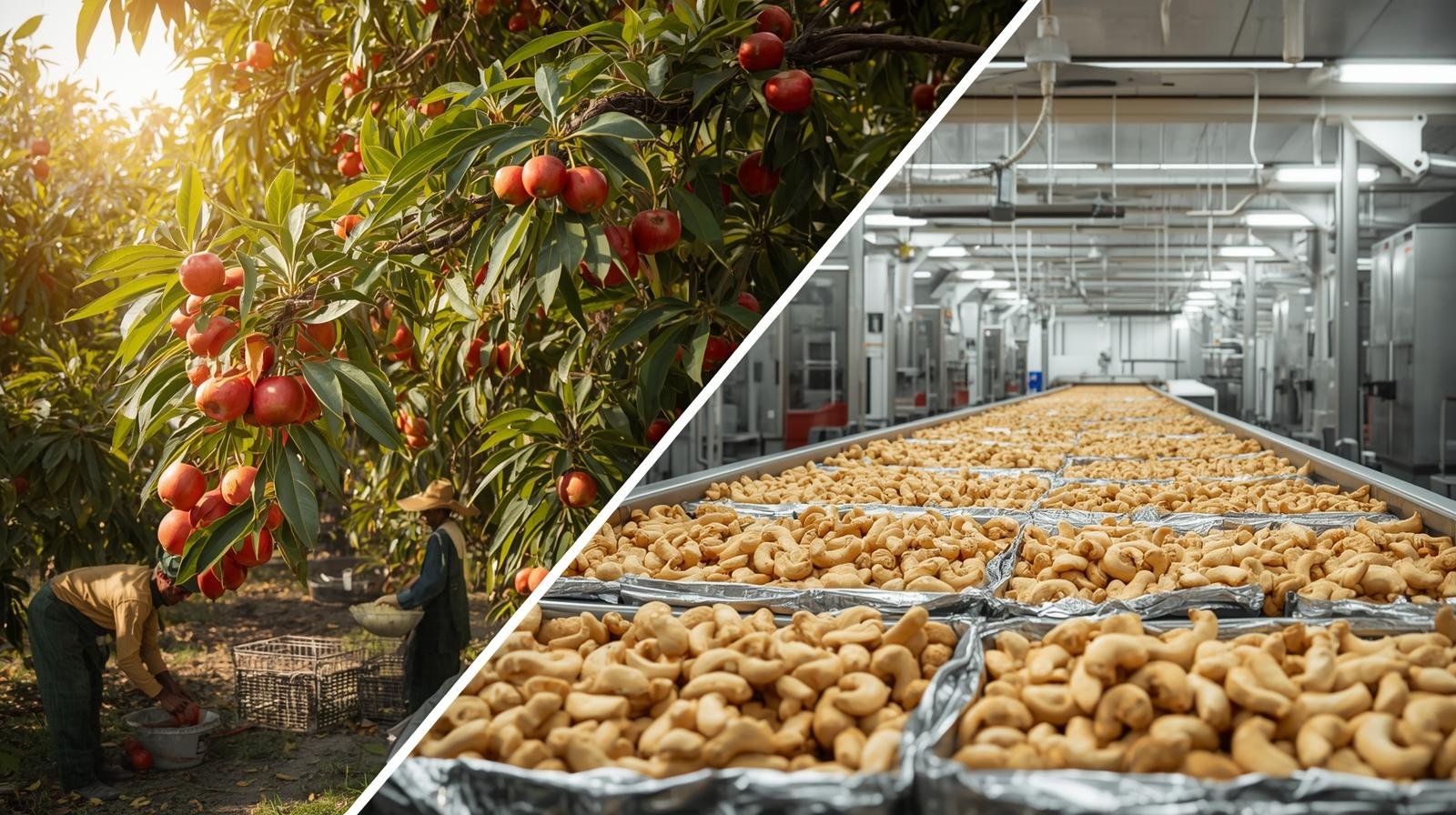
Cashews are one of the most valuable and widely traded nuts in the world. They are consumed as snacks, cooking ingredients, and processed products. Global demand for cashews has increased due to their nutritional benefits. Cashew production is concentrated in tropical regions. Farming requires specific climate conditions and skilled labor. Many countries grow cashews, but production volumes vary greatly. Identifying the largest producer helps understand global agricultural patterns. This article analyzes global data to determine which country grows the most cashews.
Overview of Global Cashew Production
Cashew trees thrive in warm, tropical climates with well-drained soils. Production is concentrated in Asia and Africa. Cashew cultivation requires patience, as trees take years to mature. Harvesting is labor-intensive. Processing involves careful handling due to toxic shells. Global production has grown steadily. Demand from international markets supports expansion. Cashews are a key export commodity.
Factors That Influence Cashew Production
Climate suitability is essential for cashew farming. Access to labor affects harvesting efficiency. Government support encourages cultivation. Availability of processing facilities improves value. Export demand motivates farmers. Infrastructure affects transportation. Research improves yield quality. These factors determine production leadership.
Major Cashew Producing Countries
Several countries are major cashew producers. Vietnam, India, Côte d’Ivoire, Brazil, and Nigeria rank highly. Each country has suitable climates. Production levels differ significantly. Some focus on raw nut production. Others specialize in processing. Comparing data reveals the global leader.
Côte d’Ivoire as the Largest Cashew Producer
According to global agricultural data, Côte d’Ivoire is the largest cashew producer in the world. The country consistently records the highest annual production volume. Favorable climate conditions support large plantations. Government policies encourage expansion. Cashew farming supports rural livelihoods. Production growth has been rapid. Data confirms Côte d’Ivoire’s leading position.
Why Côte d’Ivoire Leads Global Cashew Production
Côte d’Ivoire has vast suitable land for cashew cultivation. Favorable rainfall supports healthy trees. Low production costs encourage expansion. Strong export demand drives growth. Government investment supports farmers. Improved farming practices increase yields. Infrastructure improvements support transportation. These advantages secure leadership.
Role of Cashew Farming in Côte d’Ivoire
Cashew farming plays a major role in the national economy. Millions depend on cashew cultivation. It provides stable rural income. Export earnings support development. Processing industries are expanding locally. Government programs improve value addition. Cashew farming reduces poverty. Its importance continues to grow.
Comparison with Vietnam and India
Vietnam is a leading cashew processor rather than producer. India produces large volumes but less than Côte d’Ivoire. Both countries import raw cashews for processing. Côte d’Ivoire focuses on raw production. Production volumes are higher. Export strategies differ. Data clearly shows Côte d’Ivoire ahead.
Cashew Processing Versus Production
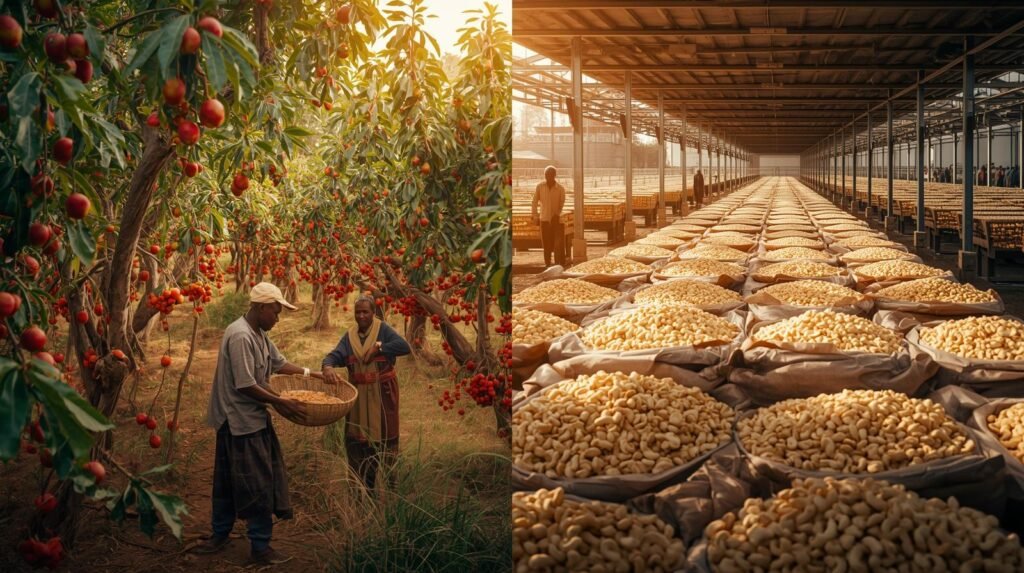
Production refers to raw nut output. Processing converts raw nuts into edible kernels. Vietnam leads in processing capacity. Côte d’Ivoire leads in raw production. Many countries depend on imports. Understanding this difference avoids confusion. Production leadership is based on raw output. Côte d’Ivoire dominates this category.
Global Cashew Production Comparison Table
| Country Name | Production Level | Main Strength | Global Rank |
|---|---|---|---|
| Côte d’Ivoire | Very high | Raw cashew production | First |
| India | High | Domestic production | Second |
| Vietnam | High | Processing capacity | Third |
| Nigeria | Medium | Raw production | Fourth |
| Brazil | Medium | Export oriented | Fifth |
Economic Impact of Cashew Production
Cashew exports generate significant revenue. Farmers benefit from stable demand. Processing adds value locally. Employment opportunities increase. Infrastructure improves through trade. Cashews contribute to agricultural GDP. Rural development is supported. The industry has strong economic importance.
Global Demand and Trade Trends
Global demand for cashews continues to rise. Health awareness boosts consumption. Snack food industries increase usage. Emerging markets show growth. Export volumes are expanding. Quality standards are improving. Processing capacity is increasing. Côte d’Ivoire benefits from strong demand.
Challenges Facing Cashew Producers
Producers face price volatility. Climate change affects yields. Pest management is essential. Processing requires investment. Labor shortages can occur. Market access can be limited. Sustainability concerns are growing. Adaptation is necessary.
Future Outlook of Global Cashew Production
Global cashew production is expected to grow. Demand will remain strong. Côte d’Ivoire is likely to retain leadership. Processing capacity may increase locally. Sustainable practices will expand. Technology will improve yields. Export markets will diversify. Data supports continued growth.