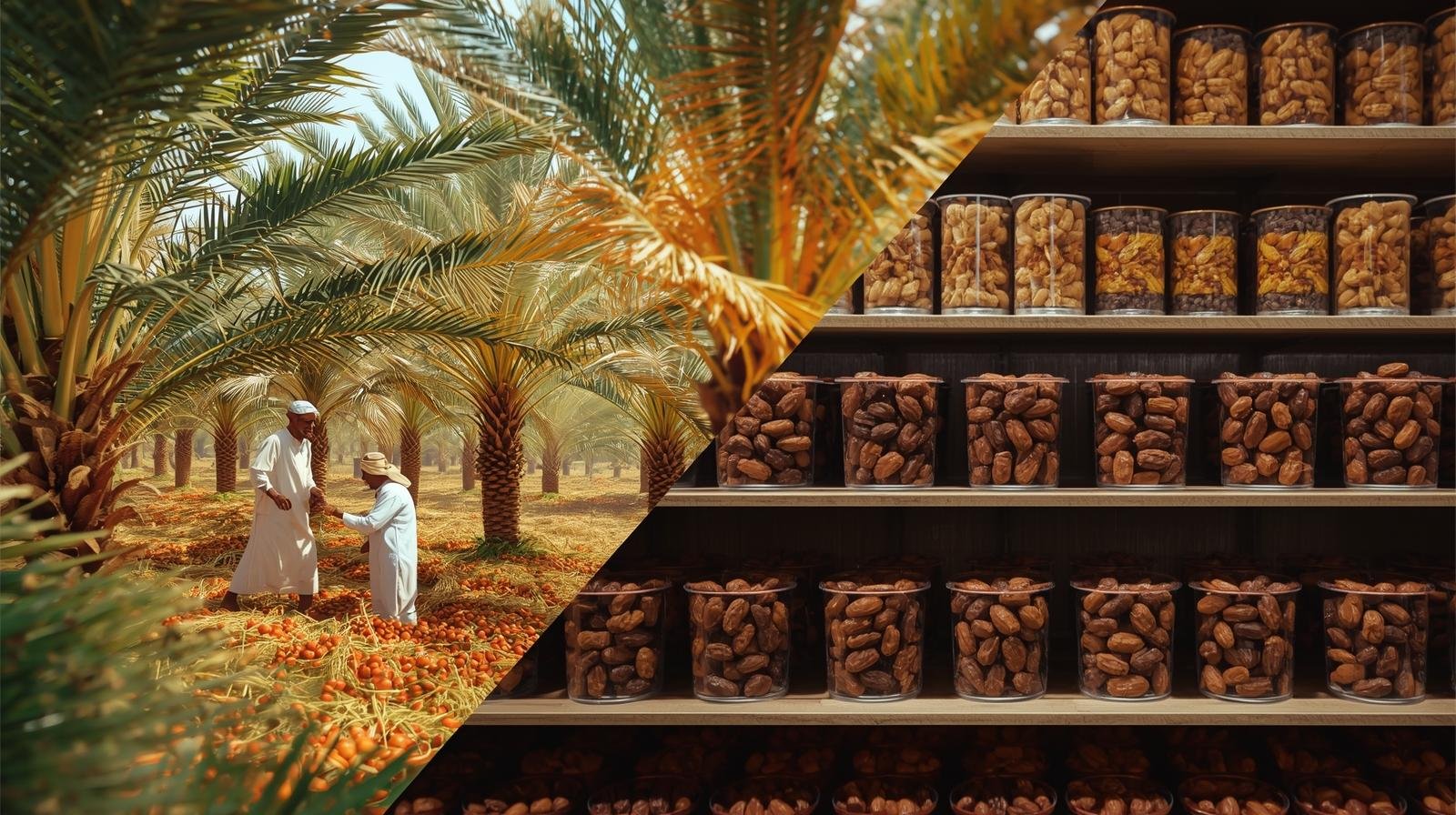
Dates are one of the oldest cultivated fruits in the world and play a vital role in global agriculture. They are a staple food in many regions due to their high energy content and long shelf life. Date palms thrive in hot, arid climates where few other crops can grow successfully. Global demand for dates has increased due to population growth and cultural consumption. Many countries produce dates, but production levels vary greatly. Identifying the largest date-producing country helps understand global food supply patterns. This article analyzes agricultural data to determine which country grows the most dates each year. It also explains the reasons behind that dominance.
Overview of Global Date Production
Date production is concentrated in regions with desert and semi-desert climates. The Middle East and North Africa dominate global output. Date palms require high temperatures and controlled irrigation. Production is measured annually in metric tons. Harvest seasons vary by region. Traditional farming methods coexist with modern techniques. Dates are consumed fresh and dried. Global production continues to rise steadily.
Factors That Influence Date Production Levels
Climate suitability is the most important factor in date production. Availability of water through irrigation systems supports yields. Traditional farming knowledge improves quality. Government investment plays a major role. Export demand encourages expansion. Disease management ensures long-term productivity. Infrastructure supports processing and storage. These factors determine production leadership.
Countries Known for High Date Production
Several countries are major date producers globally. Egypt, Saudi Arabia, Iran, Algeria, and Iraq lead production. Each country has favorable desert climates. Cultural importance supports widespread cultivation. Production levels differ significantly. Some focus on export markets. Others prioritize domestic consumption. Data analysis reveals the clear leader.
Egypt as the World’s Largest Date Producer
Based on global agricultural production data, Egypt grows the most dates in the world each year. The country consistently leads in annual production volume. Egypt’s favorable climate supports large-scale cultivation. The Nile River provides essential irrigation. Date farming is deeply rooted in Egyptian agriculture. Production has increased through modernization. Domestic consumption remains high. Global data confirms Egypt’s top position.
Why Egypt Leads Global Date Production
Egypt benefits from vast desert lands suitable for date palms. Irrigation from the Nile ensures water availability. Traditional knowledge supports cultivation practices. Government programs encourage agricultural expansion. High domestic demand stabilizes production. Export markets provide additional growth opportunities. Improved farming techniques increase yields. These factors ensure Egypt’s leadership.
Major Date Growing Regions in Egypt
Date production in Egypt is spread across several regions. The Nile Delta is a major cultivation area. Upper Egypt contributes significantly. Oasis regions support traditional farming. Soil fertility enhances fruit quality. Climate conditions are ideal. Local markets absorb large volumes. Regional diversity strengthens national output.
Saudi Arabia Position in Date Production
Saudi Arabia is a major global date producer. It ranks among the top producers worldwide. Advanced farming techniques improve efficiency. Dates hold cultural and religious importance. Production focuses on premium varieties. Domestic consumption is strong. Export markets are expanding. Saudi Arabia remains a key competitor.
Comparison with Other Leading Producers
Iran and Algeria also produce large quantities of dates. Iraq has strong traditional production systems. However, none match Egypt’s annual output. Population size influences domestic demand. Export strategies differ among producers. Climate stability affects yields. Data comparisons highlight Egypt’s dominance. The production gap remains significant.
Global Date Production Comparison Table
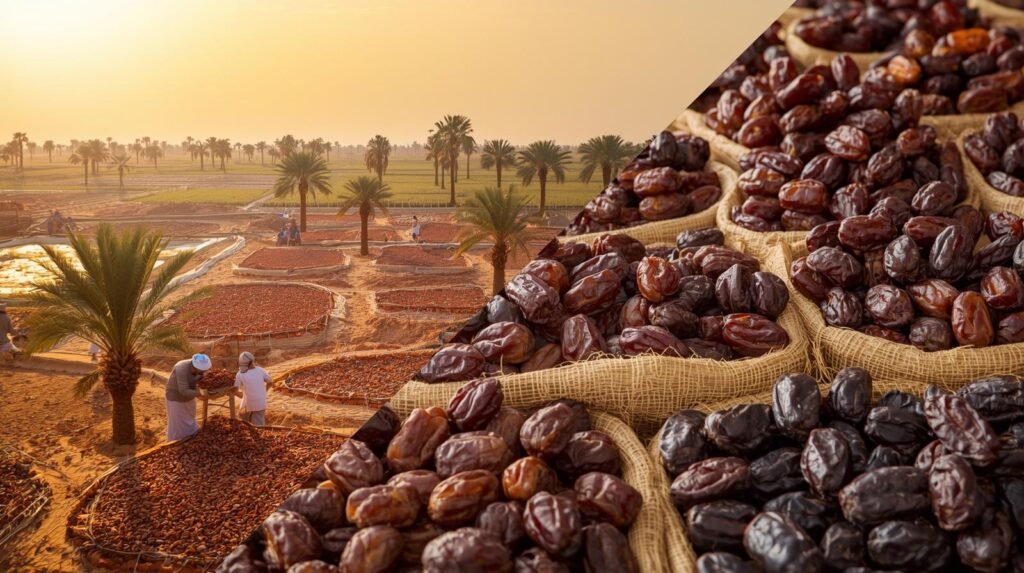
| Country Name | Production Level | Primary Use | Global Rank |
|---|---|---|---|
| Egypt | Very high | Domestic and export | First |
| Saudi Arabia | High | Domestic and export | Second |
| Iran | High | Domestic use | Third |
| Algeria | Medium | Export focused | Fourth |
| Iraq | Medium | Domestic use | Fifth |
Economic Importance of Date Farming in Egypt
Date farming supports rural livelihoods in Egypt. It provides employment opportunities. Processing industries add economic value. Dates contribute to food security. Export revenue supports the economy. Small farmers benefit from stable demand. Government support enhances productivity. Date farming is economically vital.
Global Demand and Export Trends
Global demand for dates continues to grow. Health benefits increase consumption. Religious festivals boost seasonal demand. Processed date products gain popularity. Export quality standards are improving. New markets are opening worldwide. Egypt benefits from rising demand. Export volumes are increasing steadily.
Challenges in Date Production
Date producers face challenges such as water scarcity. Climate change affects palm health. Pest management is essential. Labor shortages can occur. Market price fluctuations impact farmers. Storage requires careful handling. Sustainable practices are increasingly important. Adaptation is necessary for long-term success.
Future Outlook of Global Date Production
Global date production is expected to rise. Demand will remain strong worldwide. Egypt is likely to retain its top position. Technological advancements will improve yields. Sustainable irrigation will be crucial. Export markets will expand further. Climate resilience will shape farming practices. Data suggests continued growth.