Introduction: Why Hanging Onion Gardening Is a Game Changer
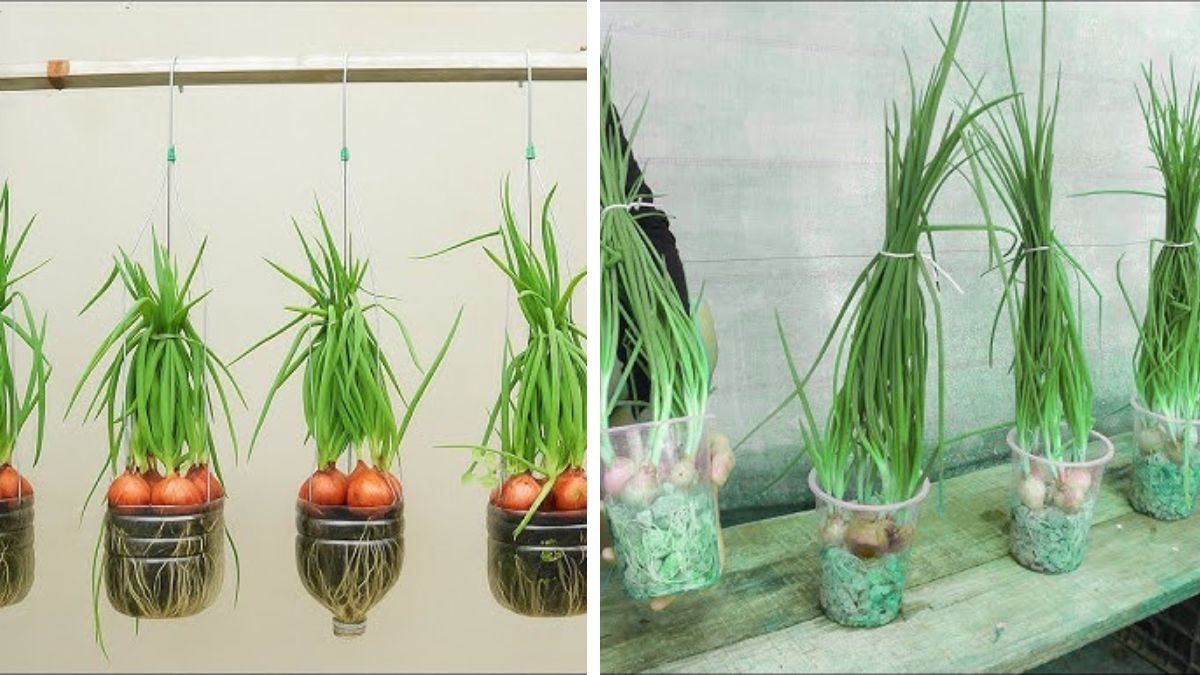
Growing onions at home is becoming increasingly popular, especially among urban gardeners. Traditional onion farming requires ground space, which many people do not have. Hanging onion gardening solves this problem by using vertical space efficiently. This method allows you to grow onions on balconies, terraces, and even near windows. Hanging onions receive better airflow and sunlight. Pest problems are greatly reduced. Maintenance becomes easier and cleaner. This guide explains a proven, space-saving method for growing onions vertically with excellent results.
Why Hanging Onions Grow Better Than Ground Onions
Hanging onions benefit from unrestricted root aeration and better drainage. Water never stagnates around the roots, preventing rot. Air circulation keeps fungal diseases away. Plants receive uniform sunlight from all sides. Hanging containers reduce soil compaction. Onion bulbs develop evenly and healthier. Pest access is limited. This method produces cleaner, stronger onion plants.
Best Onion Types for Hanging Growing
Green onions and spring onions are best for hanging systems. Small bulb varieties adapt well to containers. Bunching onions grow fast and regenerate after harvest. Avoid large bulb onions initially. Heat-tolerant varieties perform better in hanging setups. Disease-resistant varieties reduce maintenance. Local varieties adapt easily. Choosing the right onion type ensures high success.
Materials Needed for Hanging Onion Setup
You need recycled plastic bottles, hanging baskets, or fabric grow bags. Strong ropes or wires are required for support. Use lightweight, fertile soil mix. Organic compost improves growth. Scissors or cutters help prepare containers. Hooks or wall supports ensure safety. Simple materials keep costs low. Recycled items make this method eco-friendly.
Preparing Containers for Hanging Onions
Containers must have drainage holes at the bottom. Side holes can be added for extra plants. Clean containers before use. Ensure containers are strong enough to hold soil. Lightweight containers are easier to hang. Proper preparation prevents root problems. Good drainage is essential. Well-prepared containers support healthy growth.
Soil Mix for Strong Onion Growth
Onions prefer loose, well-draining soil. Mix garden soil, compost, cocopeat, and sand. Organic matter boosts nutrient availability. Soil should remain moist but airy. Avoid heavy clay soil. Adding vermicompost improves root health. Healthy soil supports fast growth. Proper soil preparation is key to success.
Planting Onions in Hanging Containers
Plant onion bulbs or seedlings evenly spaced. Ensure the root side faces downward. Cover lightly with soil. Do not bury bulbs too deep. Water gently after planting. Proper spacing improves airflow. Avoid overcrowding. Correct planting ensures uniform growth.
Watering Schedule for Hanging Onions
Hanging containers dry faster than ground soil. Water regularly but lightly. Check moisture daily. Morning watering is ideal. Avoid water dripping excessively. Consistent moisture supports leaf growth. Overwatering causes bulb rot. Balanced watering is essential.
Sunlight Requirements
Onions need at least five to six hours of sunlight daily. Morning sunlight is best. Hanging systems allow easy repositioning. Avoid harsh afternoon heat in summer. Partial shade works in hot regions. Proper sunlight improves flavor. Weak light reduces growth. Sun management improves yield.
Fertilizing Hanging Onions
Feed onions every ten to fifteen days. Use liquid compost or organic fertilizer. Nitrogen supports leafy growth. Avoid excess nitrogen for bulb onions. Balanced feeding strengthens plants. Organic feeding improves taste. Regular feeding boosts harvest. Fertilization ensures continuous growth.
Temperature and Climate Considerations
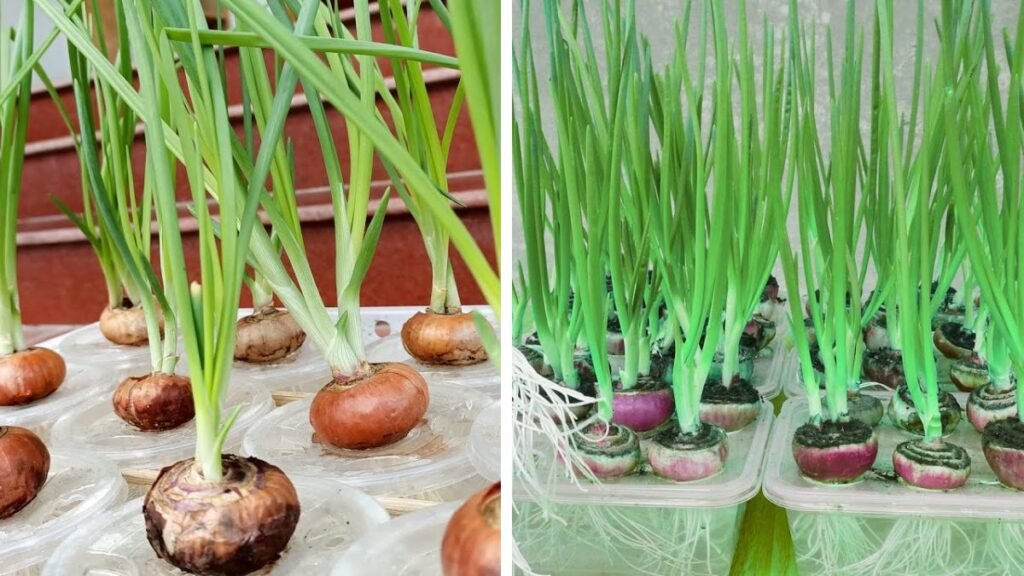
Onions grow well in mild temperatures. Protect from extreme heat. Move hanging setups during harsh weather. Cool nights improve leaf quality. Hanging systems allow flexibility. Seasonal adjustments improve results. Climate awareness ensures success. Proper care enhances productivity.
Pest and Disease Prevention
Hanging onions face fewer pest attacks. Inspect leaves regularly. Remove damaged leaves immediately. Neem oil spray works well. Good airflow prevents fungal disease. Avoid wet leaves overnight. Preventive care protects plants. Healthy plants resist pests naturally.
Harvesting Green Onions from Hanging Pots
Green onions can be harvested early. Cut leaves from the top, leaving roots intact. Continuous harvesting encourages regrowth. Harvest in the morning. Avoid pulling entire plants. Proper harvesting extends production. Clean cuts improve regrowth. Hanging onions provide ongoing supply.
Regrowing Onions After Harvest
After cutting leaves, continue watering and feeding. New shoots appear quickly. Regrowth is faster in hanging systems. Avoid cutting too low. Healthy roots support multiple harvests. Continuous care ensures steady yield. Regrowing saves money. This method offers sustainability.
Using Vertical Space Effectively
Hang containers in rows or tiers. Ensure equal sunlight exposure. Avoid overcrowding containers. Vertical setups increase plant count. Easy access simplifies care. Organized layouts improve airflow. Vertical gardening maximizes small spaces. Ideal for urban homes.
Growth Overview Table
| Growth Stage | Time Period | Main Care |
|---|---|---|
| Establishment | One to two weeks | Moist soil |
| Leaf Growth | Three to four weeks | Fertilizing |
| Harvest | Continuous | Leaf cutting |
| Regrowth | Ongoing | Water & feed |
Common Mistakes to Avoid
Overwatering is a major issue. Using heavy soil limits growth. Poor sunlight reduces yield. Overcrowding causes weak plants. Skipping feeding slows growth. Weak hanging support is risky. Avoiding mistakes improves success. Proper care ensures lush onions.
Why Hanging Onion Gardening Is Ideal for Beginners
This method is simple and forgiving. Maintenance is minimal. Space requirements are low. Growth is visible and fast. Harvest is continuous. Problems are easy to spot. Beginners gain confidence. Success rates are high.
Benefits of Hanging Onions at Home
Fresh onions available anytime. No need for garden land. Cleaner produce. Reduced pest issues. Cost-effective method. Eco-friendly recycling. Space-saving design. Perfect for balconies.
Final Conclusion
Hanging onion gardening is a practical and productive solution for modern homes. With simple materials and proper care, anyone can grow fresh onions vertically. This method saves space, reduces pests, and provides continuous harvests. Ideal for beginners and urban gardeners, hanging onions bring freshness right to your home.