
Roses are among the most loved flowering plants worldwide. Gardeners grow roses for their beauty, fragrance, and variety of colors. Growing roses from seeds is slow and unpredictable. Bud grafting is the most reliable propagation method for roses. It ensures uniform flower quality and strong plant growth. This technique is widely used by professional nurseries. Bud grafting joins a selected rose bud with a strong rootstock. The result is a healthy and productive plant. This article explains the complete rose bud grafting process.
Paragraph 2: What Is Bud Grafting in Roses
Bud grafting is a method where a single bud from a desired rose variety is inserted into the rootstock. The bud develops into a new shoot after healing. This technique requires precision but gives high success rates. Bud grafting is also known as budding. It is commonly done using T-budding method. This process allows efficient use of plant material. Bud grafting produces uniform plants. It is ideal for mass production. Proper technique ensures strong union.
Paragraph 3: Advantages of Rose Bud Grafting
Rose bud grafting offers many advantages. It produces true-to-type plants with consistent flowers. Flower color, size, and fragrance remain identical. Grafted roses grow faster than seed plants. Disease resistance improves with strong rootstock. Plants have better tolerance to soil conditions. Commercial value increases significantly. Bud grafting saves space and time. This method is preferred worldwide.
Paragraph 4: Best Season for Rose Bud Grafting
The best season for bud grafting is when the rootstock is actively growing. Mild temperature and good sap flow are ideal. Spring and early monsoon seasons work best. Avoid extreme heat or cold. Morning or evening hours are preferred. High humidity helps healing. Seasonal timing improves success rate. Avoid grafting during heavy rains. Proper planning ensures better results.
Paragraph 5: Selecting the Rootstock
Rootstock selection is very important for rose grafting. Choose a healthy and vigorous rose rootstock. The plant should be disease-free and pest-free. Strong root systems support better growth. The stem should be smooth and green. Rootstock should be well watered before grafting. Healthy rootstock improves union success. It also increases plant lifespan. Proper selection ensures strong plants.
Paragraph 6: Selecting the Bud Wood
Bud wood comes from the desired rose variety. Select healthy shoots with mature buds. Avoid flowering or very young shoots. Buds should be plump and well developed. Leaves should be removed carefully. Use fresh bud wood for best results. Keep bud wood moist until use. Quality bud selection determines flower quality. Proper handling prevents drying.
Paragraph 7: Tools Required for Bud Grafting
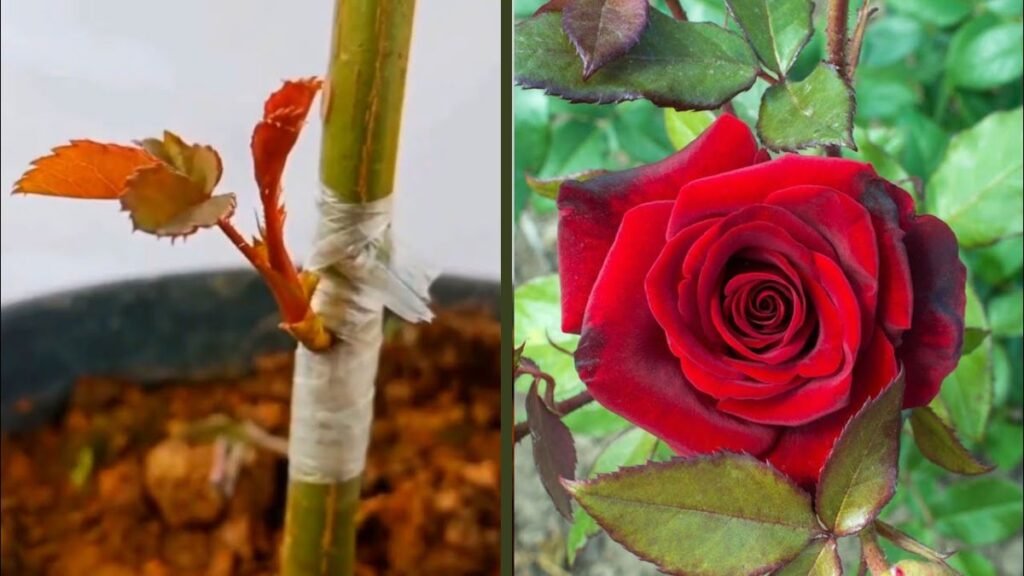
A sharp budding knife is essential for clean cuts. Pruning scissors help prepare bud wood. Grafting tape or budding strips secure the bud. Disinfect tools before use to prevent infection. Gloves help maintain hygiene. Clean tools ensure healthy grafts. Keep all tools ready before starting. Proper tools improve precision. Preparation saves time.
Paragraph 8: Step-by-Step Bud Grafting Process
Make a T-shaped cut on the rootstock bark. Carefully lift the bark flaps. Remove a healthy bud from the bud wood. Insert the bud gently into the T cut. Ensure proper alignment of cambium layers. Tie the area firmly with grafting tape. Leave the bud exposed. Proper insertion is crucial. Accuracy determines success.
Paragraph 9: Immediate Aftercare
After grafting, water the plant lightly. Keep the plant in partial shade. Avoid disturbing the grafted area. Maintain soil moisture. Protect from wind and pests. Do not remove the tape too early. Good aftercare supports healing. Stability is very important. Careful handling ensures success.
Paragraph 10: Signs of Successful Bud Grafting
Successful bud grafting shows signs within two to three weeks. The bud remains green and fresh. Bark around the bud heals well. New shoot emerges after some time. No drying or discoloration is visible. Growth indicates successful union. Remove tape carefully after healing. Observation helps confirm success. Healthy buds develop into strong shoots.
Paragraph 11: Common Mistakes to Avoid
Using immature or dry buds reduces success. Poor cambium alignment prevents healing. Loose tying allows air entry. Overwatering causes rot. Grafting in unsuitable season reduces success. Using dirty tools spreads disease. Removing tape too early damages bud. Ignoring aftercare weakens plant. Avoiding mistakes improves results.
Paragraph 12: Fertilization After Bud Grafting
Fertilization should begin after bud sprouting. Organic compost is ideal initially. Avoid heavy fertilizers early. Balanced nutrition supports shoot growth. Apply fertilizer monthly. Excess fertilizer harms roots. Healthy soil improves nutrient uptake. Proper feeding enhances plant strength. Moderation is important.
Paragraph 13: Pruning and Training
Once the bud starts growing, prune the rootstock above the bud. This directs energy to the new shoot. Training helps shape the plant. Remove unwanted shoots. Proper pruning improves airflow. Balanced growth supports flowering. Avoid heavy pruning initially. Regular maintenance improves structure. Controlled growth is essential.
Paragraph 14: Pest and Disease Control
Roses are prone to pests like aphids and mites. Inspect plants regularly. Neem oil spray is effective. Remove infected leaves promptly. Avoid water stress. Good airflow reduces disease risk. Healthy plants resist pests. Early control prevents spread. Organic methods are recommended.
Paragraph 15: Flowering Timeline
Bud-grafted roses bloom earlier than seed plants. Flowering usually begins within one year. Proper care accelerates blooming. Balanced nutrition supports bud development. Stress reduces flowering. Adequate sunlight is essential. Deadheading encourages new blooms. Patience brings beautiful roses.
Paragraph 16: Growing Grafted Roses in Pots or Ground
Grafted roses grow well in both pots and ground. Large pots suit terrace gardens. Ground planting gives higher yield. Soil should be fertile and well-drained. Avoid waterlogging. Choose sunny location. Proper spacing improves airflow. Both methods work with good care. Location selection matters.
Paragraph 17: Long-Term Maintenance
Long-term care ensures healthy rose plants. Water regularly based on season. Fertilize during active growth. Prune after flowering cycles. Inspect graft union periodically. Protect from extreme weather. Healthy plants last many years. Maintenance is essential. Consistency ensures productivity.
Paragraph 18: Table – Benefits of Rose Bud Grafting
Table: Advantages Overview
Row One: True-to-type flowers and fragrance
Row Two: Faster growth and early flowering
Row Three: Strong root system and durability
Row Four: High success rate for nurseries
Row Five: Ideal for commercial rose production
Paragraph 19: Commercial Importance
Bud-grafted roses dominate commercial markets. Nurseries rely on this technique. Uniform quality increases customer trust. Export quality roses use grafting. Landscaping projects prefer grafted plants. Market value is higher. This method supports mass production. Profitability improves significantly. Professional growers prefer budding.
Paragraph 20: Conclusion
Rose bud grafting is the most reliable method for producing high-quality roses. It ensures strong plants and beautiful blooms. With proper technique, success rate is very high. Beginners can also learn with practice. This method saves time and resources. Grafted roses enhance garden beauty. Commercial benefits are significant. Start practicing on a few plants. Consistency leads to mastery.