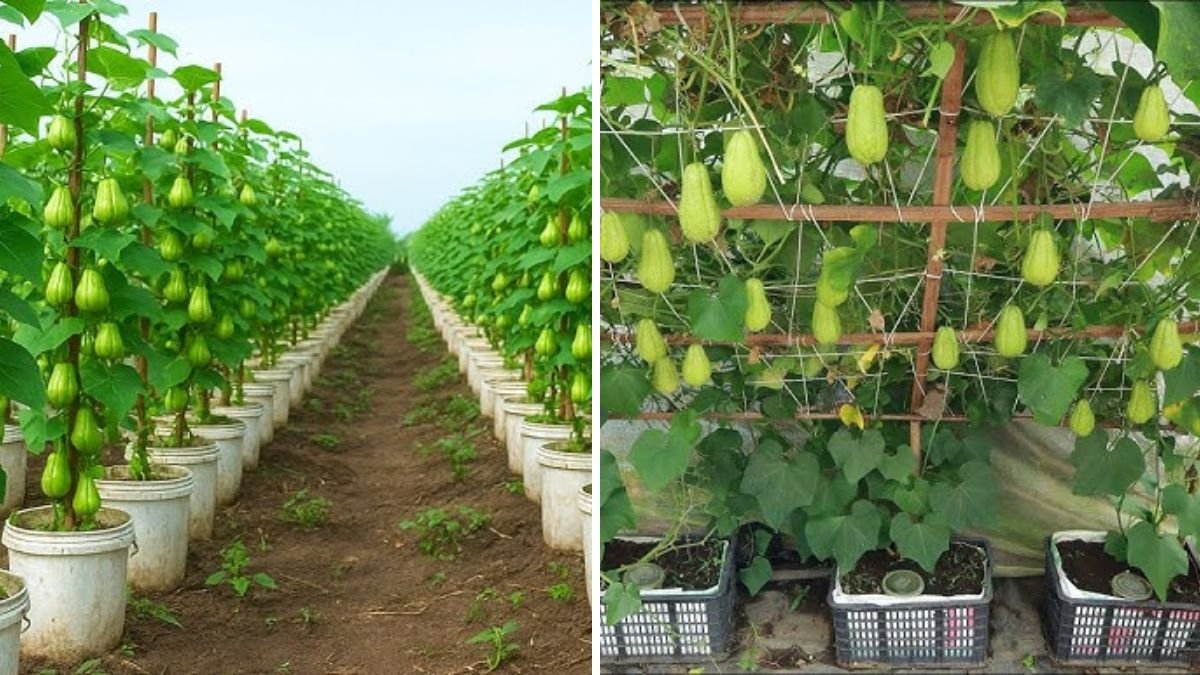
Chayote (Sechium edule) is a versatile and nutritious vegetable widely used in salads, stews, and stir-fries. Known for its crisp texture and mild flavor, chayote is rich in vitamins, minerals, and dietary fiber, making it a valuable addition to any home garden. While traditionally grown from seeds or tubers planted in soil, an easy water propagation method allows gardeners—even beginners—to grow healthy chayote plants without complicated tools or large garden spaces.
This guide explains step-by-step how to propagate chayote with water, the benefits of this method, and tips for nurturing your plants to full maturity.
Why Propagate Chayote with Water?
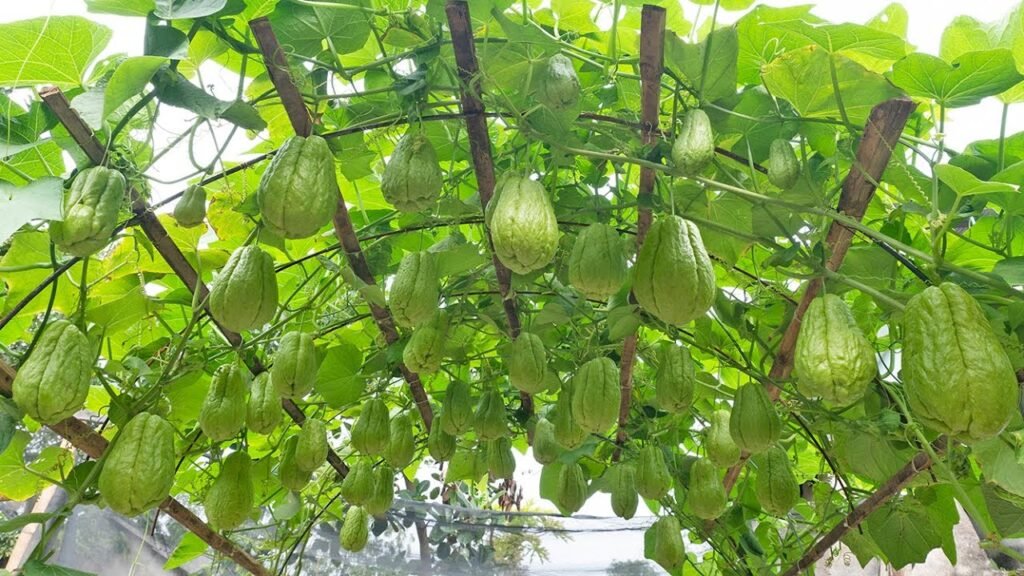
Propagating chayote in water is simple, low-cost, and beginner-friendly, with several advantages:
- Faster germination: Chayote grows quickly in water compared to direct soil planting
- Easy observation: You can monitor root development and overall plant health
- Space-efficient: Ideal for small gardens, terraces, or indoor setups
- Reduced risk of soil-borne diseases: No soil needed at the early stage
- Sustainable method: Minimal equipment and resources required
This method allows even urban gardeners to start chayote plants effortlessly and transplant them to soil once roots are established.
Step 1: Selecting the Right Chayote Fruit
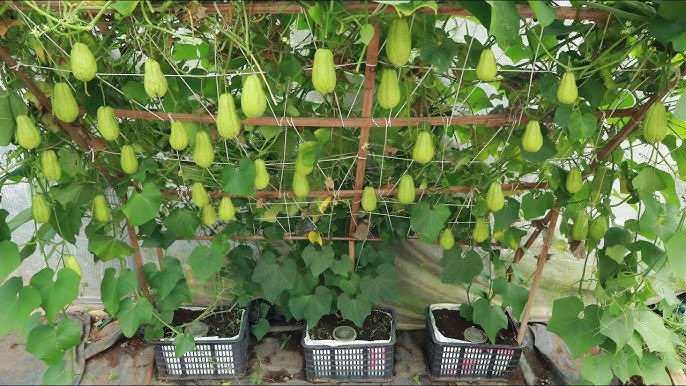
The success of water propagation begins with choosing a healthy chayote fruit.
Guidelines for Selection
- Choose a firm, healthy chayote with no soft spots or mold
- Preferably select fresh fruits from a local market or your existing plants
- Mature chayote works best, as it has the energy reserves to produce roots and shoots
Healthy starting material ensures strong, vigorous growth in water.
Step 2: Preparing the Chayote for Propagation
Chayote is typically propagated from the whole fruit, not seeds.
Preparation Steps
- Wash the chayote thoroughly to remove dirt or residues
- Optionally, soak the fruit in clean water for 12 hours to kickstart sprouting
- Inspect the fruit for any signs of rot or damage before placing it in water
A well-prepared fruit has a higher chance of rooting successfully.
Step 3: Setting Up Water Propagation
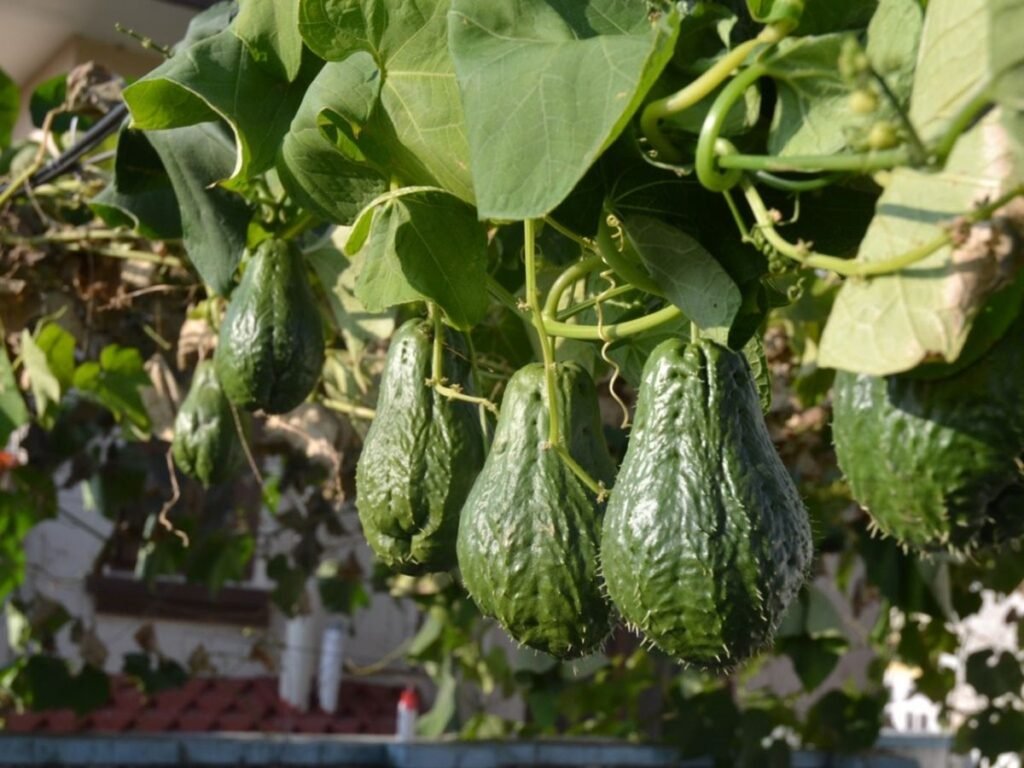
Water propagation requires just a few household items:
Materials Needed
- A container or glass jar (large enough to hold the chayote half-submerged)
- Clean water
- Optional: pebbles or small support to stabilize the fruit
Steps
- Fill the container with clean water
- Place the chayote in the water with the broad end submerged
- Ensure the top portion is above water to allow shoots to grow freely
- Keep the container in a warm, bright spot with indirect sunlight
The water will stimulate root growth while keeping the fruit stable.
Step 4: Monitoring and Maintaining Water Levels
Chayote roots develop best in clean, fresh water.
Tips
- Change water every 2–3 days to prevent stagnation and bacterial growth
- Keep water level consistent to ensure roots remain submerged
- Avoid direct harsh sunlight, which may dry out or overheat the fruit
- After 2–3 weeks, roots and shoots should begin emerging
Proper care during this phase ensures healthy, strong root development.
Step 5: Encouraging Strong Root and Shoot Growth
Once roots start to appear, the plant begins rapid development.
Supportive Actions
- Use pebbles or small sticks to stabilize the chayote and prevent tipping
- Ensure roots have space to grow without tangling
- Spray water lightly on emerging shoots to maintain humidity
With consistent care, the water-propagated chayote develops robust roots and tender shoots ready for soil transplantation.
Step 6: Preparing for Transplantation
After 4–6 weeks, the chayote is ready to move from water to soil.
Soil Preparation
- Use a well-draining, nutrient-rich soil mix: 50% garden soil, 30% compost, 20% sand
- Prepare a hole slightly larger than the root system
- Ensure soil is moist but not waterlogged
Transplanting Steps
- Carefully remove the chayote from water
- Gently wash roots to remove any debris
- Plant the chayote in soil with roots fully covered and shoots above ground
- Water immediately to settle soil around the roots
Proper transplantation ensures the chayote continues healthy growth and high survival rates.
Step 7: Caring for Chayote Plants in Soil
Chayote is a climbing vine that needs space, support, and consistent care.
Key Care Tips
- Provide trellis, fence, or bamboo stakes for climbing
- Water consistently, especially during hot days and fruiting stages
- Mulch around the base to conserve moisture and suppress weeds
- Fertilize with compost or organic fertilizer every 2–3 weeks
Healthy soil care ensures vigorous vine growth and abundant fruits.
Step 8: Fertilization and Nutrient Management
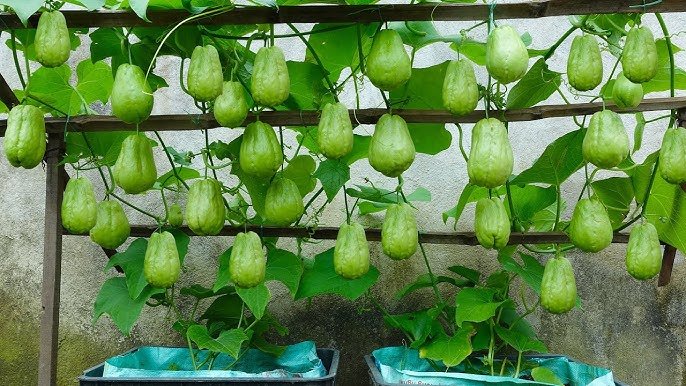
Chayote plants are heavy feeders. Fertilization enhances leaf, flower, and fruit development.
Recommended Fertilizers
- Organic compost or vermicompost for steady nutrient supply
- Liquid fertilizers (like cow dung water or compost tea) every 10–14 days
- Potash or banana peel extract to boost flowering and fruit size
- Avoid over-fertilizing nitrogen, which may produce excessive leaves but fewer fruits
Balanced nutrition leads to healthy plants and higher yield.
Step 9: Supporting the Vine and Harvesting
Chayote vines grow quickly and require proper support for maximum productivity.
Support Tips
- Use trellises, ropes, or fences for climbing
- Tie vines loosely to avoid stem damage
- Regular pruning improves airflow and prevents disease
Harvesting
- Chayote fruits are typically ready in 4–6 months after transplanting
- Pick fruits when they are firm, green, and 4–6 inches long
- Regular harvesting encourages continuous fruiting and plant health
A supported vine produces more fruits and healthier plants over time.
Step 10: Advantages of Water Propagation for Chayote
- Fast germination: Water promotes root and shoot development quickly
- Easy monitoring: Watch roots grow and catch issues early
- Beginner-friendly: Requires minimal gardening experience
- Space-saving: Ideal for small terraces, balconies, or indoor setups
- Sustainable: No chemicals, soil preparation, or expensive equipment required
- High survival rate: Plants develop strong roots and adapt well to soil
This method allows gardeners of all skill levels to propagate and grow chayote successfully.
Final Thoughts: From Water to Abundant Harvests
Propagating chayote with water is a simple, cost-effective, and highly effective way to start healthy plants at home. By following these steps, even beginners can enjoy vibrant chayote vines and abundant, nutritious fruits.
This method demonstrates that with minimal resources and a little patience, anyone can transform a simple chayote fruit into a thriving home garden plant, providing fresh vegetables for months. Whether you’re an urban gardener, a health enthusiast, or simply curious about plant propagation, water propagation of chayote is an easy, rewarding technique that anyone can try.