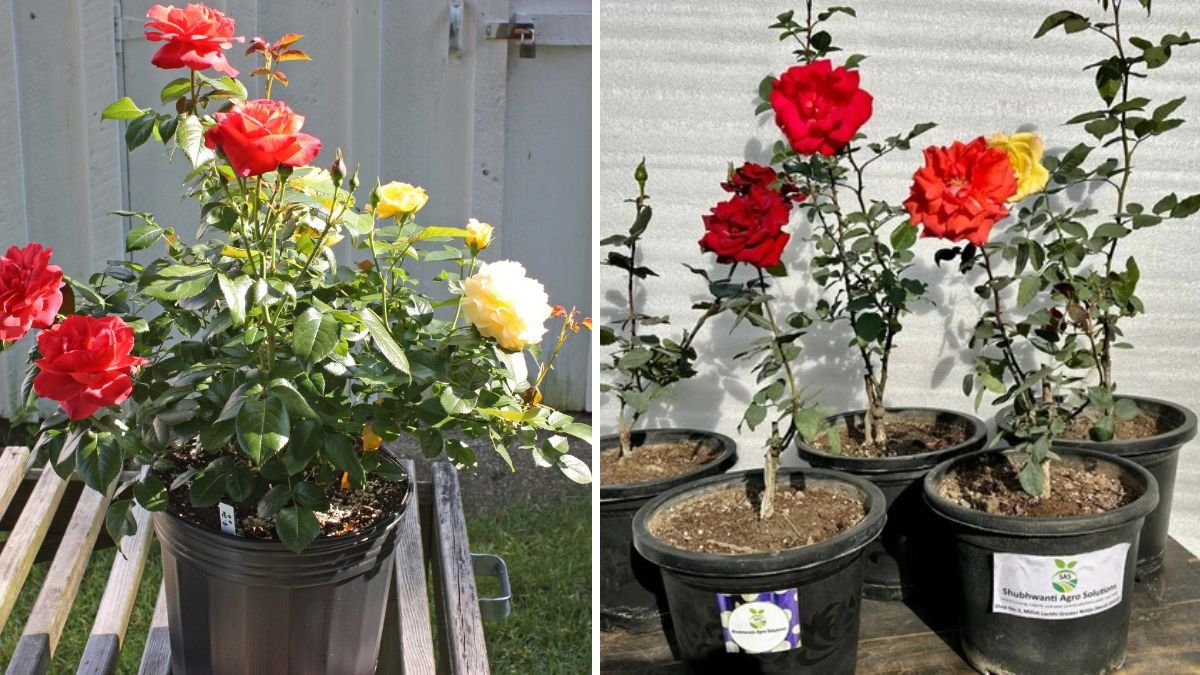
Grafting roses is one of the most rewarding skills a gardener can learn. Whether you want to propagate your favorite rose variety, create stronger plants, or produce roses with vibrant colors and superior fragrance, the T-budding technique is the most popular and reliable method. Simple, fast, and highly effective, T-budding allows even beginners to clone their desired rose variety with impressive success rates.
In this comprehensive 1200-word guide, you’ll learn everything you need to know—from choosing the right rootstock to grafting, after-care, and troubleshooting. Let’s dive into the art and science behind T-budding roses!
🌼 Introduction: Why Graft Roses?
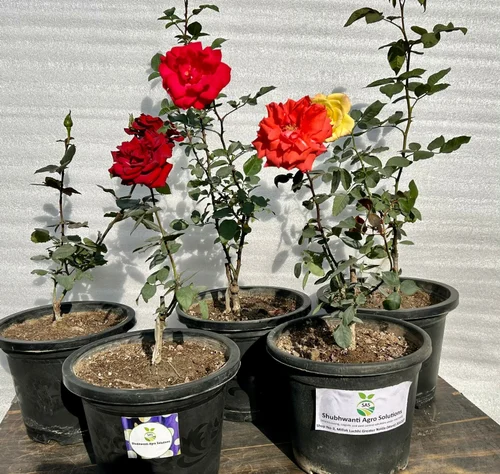
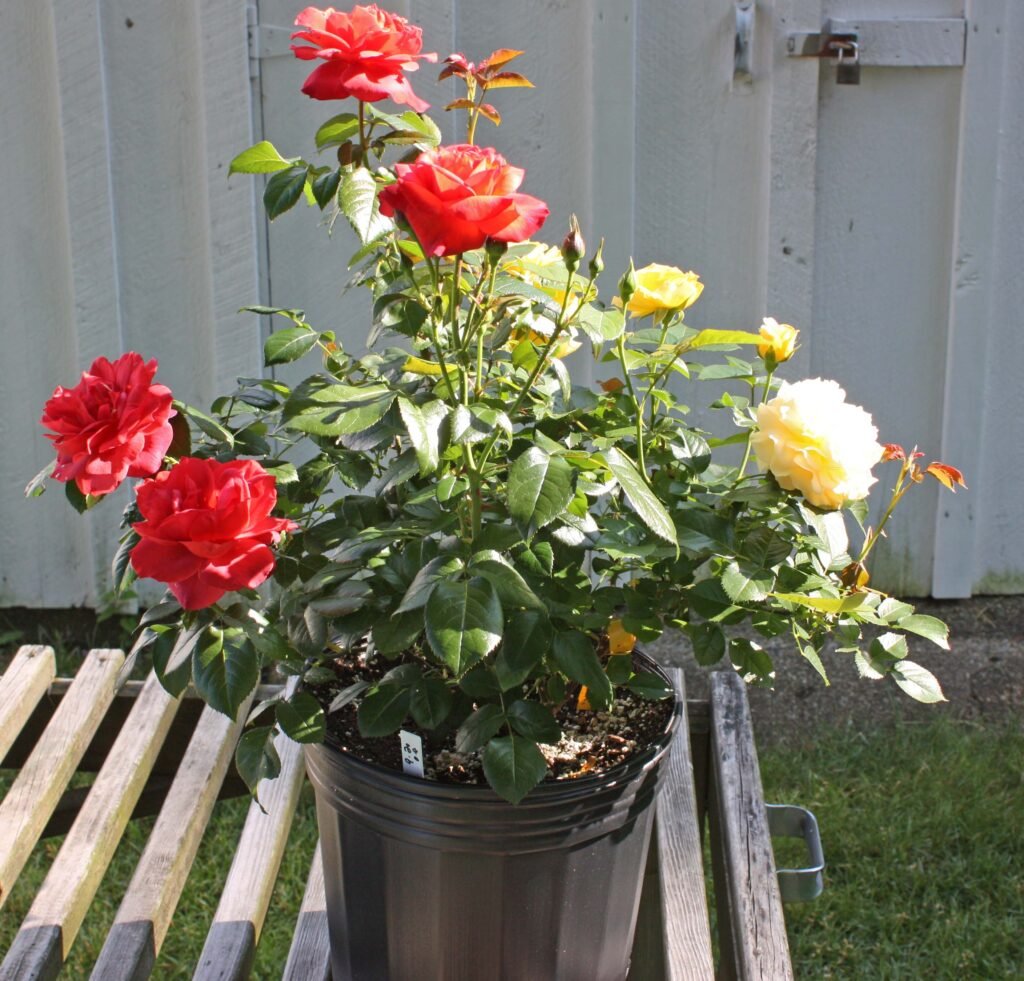
Roses are loved worldwide for their beauty, fragrance, and elegance. But many gardeners are unaware that most commercial rose plants are created through grafting, not cuttings. The reason is simple:
✔️ Better plant vigor
A grafted rose on a strong rootstock grows faster, blooms abundantly, and resists diseases.
✔️ Clone your favorite variety
Want more of a specific rose? Graft it!
✔️ Adapt roses to different climates
Certain rootstocks tolerate heat, cold, and soil issues better than typical rose cuttings.
✔️ Save rare or damaged rose varieties
Even an old, failing plant can live on through grafting.
Among many grafting methods, T-budding stands out as the easiest and most widely used technique for roses.
🌹 What Is T-Budding?
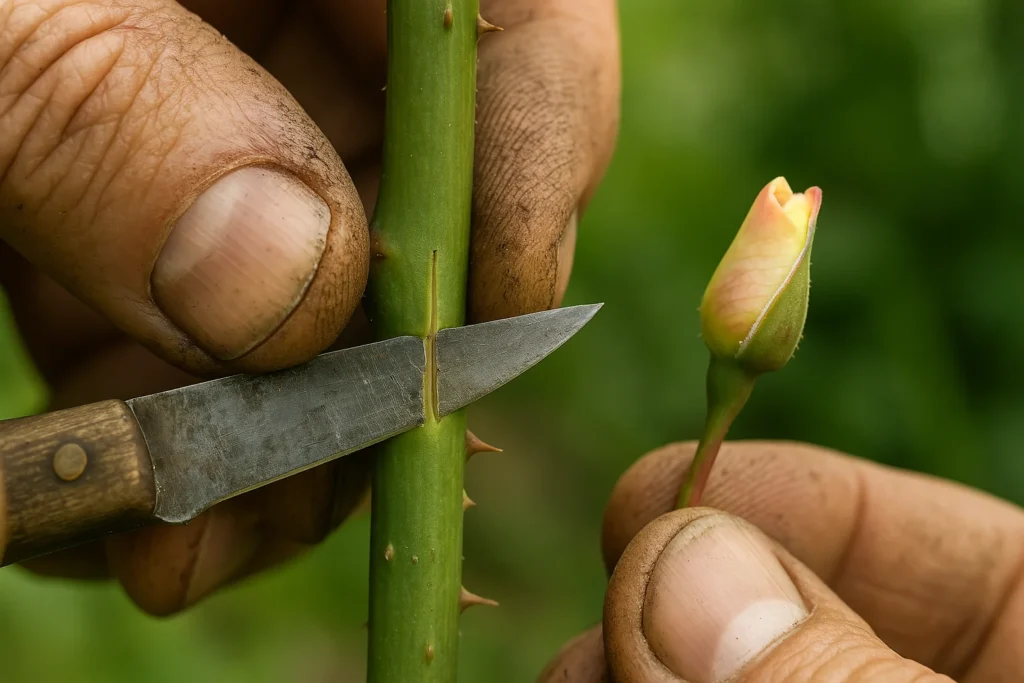
T-budding is a grafting method where a single bud (called a bud eye) from your desired rose variety is inserted into a T-shaped cut on a rootstock stem. The bud then grows to become a new plant.
This method works exceptionally well because:
- It requires minimal materials
- Buds heal quickly
- Rootstock sap flows strongly during warm seasons
- Success rates are high (80–95% with proper care)
🌱 Step 1: Choosing the Right Rootstock
The rootstock is the base plant on which you graft your chosen rose variety. Choose a strong, healthy rootstock—this will determine your plant’s growth and lifespan.
✔️ Ideal Rootstocks
- Rosa indica (common in India, strong and hardy)
- Dr. Huey (popular in commercial nurseries)
- Fortuniana (great for sandy soils)
- Multiflora rootstock (vigorous growth)
✔️ Selecting the Perfect Rootstock Stem
Pick a stem that is:
- 6–12 months old
- Pencil-thick (about 6–8 mm in diameter)
- Free from pests, diseases, or cracks
- Green and firm
Water the rootstock well a day before grafting. Moist stems peel easier, making budding smoother.
🌿 Step 2: Collecting and Preparing the Scion (Budwood)
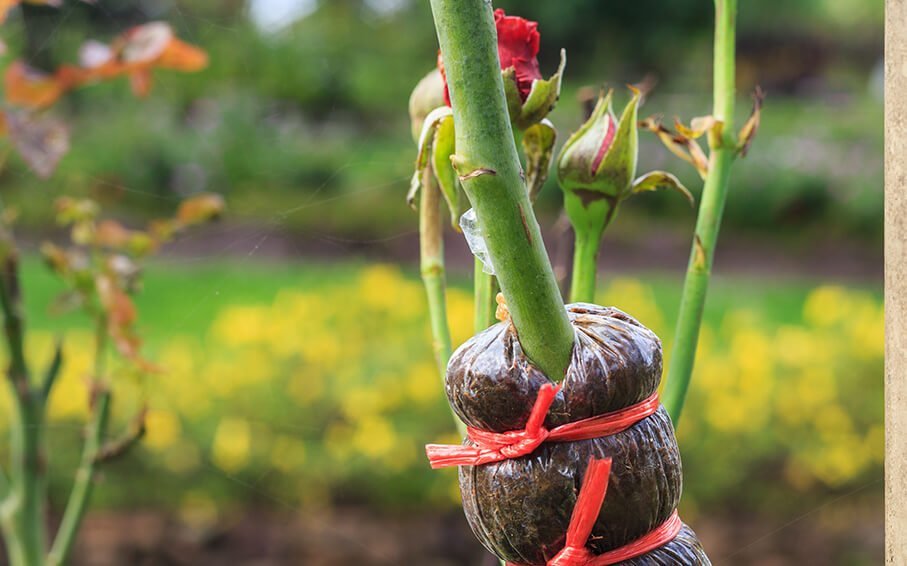
The scion is the part of the plant you want to grow—here, it’s the bud of your desired rose.
✔️ Choose Healthy Budwood
Select:
- Fresh, firm stems
- Recently finished blooming
- Mature but still green
- Free of thorns (optional but easier)
Avoid:
- Woody, old stems
- Tender new growth
✔️ Extracting the Bud (Bud Eye)
Using a sharp grafting knife:
- Cut a thin, 2-3 cm long shield-shaped piece containing a healthy bud.
- Ensure the bark, bud, and some thin tissue remain intact.
- Avoid touching the bud with your fingers to prevent contamination.
Keep the budwood wrapped in a moist cloth if you’re not grafting immediately.
🔪 Step 3: Making the T-Cut on Rootstock
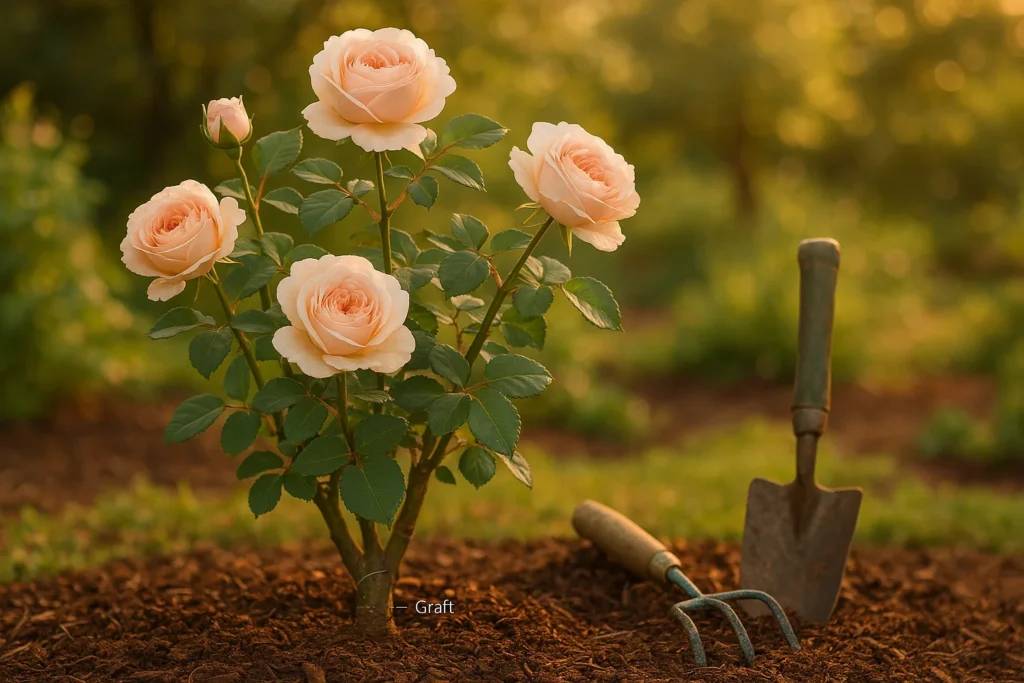
This is the defining step of the T-budding technique.
✔️ How to Make the T-Shaped Cut
- On a smooth section of the rootstock stem, make a vertical cut about 2–3 cm long.
- Make a horizontal cut at the top of the vertical slit—this forms a “T.”
- Gently lift the bark flaps using the back of your knife.
- Be careful not to damage the underlying wood.
✔️ Why the T-Cut Works
- It allows easy insertion of the bud
- Sap flow stays undisturbed
- Bud heals faster
- Ensures strong bonding between scion and rootstock
🌼 Step 4: Inserting the Bud
This is where your new rose variety begins its journey.
✔️ Steps to Insert the Bud
- Slide the bud shield carefully into the T-cut.
- Ensure the bud sits snugly under the bark flaps.
- The bud should fit completely inside, leaving only the petiole exposed.
If inserted correctly, the bud will stay firm and flat against the rootstock.
🎀 Step 5: Wrapping and Securing the Graft
To ensure the bud heals successfully, it must remain moist and protected.
✔️ Best Materials for Wrapping
- Budding tape
- Nursery grafting tape
- Polythene strips
- Para film (self-sealing)
✔️ How to Wrap Properly
- Wrap the graft tightly but gently.
- Cover the entire cut area.
- Leave the bud exposed!
- Ensure no water enters the graft union.
The wrap maintains humidity, prevents infection, and secures the bud.
☀️ Step 6: After-Care for a Successful Graft
Your work doesn’t end after grafting—proper after-care determines success.
✔️ Watering
Keep the rootstock moist but not waterlogged. Consistent moisture helps healing.
✔️ Shading
Provide light shade for 5–7 days to protect the graft from harsh sun.
✔️ Checking the Graft
After 14–20 days:
- If the bud is green and plump, it has taken successfully.
- If the bud is black or dry, retry grafting.
✔️ Triggering Bud Growth
Once the graft is successful:
- Cut off the rootstock stem above the graft.
- This redirects energy to the new bud.
- The bud will sprout and grow into a new plant.
🌸 Step 7: Growing the New Rose Plant
Within 3–6 weeks, your grafted bud develops into a young shoot.
✔️ Care Tips for New Growth
- Provide gentle sunlight (morning sun is best)
- Fertilize lightly with a balanced NPK (10-10-10)
- Protect from pests like aphids and mites
- Stake the new shoot to prevent breakage
When the shoot reaches 20–30 cm, you can transplant the plant into a bigger pot or ground.
🧪 Best Season for T-Budding Roses
Success depends heavily on timing.
✔️ Ideal Seasons
- Late spring
- Monsoon
- Late summer
Avoid:
- Winter (low sap flow)
- Extreme heat (buds dry out)
The best temperature range for grafting roses is 20–30°C.
🔍 Troubleshooting Common Grafting Problems
❌ Bud drying out
Cause: Too much sun or poor wrapping
Fix: Provide shade + tighten the wrap
❌ Bud turning black
Cause: Infection or damaged bud
Fix: Sterilize tools + use fresh budwood
❌ Bud not sprouting
Cause: Rootstock was not cut back
Fix: Cut 2 cm above bud to activate growth
❌ Bark not lifting
Cause: Rootstock is under stress
Fix: Water well before grafting
🌟 Conclusion: Grow Your Own Hybrid Roses with Confidence
T-budding is a simple yet powerful grafting method. With the right tools, careful technique, and proper timing, anyone can clone their favorite rose varieties and grow stunning hybrid rose plants at home.
Whether you’re a beginner gardener or a plant enthusiast, mastering rose grafting opens up endless possibilities—unique roses, better plant growth, and a beautiful garden full of colors and fragrances.
Start today, and soon you’ll enjoy roses that you created with your own hands! 🌹✨