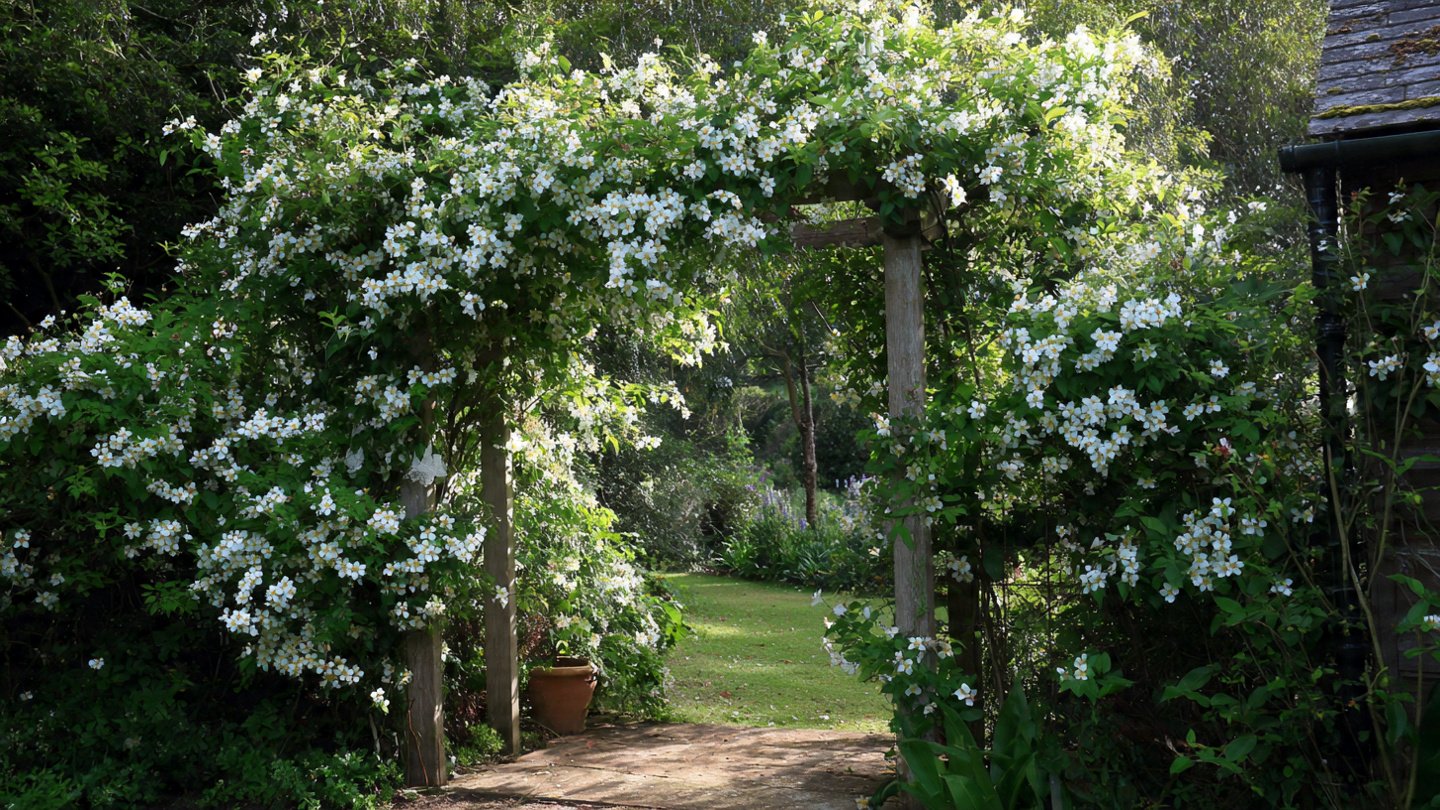
Jasmine vines are cherished by gardeners for their stunning beauty and intoxicating fragrance. When trained over garden arches, they can create breathtaking displays that enhance the elegance of any outdoor space. This guide will walk you through the process of successfully training jasmine climbing vines over garden arches, from selecting the right variety to tips on maintenance, ensuring you enjoy spectacular floral displays for years to come.
Choosing the Right Jasmine Variety
Types of Jasmine
Before you begin training jasmine vines, it’s essential to choose the right variety suited for your garden conditions and aesthetic desires:
-
Common Jasmine (Jasminum officinale): Known for its delicate white flowers and intense fragrance, this variety can grow up to 15 feet long and is ideal for trellises and arches.
-
Star Jasmine (Trachelospermum jasminoides): This vigorous vine features star-shaped white flowers and glossy green leaves. It is highly resilient and can thrive in various climates.
-
Arabian Jasmine (Jasminum sambac): Popular in tropical climates, its small, fragrant blooms are favored for their enchanting scent.
Growing Conditions
Before selecting a variety, consider these growing conditions:
- Sunlight: Jasmine thrives in full sun to partial shade. Choose a location that receives at least six hours of sunlight daily.
- Soil: A well-draining, fertile soil that retains some moisture is ideal for jasmine. Adding compost or well-rotted manure can enhance soil quality.
- Climate: Jasmines prefer warm climates. However, certain varieties can tolerate cooler temperatures, making them versatile.
Preparing the Garden Arch
Design Considerations
Your garden arch serves as a support structure for the jasmine vines and should complement the overall aesthetic of your garden. Consider these design elements:
- Height and Width: Ensure the arch is tall enough to accommodate the mature height of the jasmine vine. A width of at least 3-4 feet is ideal for providing ample space for growth.
- Material: Wooden, metal, or vinyl arches can all work well. Choose materials that resist weather-related deterioration.
Placement
Location is crucial for successful jasmine vine training. The arch should be placed along walkways, entrances, or patios to maximize visibility and fragrance. Ensure the site offers the appropriate sunlight exposure, as mentioned earlier.
Planting Jasmine Vines
Timing
The best time to plant jasmine vines is in the spring or early fall. Planting during these seasons allows the vines to establish roots before extreme temperatures arrive.
Planting Steps
- Digging the Hole: Create a hole twice the size of the root ball to accommodate growth.
- Soil Preparation: Mix the extracted soil with compost to improve drainage and fertility.
- Planting the Vine: Position the vine in the hole, ensuring that the root ball is level with the surrounding soil.
- Backfilling: Refill the hole with the soil-compost mixture and lightly compact it to eliminate air pockets.
- Watering: Provide a deep watering immediately after planting to help establish roots.
Training the Jasmine Vine
Initial Training
Once your jasmine vine has been planted, it will require a guiding approach to climb the arch:
-
Using Twine or Plant Ties: Gently tie the main stem to the arch using soft twine or plant ties. Avoid tight bindings that can damage the vine.
-
Guide Branching: Encourage lateral branches to grow along the arch by tying them to the structure periodically. This will help create a fuller display.
-
Removing Unwanted Growth: Regularly prune back unwanted or excessively long shoots to maintain the desired shape.
Supporting Growth
As the jasmine vine grows, consider the following:
- Encouraging Climbing: Jasmine naturally clings to supports using tendrils. If the vine struggles, gently wrap it around the arch until it establishes contact.
- Providing Adequate Sun: Ensure that surrounding plants do not overshadow the jasmine. Proper sunlight exposure is critical for optimal flowering.
Maintenance for Thriving Jasmine Vines
Watering
Consistent moisture is essential; however, avoid overwatering. The soil should remain moist but not saturated. Newly planted vines will need more frequent watering until established.
Fertilizing
Feed jasmine vines with a balanced fertilizer in early spring and mid-summer to promote lush growth and blooms. Organic fertilizers, such as fish emulsion or compost tea, can be beneficial.
Pruning
Regular pruning is crucial for maintaining the vine’s shape and encouraging growth. Here are some tips:
- Timing: Prune after the blooming season to avoid removing buds.
- Method: Cut back excessive growth, focusing on areas that detract from the arch’s appearance.
Pest Management
While jasmine vines are generally resilient, they can be susceptible to pests such as aphids and scale. If you notice signs of distress:
- Natural Insecticides: Use insecticidal soap or neem oil to treat infestations.
- Preventative Measures: Encourage beneficial insects like ladybugs, which can help manage pest populations.
Creating a Stunning Floral Display
Enhancing Visual Appeal
Once your jasmine vines are established and flourishing, consider adding companion plants to enhance the aesthetic. Plants with contrasting foliage or differing flower colors can create a vibrant display.
Seasonal Care
As seasons change, your jasmine may require different care. For example:
- Autumn: Mulch around the base of the plant to retain moisture and protect roots from freezing temperatures.
- Winter: If you live in a colder climate, consider wrapping the base of the arch to shield it from frost.
Enjoying the Fragrance
One of the most rewarding aspects of growing jasmine is its intoxicating scent. Ensure that planting locations encourage airflow to maximize fragrance.
FAQs
1. How long does it take for jasmine vines to mature and flower?
Jasmine vines typically take 2-3 years to establish fully and start producing blooms. However, some varieties may flower sooner.
2. Can jasmine vines thrive indoors?
While jasmine can be grown indoors, they require plenty of sunlight and humidity. A south-facing window is optimal, and regular misting can help maintain humidity levels.
3. What should I do if my jasmine vines stop blooming?
If jasmine vines stop blooming, it may be due to inadequate light, over-fertilizing, or improper watering. Assess these factors and adjust care as needed.
4. Do jasmine vines require special support systems?
While jasmine vines are capable of climbing on various structures, they will benefit from robust support that allows them to latch on and spread.
5. Are jasmine plants invasive?
Most jasmine varieties are not invasive in moderate climates, but some, like star jasmine, can spread vigorously in certain conditions. Check your local guidelines before planting.
6. Can I propagate jasmine from cuttings?
Yes, jasmine can be propagated from stem cuttings. Cut 4-6 inch pieces during warm months and place them in moist soil. Keep the cuttings in indirect sunlight until roots develop.
Conclusion
Training jasmine climbing vines over garden arches opens up a realm of stunning floral displays that enhance the beauty of outdoor spaces. By selecting the right variety, properly preparing your planting area, and following essential care techniques, you can create an enchanting environment filled with fragrant blooms. With patience and dedication, your jasmine arches will flourish, becoming a focal point of your garden for years to come.