Introduction: Why Ladybugs Are Nature’s Best Pest Control
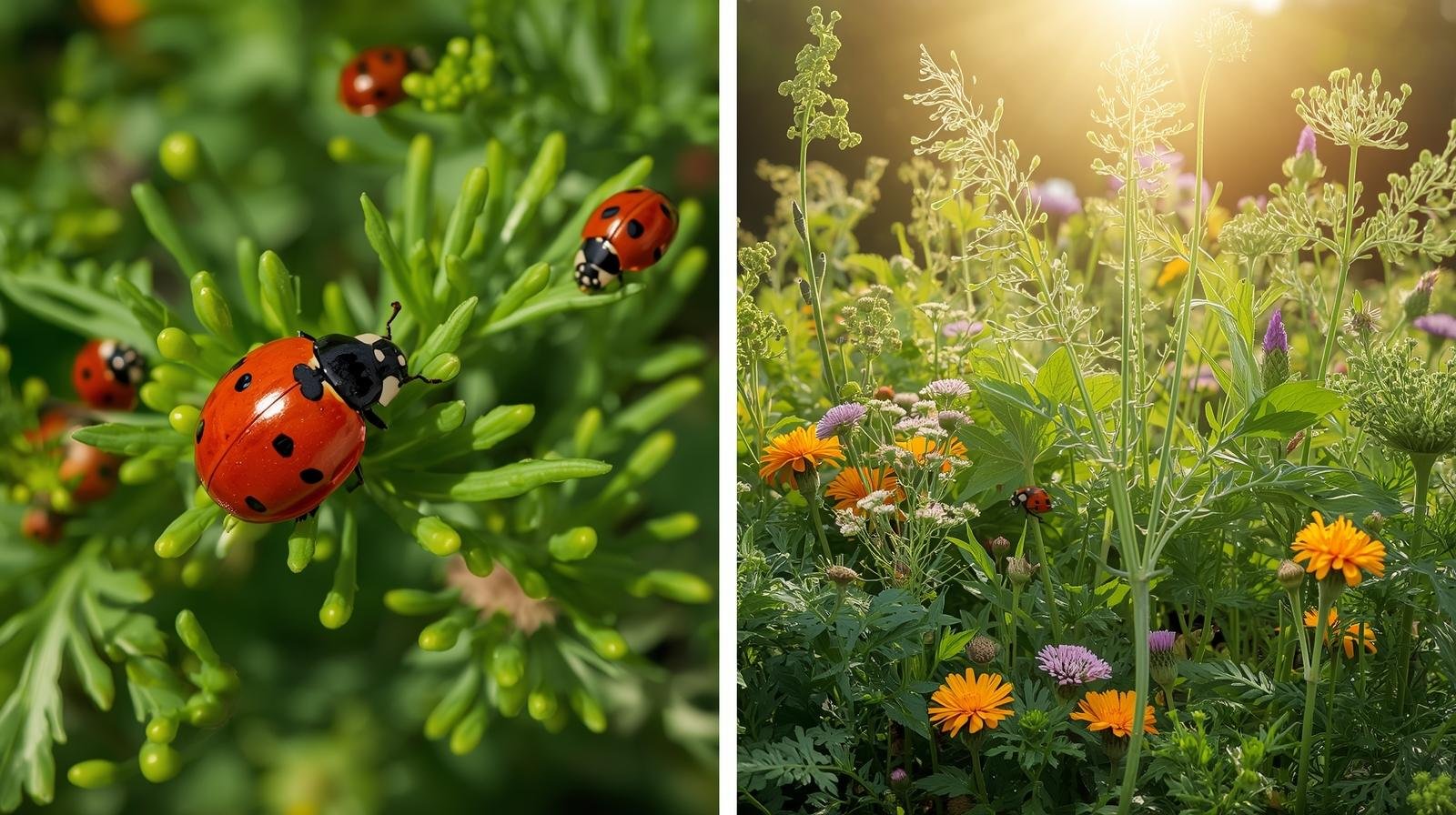
Ladybugs are one of the most beneficial insects in any garden. They are natural predators that feed on aphids and other soft bodied pests. One single ladybug can eat dozens of aphids in a day. Using ladybugs reduces the need for chemical pesticides. Gardens become healthier and more balanced naturally. Ladybugs are safe for plants people and pets. Encouraging them supports sustainable gardening. Understanding how to attract them is essential.
Understanding the Relationship Between Ladybugs and Aphids
Aphids are a primary food source for ladybugs. Ladybugs search for gardens with abundant aphids. Without pests they will leave quickly. This natural balance keeps infestations under control. Aphids damage plants by sucking sap. Ladybugs interrupt this cycle effectively. Their larvae consume even more aphids than adults. A healthy ecosystem supports both. Balance is the key to control.
Why Organic Pest Control Is Better for Gardens
Chemical pesticides kill both pests and beneficial insects. Organic control preserves garden balance. Ladybugs target pests selectively. Soil health improves without chemicals. Pollinators remain safe. Organic methods reduce long term damage. Gardens recover naturally. Sustainable practices protect future harvests. Ladybugs are a powerful organic solution.
Creating a Ladybug Friendly Garden Environment
Ladybugs prefer diverse gardens. Variety attracts beneficial insects. Mixed plantings provide shelter and food. Avoid monoculture planting. Small habitats encourage long stays. Water sources are essential. Shallow dishes help hydration. Natural environments feel safe. Diversity keeps ladybugs active.
Avoiding Chemicals That Repel Ladybugs
Pesticides drive ladybugs away. Even organic sprays can harm them. Neem oil used incorrectly is harmful. Insecticidal soap kills larvae. Avoid spraying during outbreaks. Manual removal is safer. Encourage natural predators instead. Chemical free gardens thrive better. Ladybugs stay longer without toxins.
Planting Flowers That Attract Ladybugs
Certain flowers attract ladybugs strongly. Dill provides nectar and shelter. Yarrow attracts beneficial insects. Fennel supports larvae development. Calendula draws ladybugs easily. These plants offer pollen and nectar. Flowering plants sustain adults. Plant clusters increase attraction. Flowers are essential support.
Herbs That Encourage Ladybug Populations
Herbs are powerful attractants. Cilantro flowers attract ladybugs quickly. Basil provides shelter and food. Thyme supports insect diversity. Parsley hosts beneficial insects. Let herbs flower naturally. Avoid constant harvesting. Herbs double as kitchen plants. Ladybugs benefit greatly.
Providing Water Sources for Ladybugs
Ladybugs need water daily. Dry gardens discourage them. Shallow water dishes work well. Add small stones for landing. Birdbaths can help if shallow. Mist plants lightly in mornings. Avoid deep containers. Hydration supports survival. Simple water sources make a difference.
Using Companion Planting to Support Ladybugs
Companion planting creates balance. Aphid prone plants attract ladybugs. Nasturtiums act as trap crops. Roses bring aphids and predators. Kale attracts aphids initially. Ladybugs follow food sources. Strategic planting works effectively. Natural control increases gradually.
How to Introduce Ladybugs Properly
Purchased ladybugs must be released carefully. Release at dusk for best results. Water plants before releasing. Ladybugs stay where moisture exists. Release near aphid infestations. Avoid hot sunny times. Gentle handling prevents stress. Proper release increases retention.
Best Time of Year to Attract Ladybugs
Spring is ideal for attraction. Aphid populations rise early. Ladybugs become active during warmth. Early attraction prevents infestations. Summer supports breeding cycles. Fall shelter helps overwintering. Seasonal timing improves success. Planning ahead is essential.
Creating Shelter and Overwintering Areas
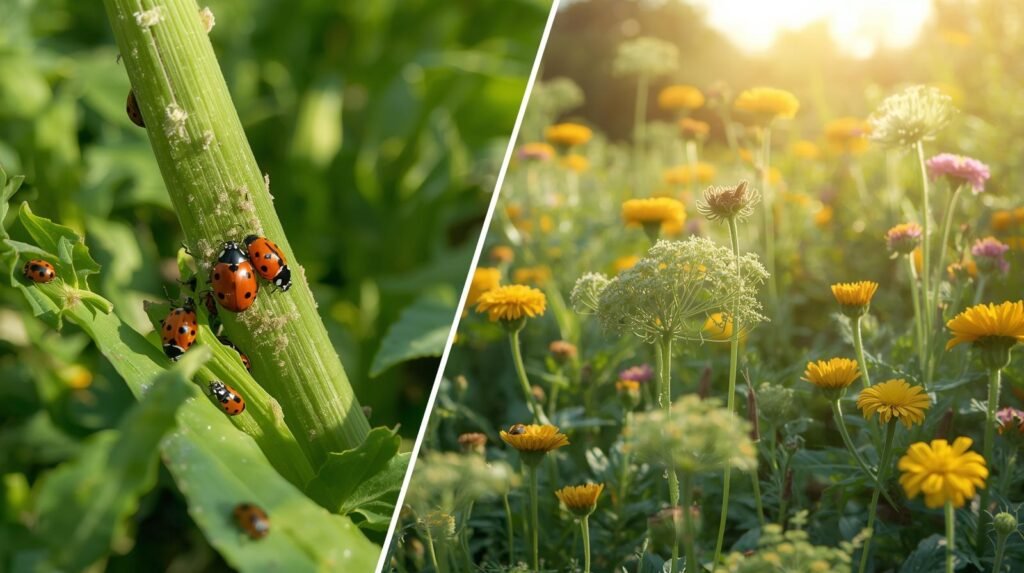
Ladybugs need shelter year round. Mulch provides hiding spaces. Leave leaf litter in corners. Hollow stems offer protection. Avoid excessive garden cleanup. Natural debris shelters insects. Overwintering areas increase return rates. Shelter ensures population stability.
Common Mistakes That Drive Ladybugs Away
Over cleaning the garden removes shelter. Heavy spraying kills beneficials. Lack of flowering plants reduces food. Dry conditions discourage insects. Removing aphids too quickly removes food. Impatience disrupts balance. Natural control takes time. Avoid these common mistakes.
How Long It Takes to See Results
Ladybugs do not work instantly. Population builds gradually. Aphids decrease over time. Larvae consume heavily. Results appear in weeks. Consistency is key. Natural systems stabilize slowly. Patience rewards gardeners.
Benefits Beyond Aphid Control
Ladybugs eat other pests too. Mites whiteflies and scale insects are controlled. Garden health improves overall. Chemical dependency reduces. Pollination increases indirectly. Soil organisms thrive. Biodiversity strengthens resilience. Benefits extend beyond pests.
Using Ladybugs in Vegetable Gardens
Ladybugs protect vegetables effectively. Tomatoes benefit significantly. Peppers suffer fewer aphids. Leafy greens recover faster. Organic produce remains chemical free. Edible gardens stay safe. Ladybugs are ideal allies. Food gardens thrive naturally.
Using Ladybugs in Flower Gardens
Flower gardens attract aphids often. Roses benefit greatly. Dahlias suffer less damage. Blooms remain healthier. Flower longevity increases. Visual appeal improves. Ladybugs protect ornamentals. Beauty and function combine.
Long Term Strategies for Ladybug Success
Focus on habitat building. Maintain plant diversity. Avoid chemical interventions. Encourage beneficial insects year round. Observe garden patterns. Adjust plant choices. Long term balance develops. Sustainable gardens flourish.
Expert Tips for Maximizing Ladybug Control
Release ladybugs after watering. Provide continuous flowering plants. Allow some aphids initially. Avoid disturbing larvae. Monitor garden weekly. Support biodiversity always. Experts rely on patience. Natural control is powerful.
Table: Plants That Help Attract Ladybugs
Plant Name
Dill provides nectar and shelter
Plant Name
Yarrow attracts beneficial insects
Plant Name
Fennel supports larvae development
Plant Name
Calendula attracts ladybugs
Plant Name
Cilantro flowers feed adult ladybugs