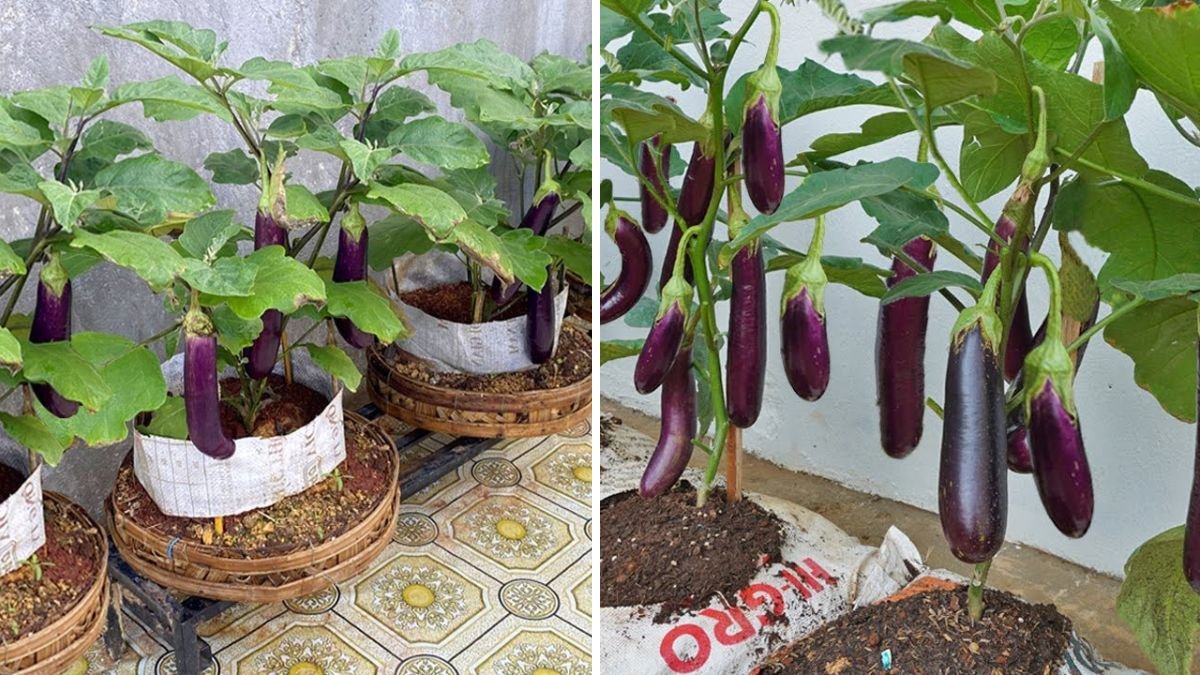
Eggplants, also known as aubergines, are versatile, nutritious, and a staple in many cuisines worldwide. With their glossy purple skin and rich flavor, they can transform simple dishes into culinary delights. But did you know you can grow eggplants right at home, even in small spaces like balconies, patios, or container gardens?
Growing eggplants at home is rewarding, economical, and surprisingly easy when you follow the right techniques. In this guide, we’ll cover everything you need to know—from choosing varieties to planting, caring, and harvesting eggplants for a bountiful yield.
🌱 Why Grow Eggplants at Home?
Homegrown eggplants offer several advantages:
- Freshness and Flavor: Homegrown eggplants are fresher and more flavorful than store-bought ones.
- Chemical-Free: You control the use of fertilizers and pesticides, ensuring safe, organic produce.
- Cost-Effective: Growing your own reduces the need to buy expensive vegetables.
- Therapeutic Gardening: Cultivating plants provides stress relief and satisfaction.
- Educational: Great for teaching children about gardening and plant life cycles.
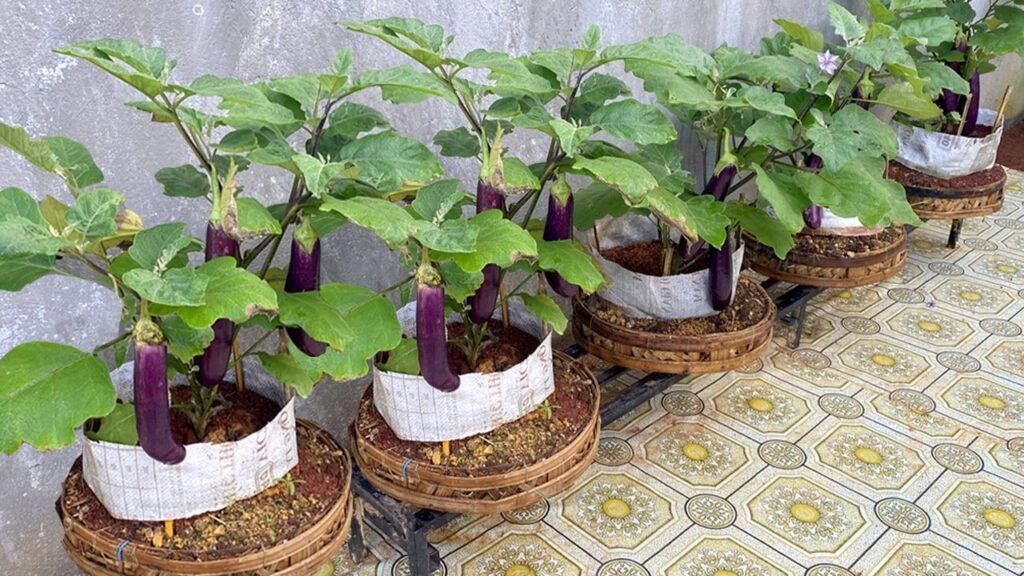
Even a small balcony or a few containers can produce a continuous supply of eggplants with proper care.
🍆 Choosing the Right Eggplant Variety
Selecting the right variety is crucial for home gardening:
- Long or Japanese Eggplant:
- Slim, elongated fruits.
- Smooth skin and tender flesh.
- Perfect for stir-fries and grilling.
- Globe or American Eggplant:
- Round, large fruits.
- Ideal for stuffing, baking, and frying.
- Baby or Mini Eggplant:
- Small, tender fruits.
- Suitable for container gardens or small spaces.
- Exotic Colors:
- White, green, or striped varieties add ornamental value and unique flavors.
Choose a variety that suits your climate, cooking style, and available space.
🌿 Preparing to Plant Eggplants
1. Soil Requirements
Eggplants thrive in fertile, well-draining soil:
- pH: 5.5–6.8 (slightly acidic to neutral)
- Enrich soil with compost, manure, or organic matter for nutrients
- Ensure good drainage to prevent waterlogging, which can lead to root rot
2. Containers for Home Gardening
If you lack a garden:
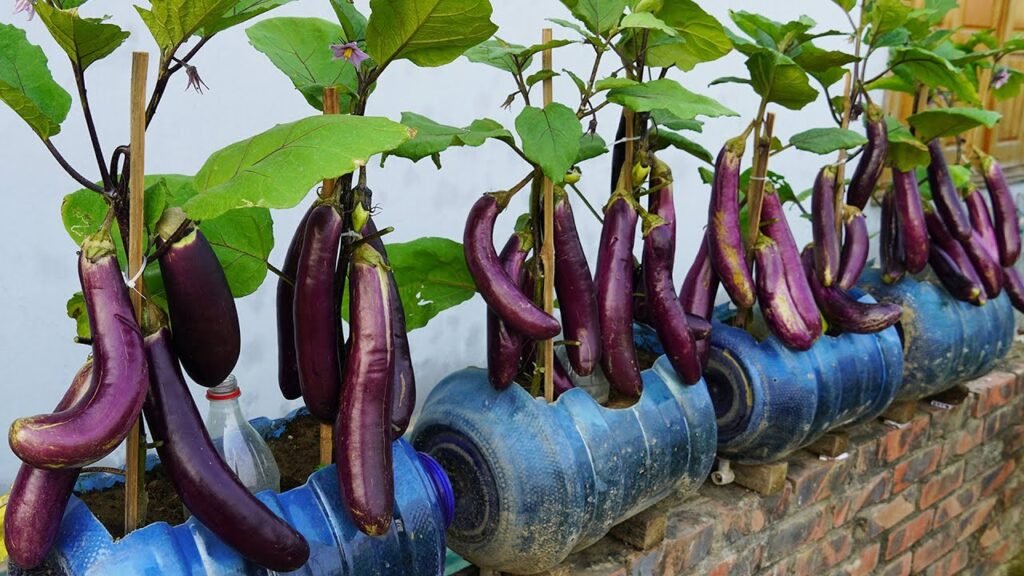
- Pots and Containers: Minimum 12–16 inches deep for proper root growth.
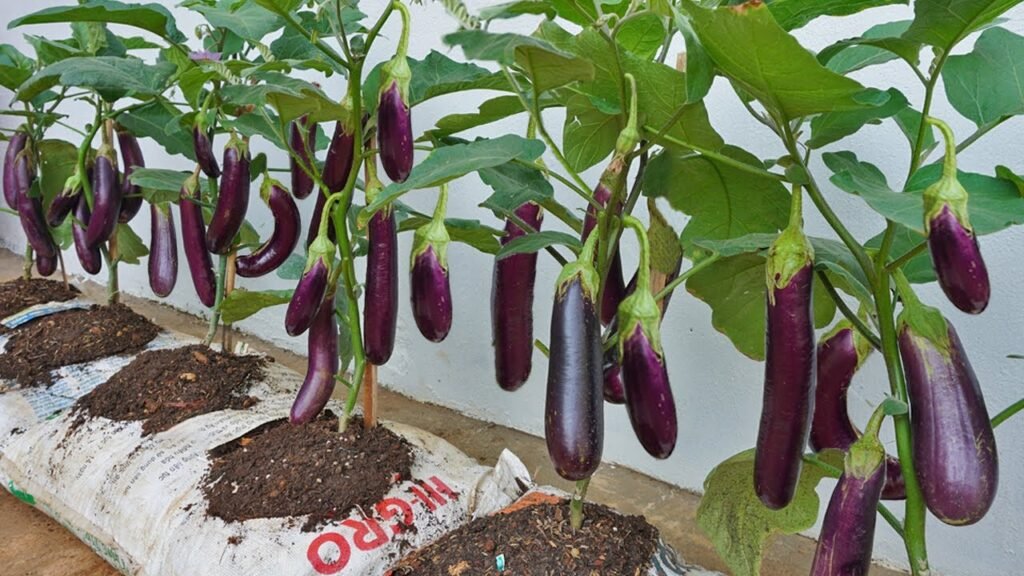
- Grow Bags: Fabric bags allow aeration and prevent root circling.
- Raised Beds: Ideal for larger setups, easy to manage and harvest.
Containers allow mobility, making it easier to provide sunlight and protect from extreme weather.
🌱 Starting Eggplants from Seeds or Seedlings
From Seeds:
- Sow seeds 6–8 weeks before the last frost.
- Use seed trays with seed-starting mix.
- Keep soil moist and warm (70–85°F) for germination.
- Transplant seedlings after 4–6 true leaves appear and frost risk has passed.
From Seedlings:
- Purchase healthy seedlings from nurseries.
- Check for strong stems, healthy leaves, and no pests.
- Transplant directly into containers or garden soil.
Starting from seedlings is faster and ensures a head start for early harvest.
☀️ Sunlight and Placement
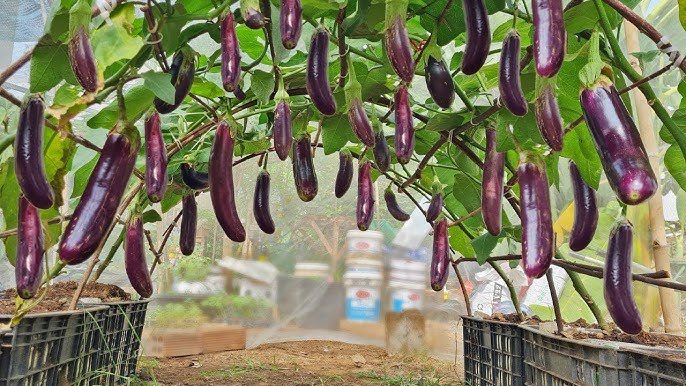
Eggplants require 6–8 hours of direct sunlight daily:
- Place containers on balconies, terraces, or sunny windowsills.
- Rotate pots occasionally for uniform growth.
- Insufficient sunlight results in slow growth, weak stems, and poor fruiting.
Sunlight is essential for strong plants and high-quality fruit.
💧 Watering Eggplants
- Keep soil consistently moist but not waterlogged.
- Water deeply 2–3 times per week, increasing frequency in hot weather.
- Mulch around the base with straw or dried leaves to retain moisture.
Regular watering ensures healthy foliage and succulent fruits.
🌱 Fertilizing for Maximum Yield
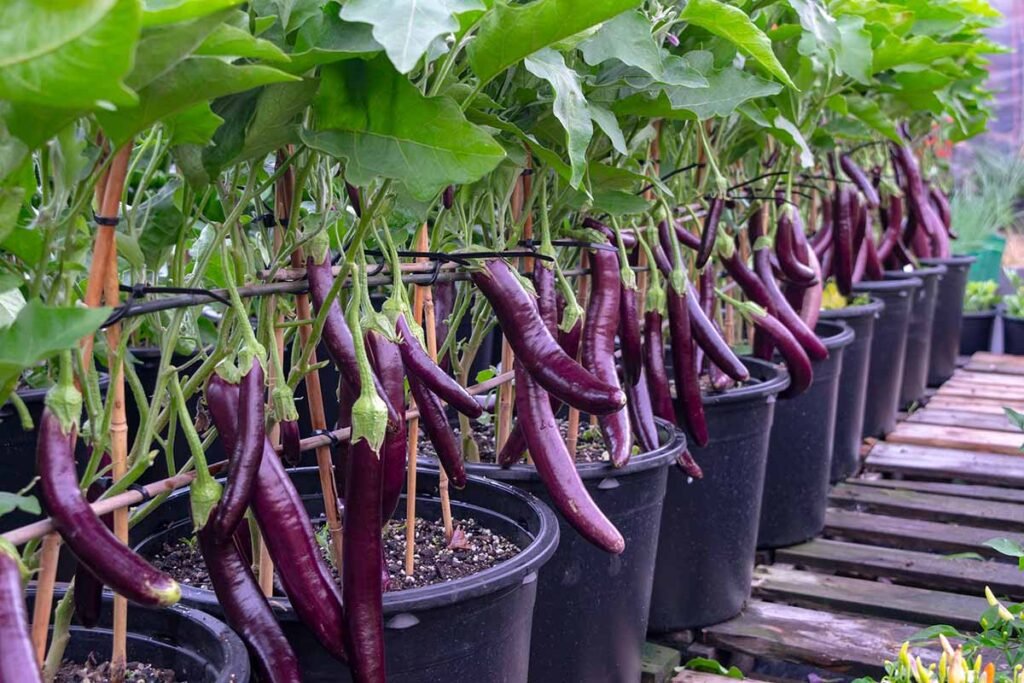
Eggplants are heavy feeders:
- At Planting: Mix well-rotted compost or manure into the soil.
- During Growth: Use nitrogen-rich fertilizer to encourage leafy growth.
- Before Flowering and Fruiting: Switch to phosphorus and potassium-rich fertilizers to boost flower and fruit development.
Balanced nutrition leads to larger, healthier eggplants.
🌸 Pruning and Plant Support
- Pruning: Remove weak, damaged, or crowded branches to improve air circulation and focus energy on fruit production.
- Support: Use stakes or cages to prevent tall plants from bending or breaking under fruit weight.
Proper support and pruning result in better-quality fruits and easier harvesting.
🐛 Pest and Disease Management
Common issues in homegrown eggplants:
- Aphids: Spray with neem oil or insecticidal soap.
- Flea Beetles: Use floating row covers or organic repellents.
- Whiteflies: Introduce natural predators like ladybugs.
- Fungal Diseases: Ensure proper spacing, avoid overhead watering, and remove affected leaves.
Regular monitoring keeps plants healthy and productive.
🍆 Flowering and Fruiting
- Eggplants produce purple or white flowers, which develop into fruits.
- Each plant can yield 6–10 fruits, depending on size and variety.
- Fruit matures 60–80 days after flowering, depending on the type.
Hand-pollination can increase fruit set in indoor or low-pollinator areas.
🥄 Harvesting Eggplants
- Harvest when fruits are firm, glossy, and fully colored.
- Use a sharp knife or scissors to cut fruits, leaving a short stem attached.
- Avoid leaving overripe fruits on the plant, as it reduces productivity.
Regular harvesting encourages continuous fruit production.
🍽 Cooking Ideas for Homegrown Eggplants
Freshly harvested eggplants can be used in:
- Stir-fries and curries
- Baking and roasting
- Grilling and barbecues
- Stuffed eggplant dishes
- Pickles and dips like baba ganoush
Homegrown eggplants are tender, flavorful, and free from chemicals, enhancing any recipe.
🌟 Tips for Success When Growing Eggplants at Home
- Choose disease-free seeds or seedlings.
- Provide 6–8 hours of sunlight daily.
- Maintain consistent watering and proper drainage.
- Fertilize at key growth stages.
- Prune and stake plants for strong stems.
- Monitor for pests and remove diseased leaves promptly.
- Harvest fruits regularly to promote continuous production.
Following these tips ensures healthy plants and a bountiful harvest.
🍆 Final Thoughts: Growing Eggplants at Home
Eggplants are not only delicious but also highly rewarding to grow at home. With the right selection of seeds or seedlings, proper sunlight, consistent watering, and careful care, even urban gardeners can enjoy lush, productive plants.
From container gardens on balconies to raised beds in small yards, homegrown eggplants offer freshness, flavor, and satisfaction that store-bought vegetables simply can’t match. Start small, nurture your plants, and soon you’ll be harvesting tender, glossy eggplants straight from your garden to your kitchen.
Growing eggplants at home is fun, educational, and highly rewarding, making it a perfect addition to any home garden—even in limited space.