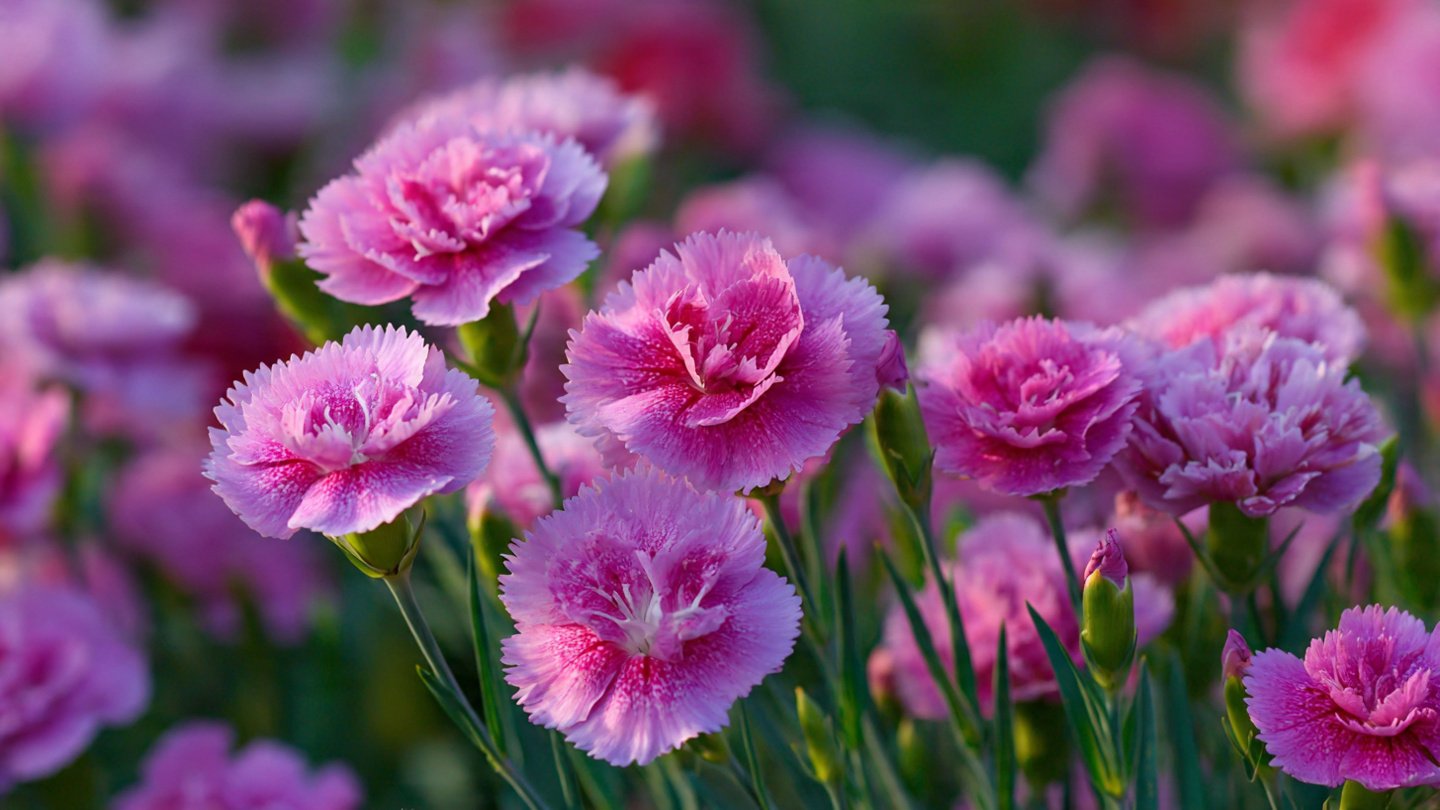
Dianthus, commonly known as pinks or carnations, are beloved perennial flowers that bring vibrant color and a delightful fragrance to gardens. Their striking blooms and lush foliage make them a popular choice for borders and rock gardens. This comprehensive guide will walk you through everything you need to know about successfully growing Dianthus in your garden, from choosing the right varieties to caring for your plants.
Understanding Dianthus
Overview
Dianthus encompasses a large genus of flowering plants, with over 300 species. They are native to Europe, Asia, and Africa but have been cultivated worldwide in various colors and forms. Known for their fringed petals and spicy-sweet scent, Dianthus is often used in bouquets and arrangements.
Types of Dianthus
- Dianthus barbatus (Sweet William): These biennial flowers come in clusters with a rich variety of colors, often appearing in spring and early summer.
- Dianthus caryophyllus (Carnation): Popular for floral arrangements, these blooms are available in numerous colors and have a long vase life.
- Dianthus deltoides (Maiden Pink): A ground-cover type, Maiden Pink features low-growing forms with small flowers, making it ideal for borders.
- Dianthus alpinus (Alpine Pink): A compact plant that thrives in rocky areas, perfect for alpine gardens.
Each of these types has its unique characteristics, and the choice will depend on your garden’s specific needs and aesthetic preferences.
Choosing the Right Location
Sunlight
Dianthus plants thrive in full sun, requiring at least 6 hours of direct sunlight each day. Ensure your garden bed is located in a spot that receives adequate light to promote healthy growth and abundant blooms.
Soil Conditions
Dianthus prefers well-draining soil with good fertility. A sandy or loamy soil is ideal, but if your soil is heavy clay, consider amending it with compost or sand to improve drainage.
pH Levels
These plants prefer a slightly acidic to neutral soil pH of 6.0 to 7.0. Conduct a soil test if you’re unsure, and amend as necessary.
Planting Dianthus
Best Time to Plant
The optimal time to plant Dianthus varies by climate. In most regions, it’s best to plant in the spring after the last frost. In warmer climates, you can also consider a fall planting.
Spacing
Depending on the variety, space your plants about 12 to 18 inches apart. This gives them room to grow and allows air circulation, which helps to prevent diseases.
Planting Steps
- Prepare the Soil: Till the soil to a depth of about 12 inches, mixing in compost.
- Dig Holes: Create holes that are about twice the width of the root ball and equal in depth.
- Place the Plants: Remove plants from their pots and gently loosen any tightly bound roots. Place them in the holes so that the top of the root ball is level with the soil surface.
- Backfill and Water: Fill the holes with soil, pressing lightly to eliminate air pockets. Water thoroughly after planting.
Care and Maintenance
Watering
Dianthus is drought-tolerant once established, but regular watering is essential during the first few weeks after planting. Water deeply once a week, allowing the soil to dry out between watering sessions. Avoid overhead watering to prevent fungal diseases.
Fertilization
Incorporate a balanced, slow-release fertilizer in spring when new growth begins. For best results, choose a fertilizer with an N-P-K ratio of 10-10-10 or similar.
Deadheading
Regular deadheading encourages more blooms throughout the season. Remove spent flowers by cutting the stem back to the nearest leaf node. This practice not only improves the plant’s appearance but also prevents energy from being wasted on seed production.
Pruning
In late summer or early fall, prune back Dianthus to about 6 inches to promote new growth in the spring. This helps maintain a tidy appearance and encourages bushier growth.
Pest and Disease Control
While Dianthus is relatively pest-resistant, they may be susceptible to aphids, spider mites, and slugs. Monitor your plants and use organic methods like insecticidal soap or neem oil when necessary. Diseases such as powdery mildew can also be a concern. Ensure proper air circulation and avoid overhead watering to minimize this risk.
Seasonal Care
Spring
- Remove winter mulch.
- Fertilize as new growth emerges.
- Water as needed based on rainfall.
Summer
- Regularly deadhead and check for pests.
- Water deeply during hot, dry spells.
Fall
- Cut back spent foliage.
- Apply a layer of mulch to protect the roots during winter.
Winter
- In colder regions, protect plants with mulch or cover them, especially if you have deciduous varieties.
Companion Planting
Dianthus pairs well with various plants, enhancing your garden’s beauty and biodiversity. Consider planting them alongside:
- Salvia: Their tall spikes of flowers contrast nicely.
- Lavender: The fragrance of lavender complements Dianthus beautifully.
- Sedum and Thyme: These low-growing plants enrich the ground cover around Dianthus.
Propagation
Seed
Dianthus can be grown from seeds, but it requires patience. Start seeds indoors 8-10 weeks before the last frost, or sow directly outdoors after the danger of frost has passed.
Division
Established clumps can be divided every three years in spring or fall to rejuvenate them and encourage new growth.
FAQs
1. Can Dianthus grow in partial shade?
While Dianthus prefers full sun, some varieties can tolerate partial shade. However, blooming may be less prolific.
2. How often should I fertilize Dianthus?
Fertilize once in spring with a balanced fertilizer. If your plants seem to be struggling, you can add a second application in mid-summer.
3. Why are my Dianthus wilting?
Wilting can occur due to underwatering, overwatering, or stress from extreme temperatures. Assess your watering schedule and soil drainage to diagnose the issue.
4. Do Dianthus plants need to be winterized?
In regions with harsh winters, applying mulch around the base can help protect the roots. However, many varieties are hardy and can survive without special treatment.
5. Can I grow Dianthus in containers?
Yes, Dianthus can thrive in pots. Ensure the container has good drainage and use a quality potting mix.
6. When will my Dianthus bloom?
Dianthus generally blooms from late spring to early summer, depending on the variety and cultivation conditions.
7. Are Dianthus deer-resistant?
Dianthus is known to be relatively deer-resistant due to its fragrant foliage, but hungry deer may eat just about anything if food is scarce.
8. How can I improve the blooming of my Dianthus plants?
Ensure your plants receive plenty of sunlight, avoid overcrowding, and deadhead spent blooms to encourage new growth and flowering throughout the season.
Conclusion
Growing Dianthus border plants in your garden can yield vibrant blooms and a delightful fragrance that elevates your outdoor space. By selecting the right varieties, providing optimal growing conditions, and maintaining regular care, you can enjoy these stunning flowers for years to come. With this comprehensive guide, you’re well-equipped to successfully cultivate and appreciate the beauty of Dianthus in your garden. Happy gardening!