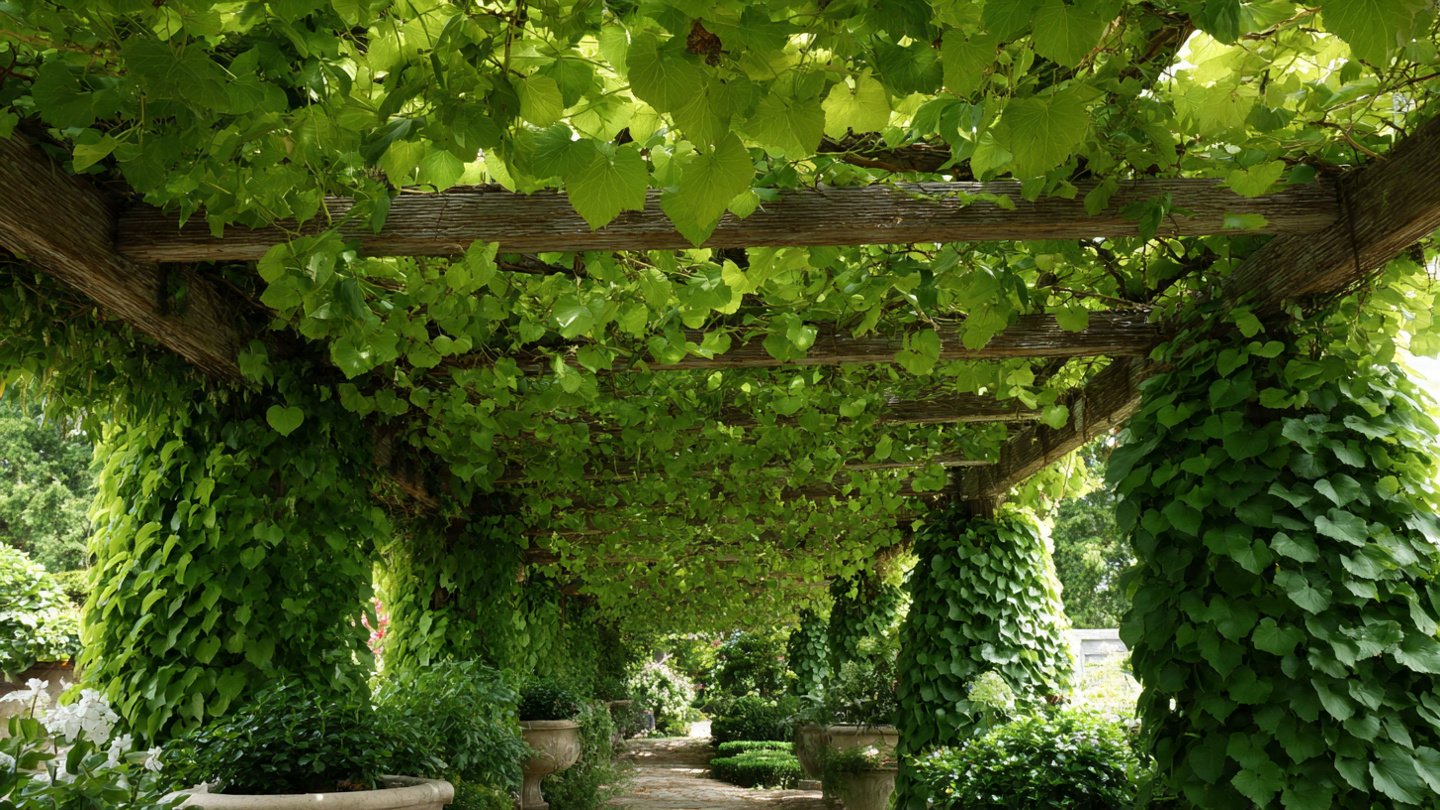
Creating a lush, green oasis in your backyard often involves the strategic use of plants, especially when it comes to adding shade to outdoor spaces like pergolas. Pergolas not only support climbing plants but also serve as a stylish addition to any garden or patio. If you’re looking to enhance your pergola with creeping plants, this guide will help you choose the best creepers that offer dense foliage, aesthetics, and practicality.
Understanding Creepers and Climbers
First, it’s essential to differentiate between creepers and climbers.
- Creepers: These plants grow along the ground and spread horizontally, using their stems for growth. Examples include ground covers that will eventually spread to cover large areas.
- Climbers: Climbers rely on other structures, like your pergola, to grow upwards. They use tendrils, twining stems, or adhesive pads to cling to vertical surfaces.
For pergolas, we are primarily interested in climbers. They provide vertical coverage and create a beautiful canopy of foliage and flowers.
Considerations When Choosing Creepers for Your Pergola
1. Sunlight Requirements
Before selecting the right creepers, it’s crucial to understand the sunlight levels in the area surrounding your pergola. Some climbing plants thrive in full sun, while others prefer partial shade or even full shade.
- Full Sun: Varieties like Wisteria and Honeysuckle love bright environments.
- Partial Shade: Crocosmia and Clematis can adapt well to these conditions.
- Full Shade: For areas with less light, look into plants like Virginia Creeper or certain Ivy species.
2. Hardiness Zone
Understanding your climate zone will significantly impact which creepers will thrive. The USDA Hardiness Zones range from 1-13, dictating which plants can survive based on local climatic conditions.
- Knowing your zone helps in selecting invasive species or non-native plants, which might be ill-suited to your environment.
3. Growth Rate and Maintenance
Some creepers grow rapidly, while others are more leisurely. Fast-growing plants can cover your pergola quickly but may require more frequent pruning and maintenance.
- Fast Growers: Passionflower and Trumpet Vine can provide quick cover.
- Slow Growers: Climbing Roses and other varieties may take time to establish.
4. Aesthetics
The visual appeal of your climbing plants should align with your overall landscape design. Consider bloom colors, foliage texture, and seasonal variations.
- Some plants have vibrant flowers, while others provide lush green foliage. Choosing a mix ensures year-round interest.
5. Support Structure
Ensure your pergola can support the weight of your chosen plants. Denser creepers may require sturdier support systems.
- Assess whether your pergola is constructed of wood, metal, or vinyl, and how it might support plant growth without damage.
Top Creepers for Pergolas
Here’s a detailed look at some of the best creeping plants for creating lush shade on your pergola:
1. Wisteria
Characteristics: Known for its stunning cascading flowers in spring, Wisteria produces fragrant blooms in shades of blue, lavender, or white.
Ideal Conditions: Prefers a full sun location and grows vigorously in well-drained soil.
Maintenance: Requires regular pruning to control growth and promote blooms.
2. Climbing Roses
Characteristics: These offer beautiful blooms throughout the growing season. Their variety in color makes them a favored choice for aesthetic appeal.
Ideal Conditions: They thrive in full sun and need fertile, well-draining soil.
Maintenance: Requires substantial pruning and care to manage growth and enhance blooming.
3. Honeysuckle (Lonicera)
Characteristics: This fragrant climber produces tubular flowers, attracting hummingbirds and butterflies.
Ideal Conditions: Performs well in full sun and partial shade.
Maintenance: Moderate maintenance; prune to prevent overgrowth but allows flexibility in shape.
4. Clematis
Characteristics: Known for diverse forms and colors, Clematis blooms from early spring to late fall, depending on the variety.
Ideal Conditions: Prefers sun at the crown and shade for its roots.
Maintenance: Depending on the species, pruning requirements vary.
5. Virginia Creeper
Characteristics: A fast-growing vine that provides dense foliage and vibrant red autumn color.
Ideal Conditions: Grows well in various light conditions, including full shade.
Maintenance: Requires minimal upkeep but can become invasive if not trimmed regularly.
6. Passionflower
Characteristics: With intricate flowers resembling a ruffled crown, Passionflower adds a unique visual appeal.
Ideal Conditions: Needs full sun and tolerates various soils.
Maintenance: Prune back in early spring to promote growth.
7. Trumpet Vine (Campsis radicans)
Characteristics: This vigorous grower produces trumpet-shaped orange or red flowers, attracting birds and pollinators.
Ideal Conditions: Thrives in full sun.
Maintenance: Requires annual pruning to manage growth.
Planting and Caring for Your Creepers
1. Site Preparation
Begin by assessing the quality of the soil. Good drainage is crucial; you may need to amend it with compost to enhance nutrients.
2. Planting
- Timing: Spring or fall is typically the best time to plant.
- Spacing: Ensure adequate spacing between plants for airflow and growth.
- Support: Install any required trellises or support from the start to guide the creepers.
3. Watering
Initially, keep the soil consistently moist but not soggy. Once established, many creepers require less frequent watering.
4. Fertilizing
Choose a balanced fertilizer in early spring to encourage healthy growth.
5. Pruning
- Regularly prune to control growth and stimulate blooming.
- Remove dead or diseased wood to maintain plant health.
Troubleshooting Common Issues
1. Pests and Diseases
- Aphids: Often found on new growth; consider using insecticidal soap.
- Powdery Mildew: A common fungal disease; ensure good airflow around plants.
2. Nutrient Deficiencies
Yellowing leaves may indicate nutrient deficiencies. Adjust your fertilization routine if necessary.
3. Overgrowth
Regularly check for overgrowth or unwanted spread, especially with aggressive growers like Virginia Creeper.
Conclusion
A pergola covered with the right climbing plants can provide functional shade and enhance the aesthetic appeal of your outdoor living space. By considering factors such as sunlight, hardiness zones, and maintenance needs, you can choose the best creepers to create a lush, inviting atmosphere.
FAQs
1. How long will it take for creepers to cover my pergola?
The time varies based on the plant species and growing conditions. Fast growers like Wisteria can cover a pergola in one to two seasons, while slower growers like climbing roses may take several years.
2. Will my creepers attract pests?
Most creepers may attract pests like aphids and spider mites. Regular monitoring and organic pest control methods can help manage this issue.
3. Can I grow multiple types of creepers on one pergola?
Yes! Just ensure that their growth habits and care requirements are compatible to avoid competition.
4. Do I need to fertilize my climbing plants?
Yes, fertilization in early spring can help boost growth, especially if your soil lacks nutrients.
5. Are there creepers suitable for low-light conditions?
Yes, varieties like Virginia Creeper and certain Ivy species can thrive in low-light conditions.
By following this guide, you’ll be well on your way to creating a stunning, shaded retreat under your pergola, filled with vibrant colors and lush greenery. Happy gardening!