
Introduction: Why Small Yard Landscaping Matters
Small yards often feel cramped and limiting. Strategic landscaping can create the illusion of space. Clever use of color, height, and focal points visually expands your outdoor area. Plants, pathways, and decorations can all influence perception. Light and shadows play crucial roles in design. Proper planning maximizes every square foot. Psychological tricks enhance comfort and openness. Small yards can appear luxurious with the right techniques. Creativity makes even tight spaces feel inviting.
Trick 1: Using Vertical Gardening to Save Space
Vertical gardens utilize walls, fences, or trellises. Plants grow upward rather than outward. This reduces ground clutter. Hanging planters add greenery without crowding. Vertical space draws eyes upward, creating the illusion of height. Vine plants such as ivy or jasmine work well. Vertical gardens also improve air quality. Expertly designed walls add aesthetic appeal. This approach maximizes functional yard space.
Trick 2: Choosing Light Colors for Visual Expansion
Light-colored fences, walls, and decking appear to recede. Whites, creams, soft blues, and pale greens create openness. Pathways painted in light tones visually extend distance. Contrasting borders highlight plant shapes. Light colors reflect sunlight, brightening shaded areas. Lighter surfaces feel airy and spacious. Avoid overly dark colors that shrink space. Subtle color contrasts enhance perspective. Proper palettes visually enlarge your yard.
Trick 3: Creating Curved Pathways and Walkways
Curved paths trick the eye into seeing a longer, more expansive yard. Meandering walkways create movement and depth. Avoid straight lines that end abruptly. Natural stone or brick adds texture and dimension. Small curves can suggest hidden areas beyond view. Adding plants along curves enhances depth perception. Visual layering gives a three-dimensional effect. Experts recommend gentle, continuous curves. Paths define space while enhancing openness.
Trick 4: Strategic Plant Selection and Placement
Tall plants in back, short in front, create depth. Layering plants forms visual distance. Using narrow plants along borders elongates boundaries. Medium height plants add transitional space. Ground covers open sightlines across lawns. Contrasting textures guide the eye naturally. Repetition of colors and shapes adds rhythm. Proper spacing prevents overcrowding. Plant positioning trickery makes a yard appear larger.
Trick 5: Incorporating Mirrors and Reflective Surfaces
Mirrors reflect existing greenery, doubling visual space. Position mirrors on walls or fences at angles. Water features act as natural reflective surfaces. Glass panels can subtly extend perception. Reflective paths or stepping stones enhance openness. Mirrors must blend with surroundings for natural effect. Avoid cluttering mirrored areas. The trick is subtlety and placement. Reflective surfaces expand visual field dramatically.
Using Low Fencing and Open Borders
Low fences maintain boundary definition without blocking sightlines. Open borders allow the eye to travel beyond the yard. Lattice or partial fencing creates partial visual barriers. Avoid solid walls along edges. Transparent barriers maintain security and perception of space. Low fencing also highlights landscaping elements. Combined with pathways, it draws attention outward. Experts emphasize visual continuity.
Maximizing Lawn Space in Small Yards
Compact lawns can appear expansive with thoughtful shape. Rounded edges or diagonal layouts trick perspective. Remove excessive decorative clutter. Use minimal furniture to maintain open views. Grass varieties with consistent color enhance continuity. Mowing patterns can add directional depth. Gradual layering with borders extends perception. Simple lawns amplify yard size visually.
Using Multi-Level Planting Beds
Raised beds at different heights create depth illusion. Front beds lower, rear beds higher add vertical interest. Terraced beds guide eyes naturally. Plant variation in size and color improves layering effect. Combining with pathways enhances perspective. Multi-level design maximizes vertical and horizontal space. Beds create organized zones without overcrowding. Experts recommend gentle height differences for realism.
Choosing the Right Garden Furniture
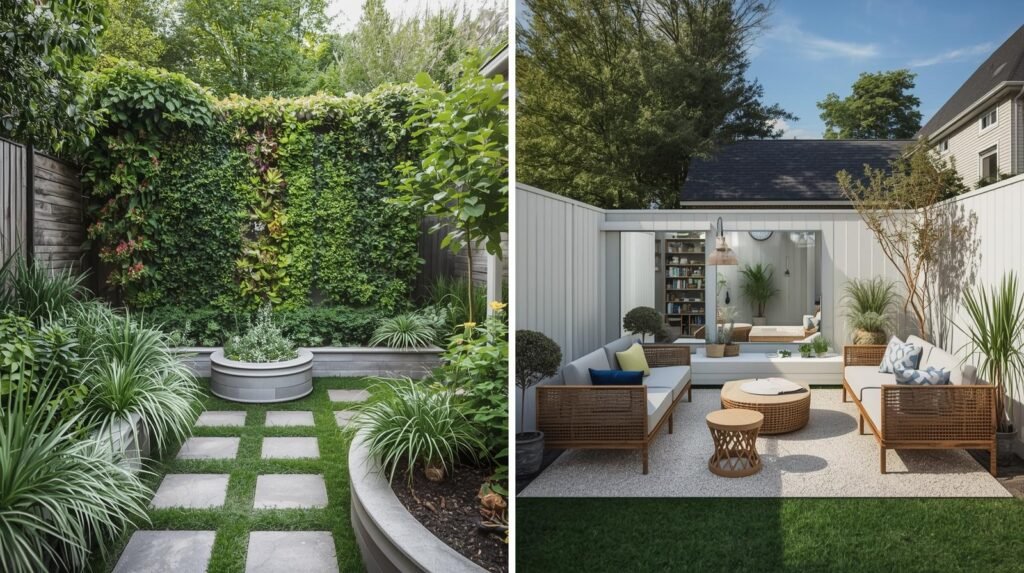
Furniture size impacts perceived yard space. Small scaled tables and chairs open up pathways. Transparent materials like glass or acrylic reduce visual obstruction. Folding or movable pieces adapt easily. Avoid oversized furniture. Strategically place seating near corners. Furniture doubles as a focal point. Proper selection maintains spacious feel.
Lighting Tricks for Depth and Dimension
Lighting extends usable yard hours and perception. Pathway lights draw attention forward. Uplighting trees adds vertical emphasis. Soft ambient lighting prevents shadows from shrinking space. Mirrors and reflective surfaces enhance illumination. Directional lighting guides the eye. Use warm tones for inviting effect. Night lighting reinforces spatial illusion.
Layering Plants for Perspective
Tall shrubs in back, medium plants mid-ground, small in front. Layered planting creates visual pathways. Color contrasts emphasize depth. Texture differences enhance three-dimensionality. Repetition guides the gaze. Layering adds richness without crowding. Use curving lines for natural movement. Expert planning maximizes perceived space.
Focal Points and Accents
A single focal point elongates vision. Sculptures, fountains, or a tree act as centerpieces. Place near the end of a path or line of sight. Focal points draw attention away from small dimensions. Use color and texture to emphasize. Multiple focal points reduce coherence. Avoid overcrowding space with too many objects. Strategic accents enhance spatial illusion.
Using Ground Covers Wisely
Low growing ground covers create continuous texture. Creeping thyme or moss creates openness. Avoid tall fillers near pathways. Green carpets suggest expansive space. Ground covers reduce visual breaks. Plant consistently for uniformity. Avoid patches of bare soil. Smooth continuity tricks perception positively.
Using Container Plants Effectively
Containers allow repositioning to create flow. Tall containers anchor corners. Low containers maintain sightlines. Color coordination adds depth. Group containers strategically. Movable plants adapt seasonal design. Patterns enhance yard organization. Containers maintain flexibility.
Seasonal Considerations for Small Yard Landscaping
Choose plants that provide year-round interest. Evergreen shrubs maintain structure in winter. Seasonal flowers add depth during growth months. Rotate containers for variety. Adjust lighting seasonally. Mulching maintains visual texture. Seasonal design prevents monotony. Experts recommend layered planting through seasons.
Common Small Yard Landscaping Mistakes
Overcrowding reduces perception of space. Large furniture blocks pathways. Monotonous colors shrink space. Ignoring focal points creates flat appearance. Poor lighting hides depth. Lack of vertical interest diminishes effect. Recognizing mistakes improves design. Professional techniques prevent errors.
Long-Term Benefits of Smart Small Yard Landscaping
Yards appear larger, more inviting. Maintenance remains manageable. Plants thrive in organized spaces. Usable areas increase visually. Garden aesthetics improve significantly. Social enjoyment rises. Property value may increase. Clever design pays off sustainably.
Table: Landscaping Tricks for Small Yards
Trick
Vertical gardening utilizes walls to save space
Trick
Light colors make the yard appear larger
Trick
Curved pathways create visual depth
Trick
Layered planting adds perception of distance
Trick
Mirrors and reflective surfaces expand visual space